
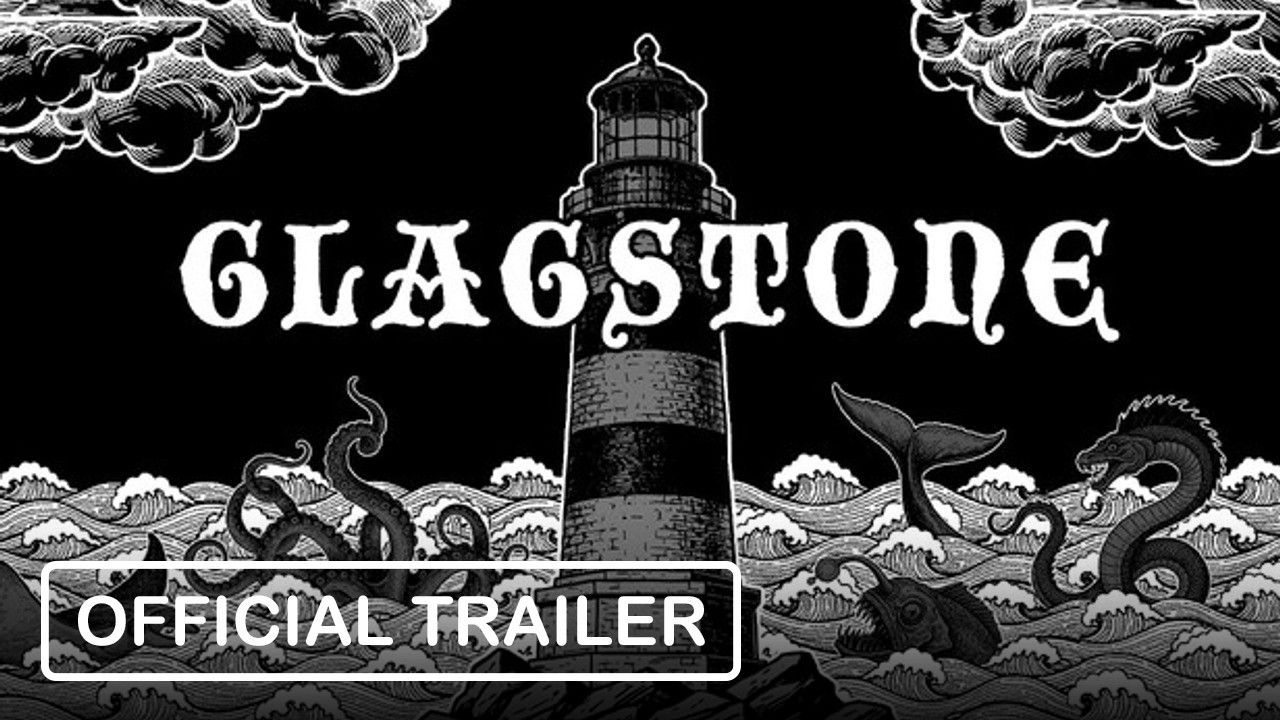
GlagStone, a 1-bit city builder on a storm-battered northern isle
You arrive as the new governor. The lighthouse is broken, the town is crumbling, and the previous leader has disappeared. That is the whole setup, and it is a good one. GlagStone wraps city building and survival under pressure into a stark two-color presentation that nods to late 80s Macintosh aesthetics while leaning into atmosphere and story.
Visuals are intentionally strict. Everything is black and white, high contrast, and deliberately readable. That limitation is not a gimmick. It shapes gameplay and story. Visibility matters. What you can see determines what you can fix and whom you can help. The island reacts to your choices, and the island remembers what you uncover.
Rebuild the island piece by piece
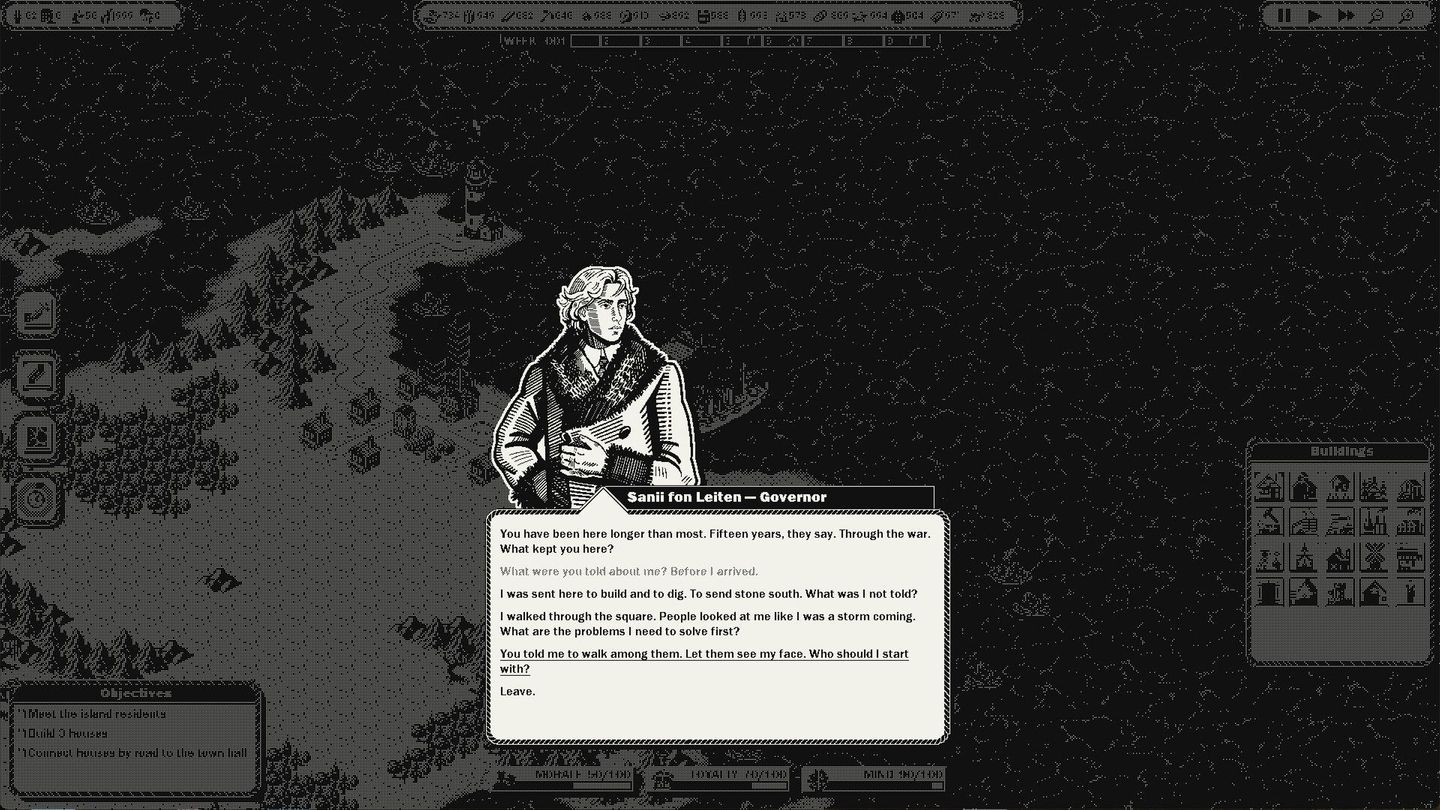
At its core GlagStone is about reconstruction. Lay roads, build houses, set up production buildings, and manage resources that are in short supply. The settlement does not rebuild itself. People rely on food, shelter, and the fragile infrastructure you prioritize.
Choices are material as well as moral. Which production buildings come first? Who gets shelter when a storm flattens roofs? Your decisions affect morale and loyalty. Local disputes and desperate requests will force trade offs where there is no obvious right answer. The engine is small and focused: keep people alive and keep the community functioning long enough to learn what happened before you arrived.
Weather, night, and the lighthouse
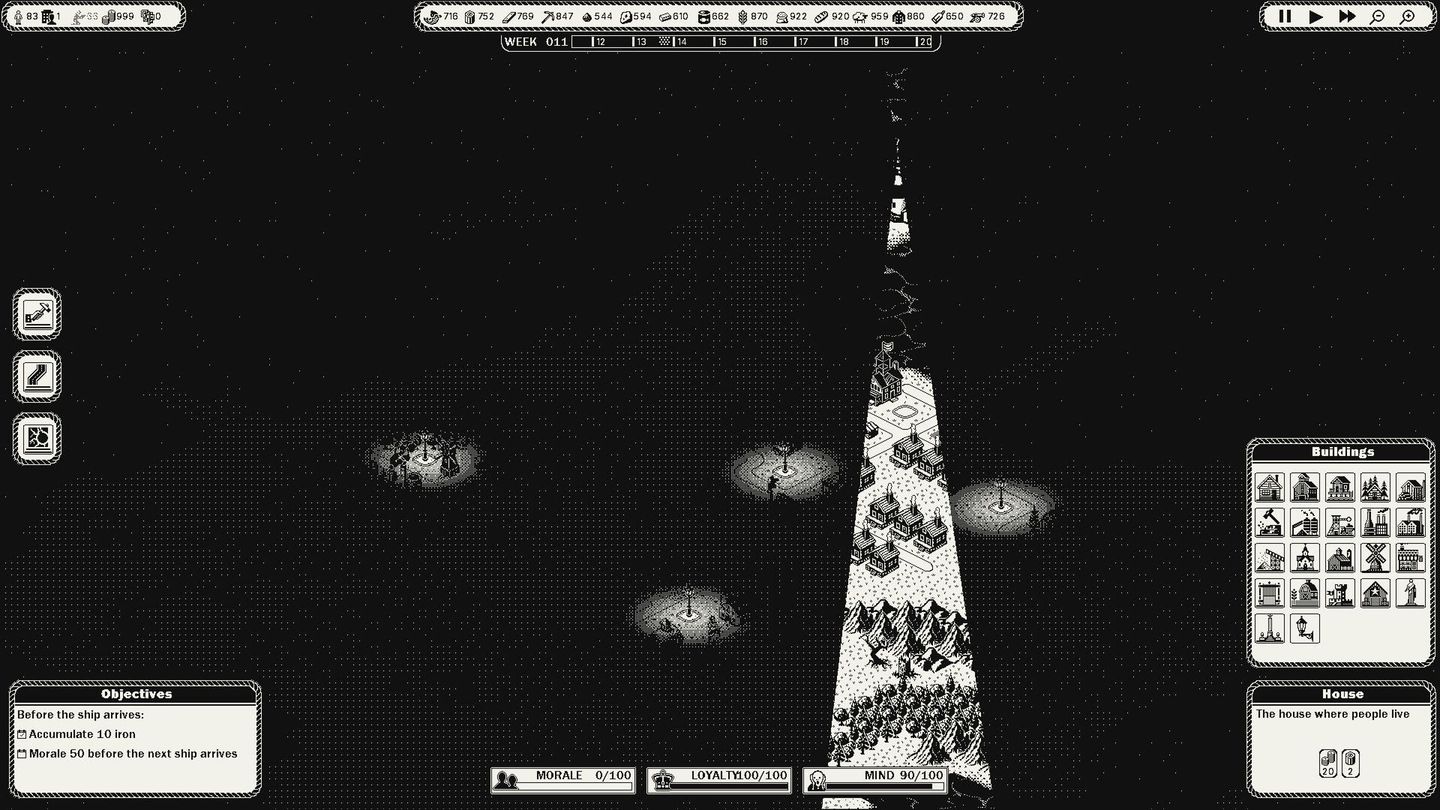
Weather is not decoration. Rain, snow, fog, storms, and the long northern nights all change how much of the island you can see and how well your people can work. The lighthouse is more than an aesthetic beacon. Restoring and maintaining it pushes back darkness, improves visibility during bad weather, and becomes a tangible lifeline for the settlement.
Those mechanics tie directly into the mystery. Poor visibility hides wreckage, documents, and small signals from the sea. Bad weather means you must make harder choices with less information. The lighthouse becomes both a practical tool and a symbol of control over uncertainty.
Choices, documents, and the island's memory
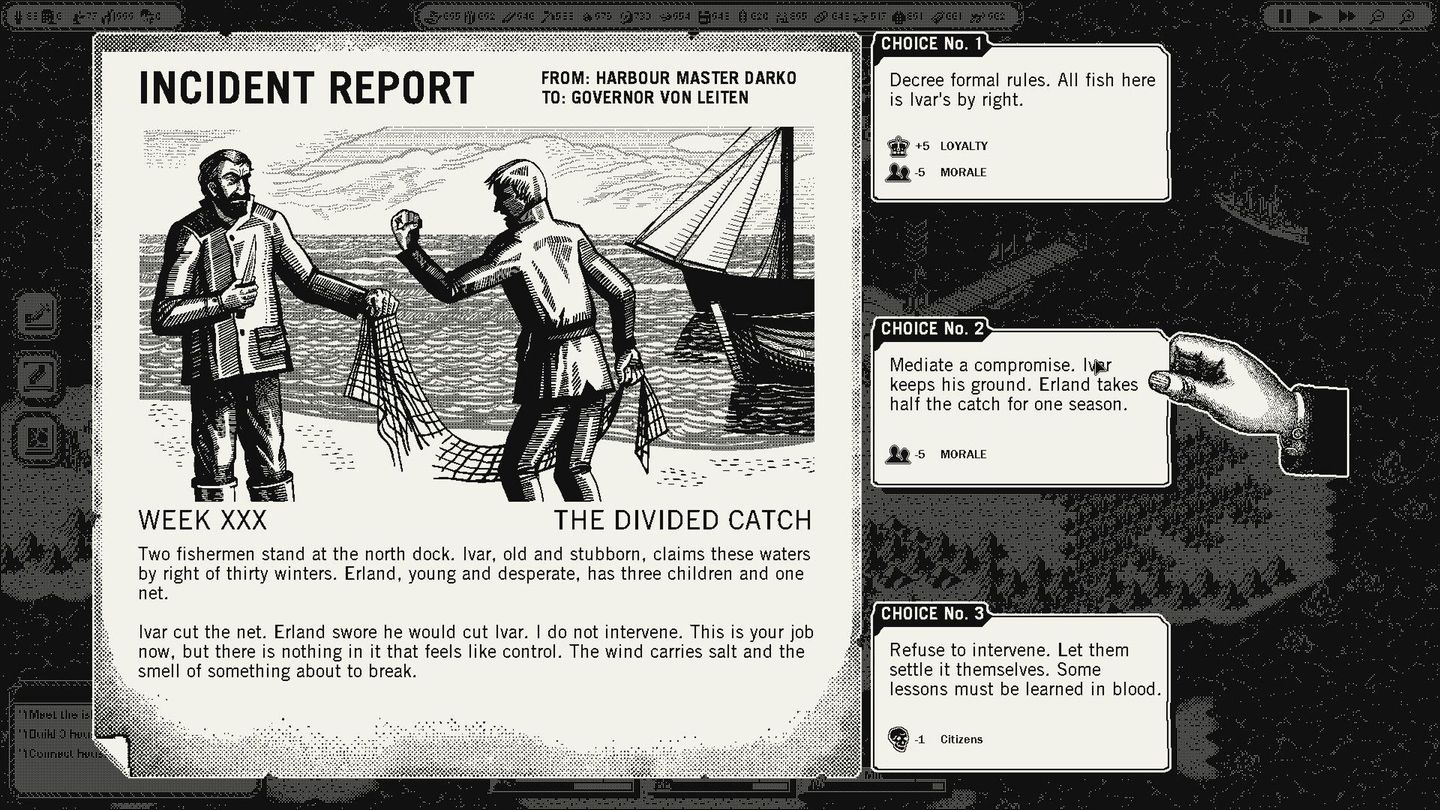
Storytelling in GlagStone is layered into found objects. Diaries, letters, incident reports, newspaper clippings, and items washed ashore reveal the island's past in fragments. The more of the town you rebuild, the more likely you are to find those fragments. Narrative rewards exploration and reconstruction equally.
Characters feel grounded and a little macabre. Residents carry grief, fear, and practical needs. Their requests will tug at you in different directions. Official reports from the mainland add pressure and urgency while local voices make the moral stakes immediate. Expect decisions that change resource flow, loyalty, and who remains willing to follow your rule.
Audio, tone, and what it all feels like
Sound and music are built to support isolation and tension rather than spectacle. The audioscape is meant to make you feel the wind and the waiting. In a game that limits color, sound helps fill in emotional texture and keeps the island alive when the screen is mostly black and white.
GlagStone presents a restrained, focused design. Its 1-bit palette clarifies priorities: visibility, infrastructure, the lighthouse, and documents. The result is a compact but atmospheric package that asks you to manage people as much as resources, and to piece together a mystery from very small, high-contrast clues.