
Project BOTNET turns MMO sabotage into a deskbound hustle
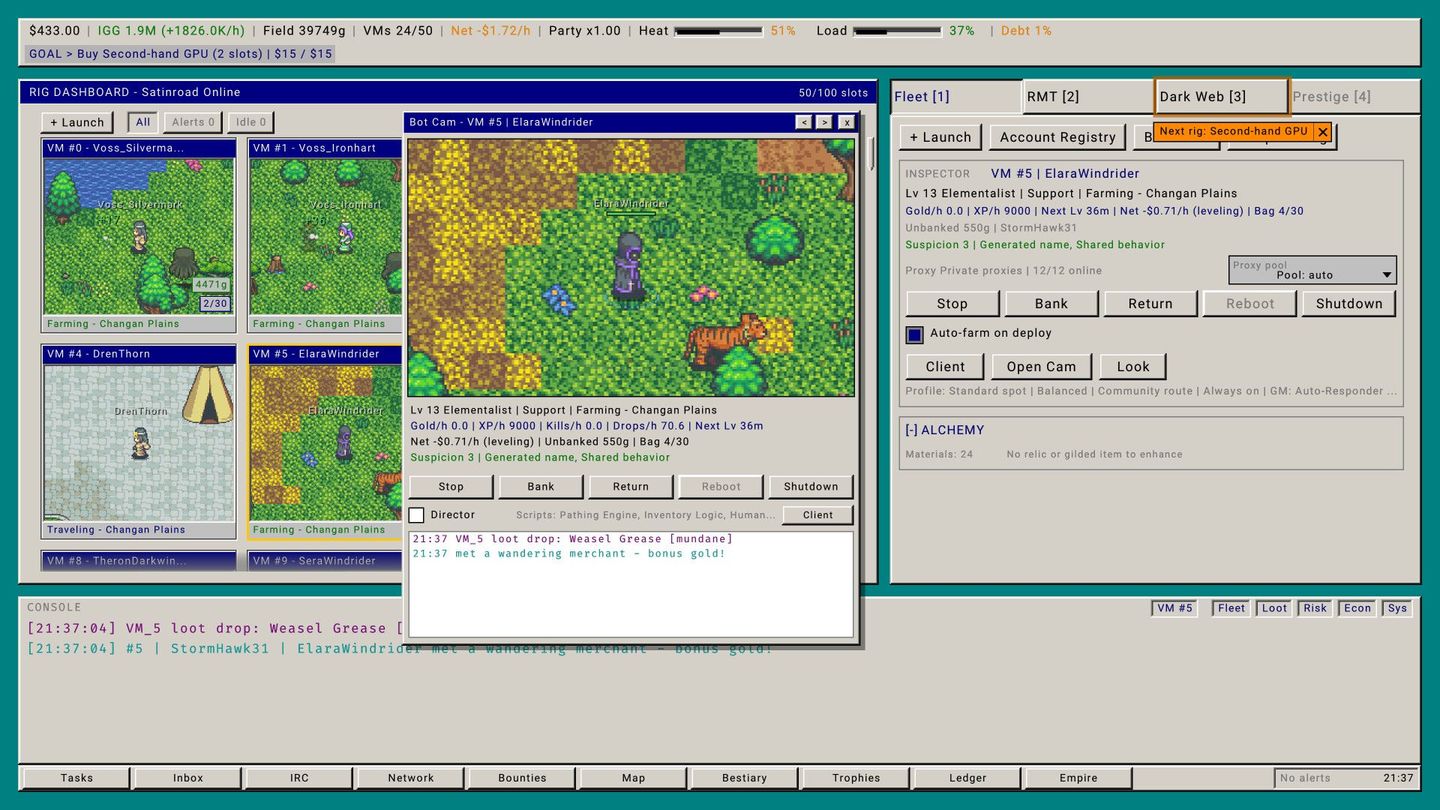
Project BOTNET casts you as the operator behind the scenes of Satinroad Online, a fictional MMORPG. From an oldschool desktop UI you boot virtual machines, assign bot classes, and watch your fleet grind while you juggle proxies, scripts and cash-outs. It is an idle tycoon about optimization, risk management and the occasional moment of chaos when a ban wave hits.
Boot a fleet
The core loop is gloriously simple. Every virtual machine runs a single bot account. You pick a class, role and a grind zone, then send it out to farm. Most of the fun is in the macro view: slotting accounts into slots, waiting on timers, and upgrading the backend so you can manage more machines without babysitting.
Project BOTNET leans into the feeling of running an illicit operation from a desktop environment. The UI evokes old multitool dashboards more than modern overlays. Decisions are about throughput and safety: more bots equals more gold, but also more heat.
Every VM is a live MMO client
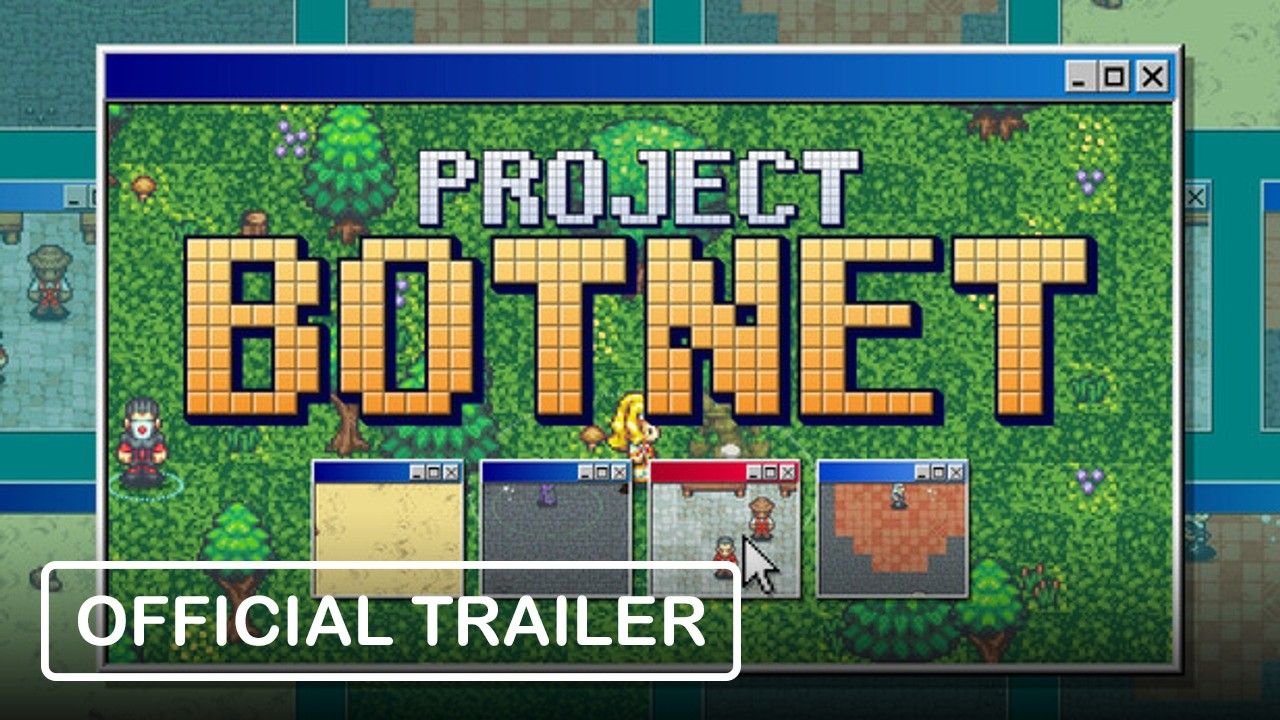
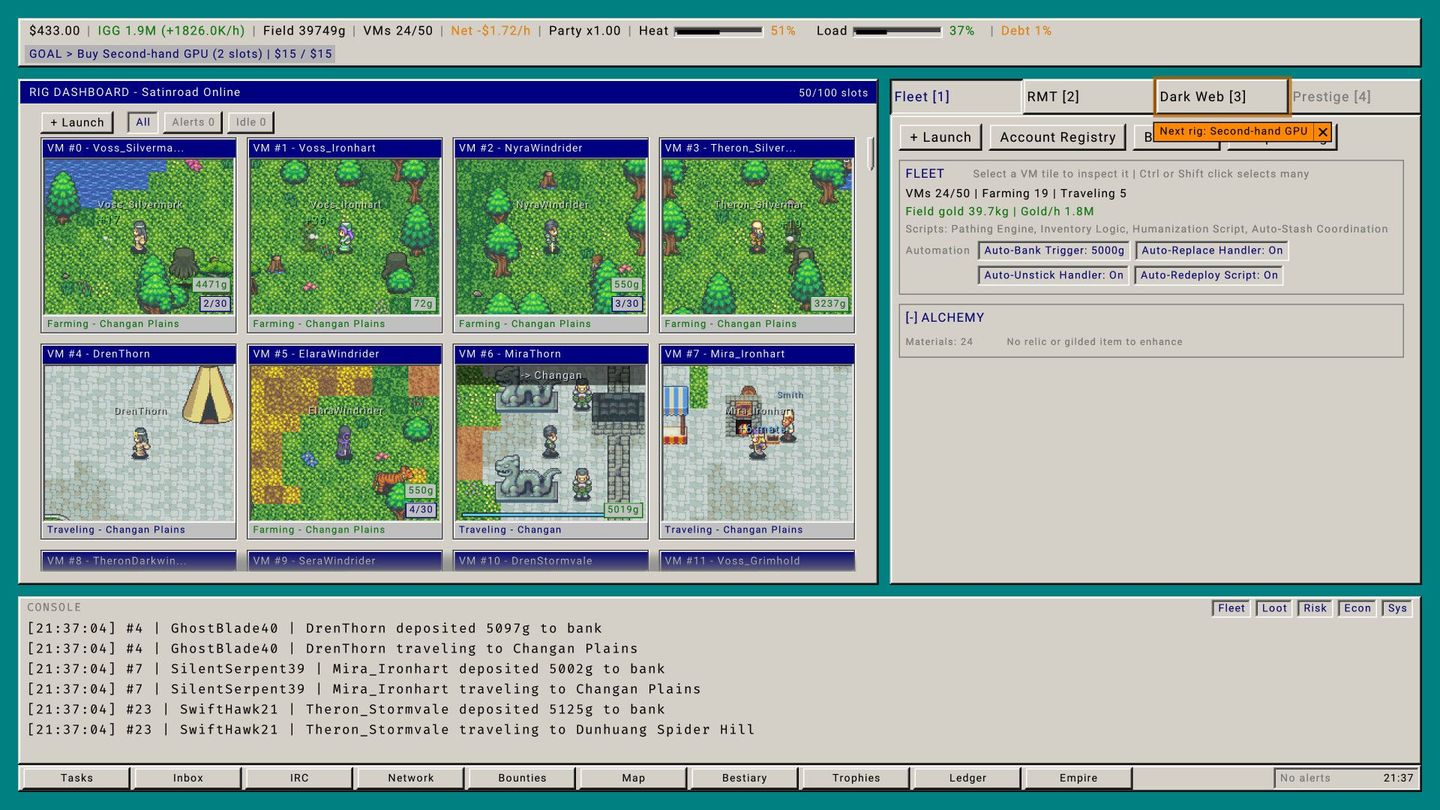
Each tile in your rig is a tiny live window into Satinroad Online. Bots fight, loot, level, and sometimes do the kind of dumb AI things you expect - like getting stuck on scenery or homing back to town to bank. There is a Bot Cam you can open to watch relics drop or a cart collapse into a mob of respawning enemies. Those moments make the idle loop feel alive instead of purely numerical.
Because the clients are visible, the game mixes passive management with low-key voyeurism. You are both CEO and spectator, deciding when to intervene and when to let scripts handle it.
Sell the gold, buy better scripts
Gold is the raw output, and trading it to whales for cash is the engine. You have to time sales before the market crashes, and then spend proceeds on upgrades from the Dark Web: bigger rigs, cleaner proxies and smarter scripts. Upgrades change playstyle more than pace - a better script can automate babysitting while proxies reduce heat generation.
That economy loop - farm, sell, reinvest - is classic tycoon territory, except here the reinvestment options feel morally grey by design. It is a system that rewards planning and risk tolerance.
Stay under the GM's radar
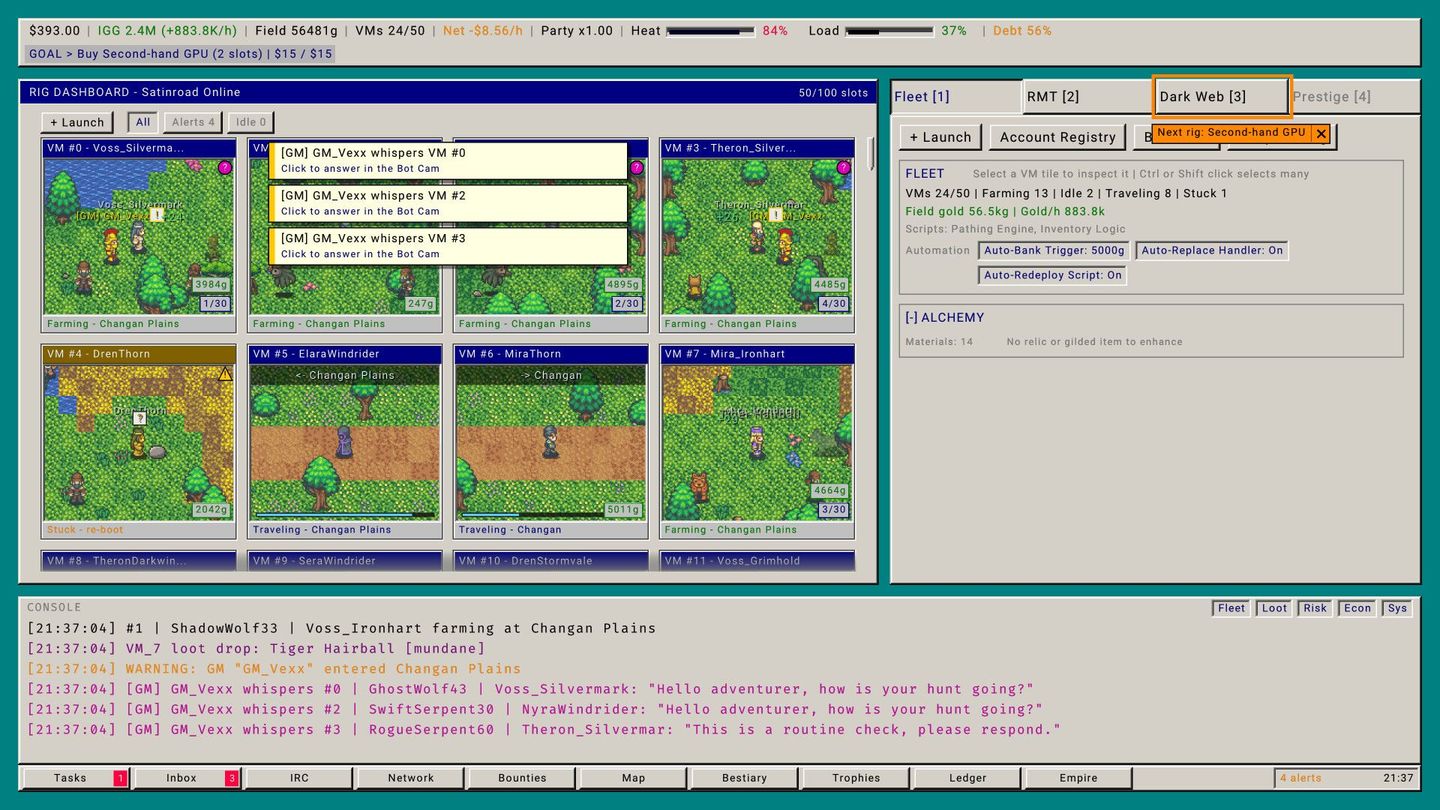
Heat is the primary counterweight. Loud bots trigger attention. GMs whisper accounts, patches break automation, and ban waves can wipe whole rows of VMs. You humanize behavior, rotate proxies and sometimes "pull the plug" to avoid cascading losses. The tension between expansion and stealth is the game's main strategic heartbeat.
Managing detection risk makes each choice matter. Do you squeeze one more VM into a rack for extra short-term profit, or do you scale carefully to survive the next sweep?
Scale to a syndicate
Progression moves you from a bedroom PC to a warehouse rack with dozens of VMs. You can run caravans across multiple zones and corner pieces of the in-game economy like the auction house. When a server's economy collapses, the answer is relocation: start over on a fresh server and take what you've learned.
The scale feels satisfying because each tier adds new systems to juggle without changing the core loop: farm, launder, upgrade, repeat.
Visuals, tone and why it works
Project BOTNET balances a gray, criminal premise with a cheeky management game tone. Satinroad Online is explicitly fictional, and the game reminds players that real botting gets accounts banned; here the stakes are virtual VMs. The art and UI lean on retro desktop vibes and compact, readable windows so you can absorb a lot of information at a glance.
If you enjoy idle tycoons that trade pure number-crunching for a theme that injects personality into every upgrade and failure, Project BOTNET looks like it will scratch that itch.