
MARSTEAD Drops You on Mars With Three Survivors and a Lot to Fix
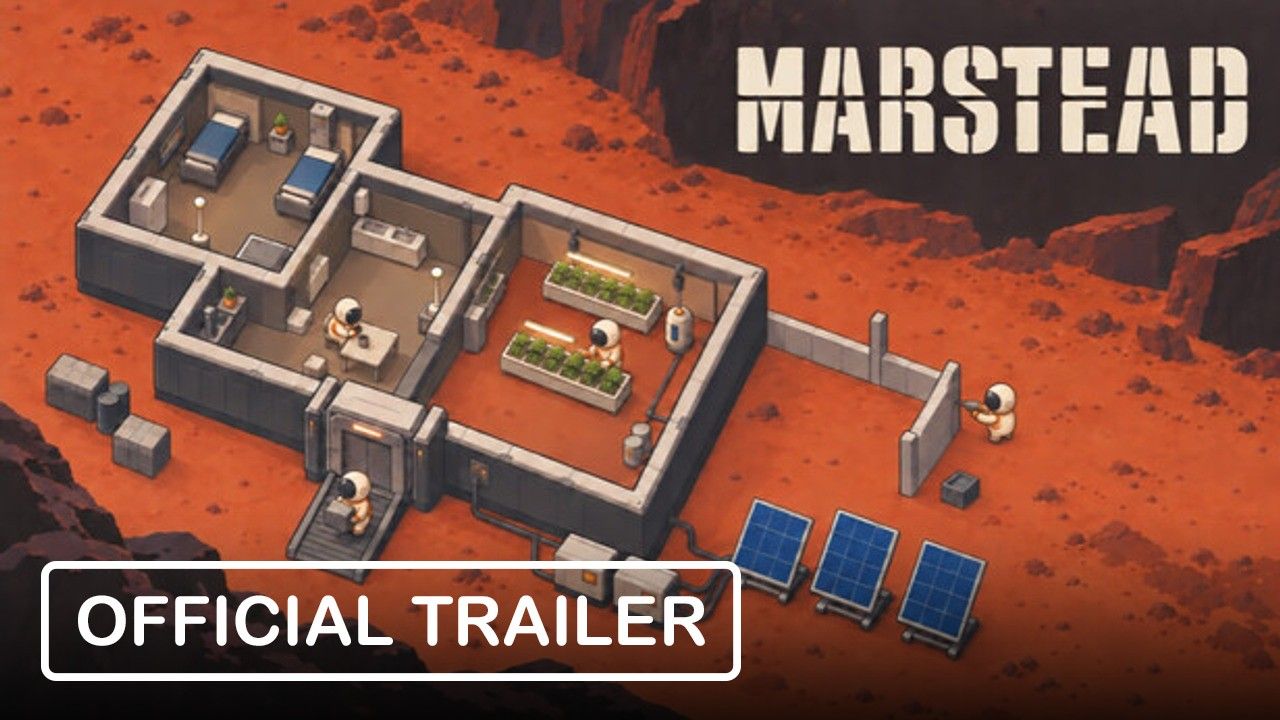
MARSTEAD is a colony sim that throws you into the aftermath of a transport ship crash. You begin with three colonists and three escape pods, and the immediate task is brutally simple: keep people alive. That means establishing shelter, a working life support system and a reliable food supply while you scrape together the tech and materials to expand.
The demo covers your first 10 sols. It lets you save and load, and gives you the option to start again so you can experiment with priorities without committing to a doomed run. What stands out is how the game ties hard systems to human stories. Colonists have professions, traits and relationships. Their moods matter, and so do the quiet choices you make about who does what and when.
Life Support, Power and Pressurized Rooms
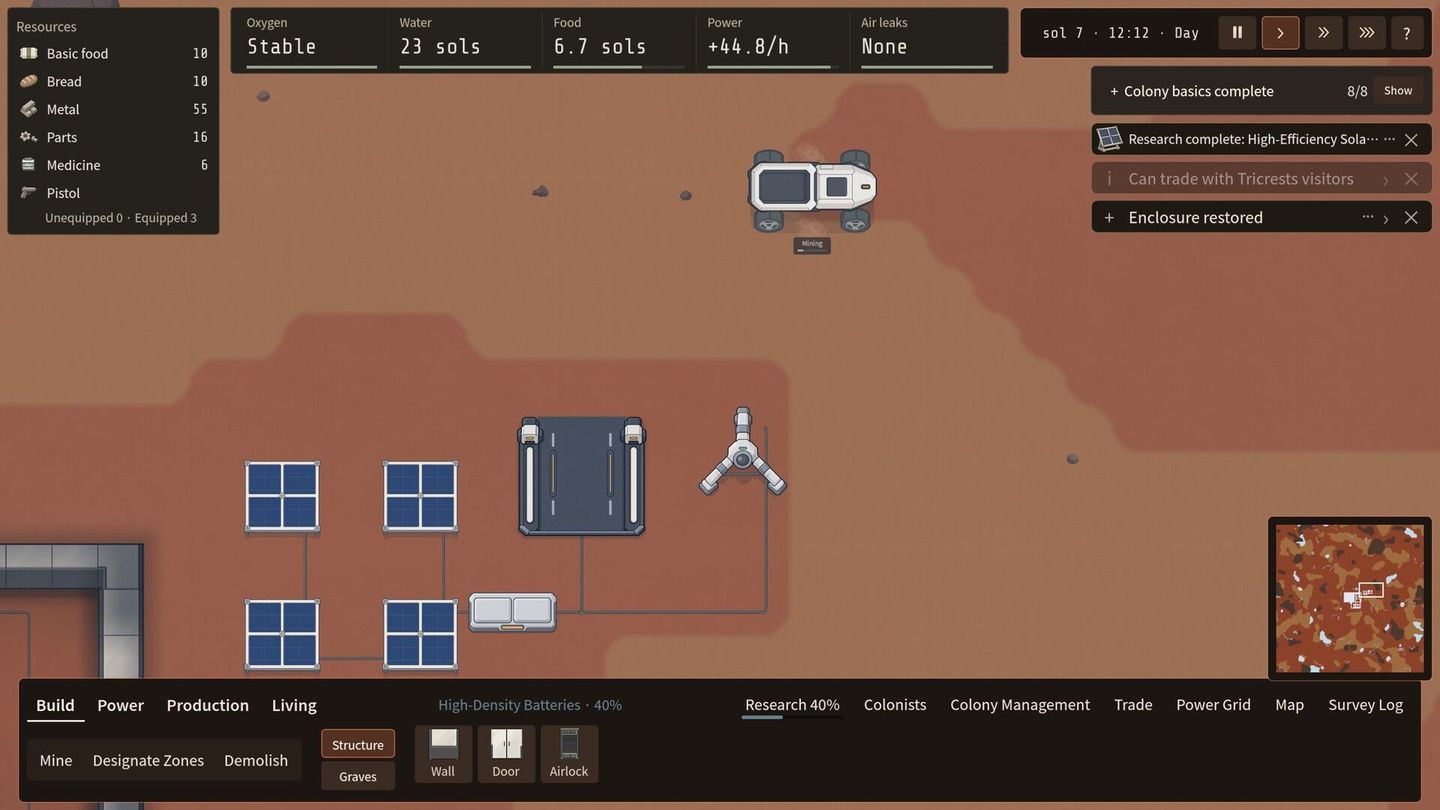
Survival in MARSTEAD hinges on atmosphere, water and electricity. You build enclosed rooms with walls, doors and airlocks, then pipe in oxygen and water. Water is multifaceted. It is for drinking, for oxygen production, for farming and for cooking. Balance is everything.
Power starts with solar panels and batteries. As the base grows you will expand generation and learn to keep reserves for things like cold snaps and dust storms. Broken gear and leaks are not abstract events. Colonists must fix them or services will stop. Those repairs turn into tense moments when a single failure can cascade into multiple problems.
Growing, Cooking and Caring for People
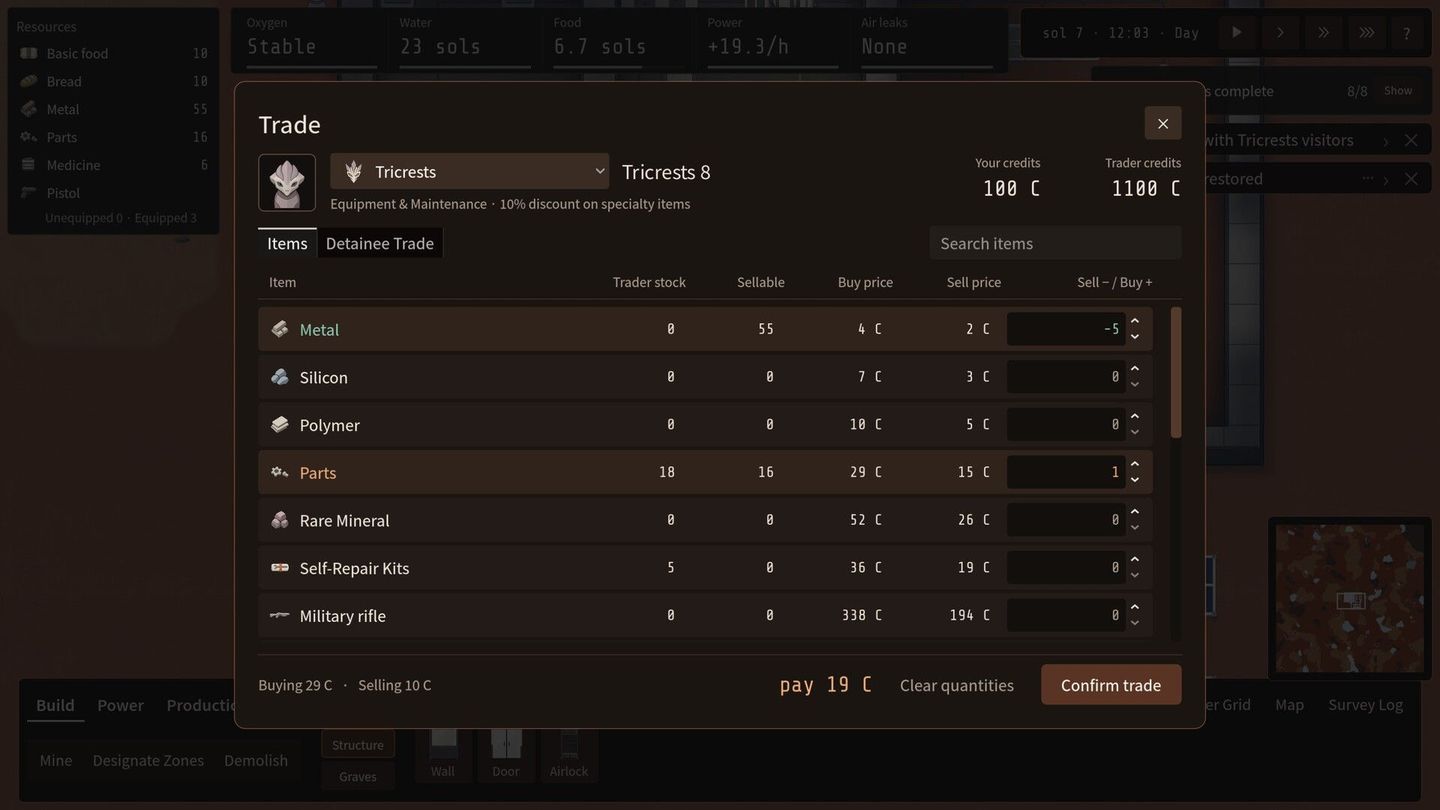
Farming in MARSTEAD is straightforward but meaningful. You plant rice, wheat and potatoes and manage colonists who sow, water and harvest. Crops feed the kitchen, which can turn raw produce into porridge, rice, bread, baked potatoes and stew. You can tell the kitchen to maintain a target stock of meals or to produce fixed orders. The game encourages planning ahead rather than blind expansion.
Health and personal relationships layer on top of the mechanics. Colonists improve skills through work, develop friendships, romances and rivalries, and those bonds affect morale. Illness and injuries require rest and medical care. You can manufacture medicine, use medical beds, and even help injured visitors recover before they leave. Managing people is as much a part of survival as managing oxygen.
Mining, Manufacturing, Trade and Defense
Resources are physical objects in the world until your colonists carry them to storage. You set up shelves, storage zones and production facilities. Smelting and processing convert raw materials into parts and equipment. Production runs require materials, power and an assigned worker, so supply chains feel tactical.
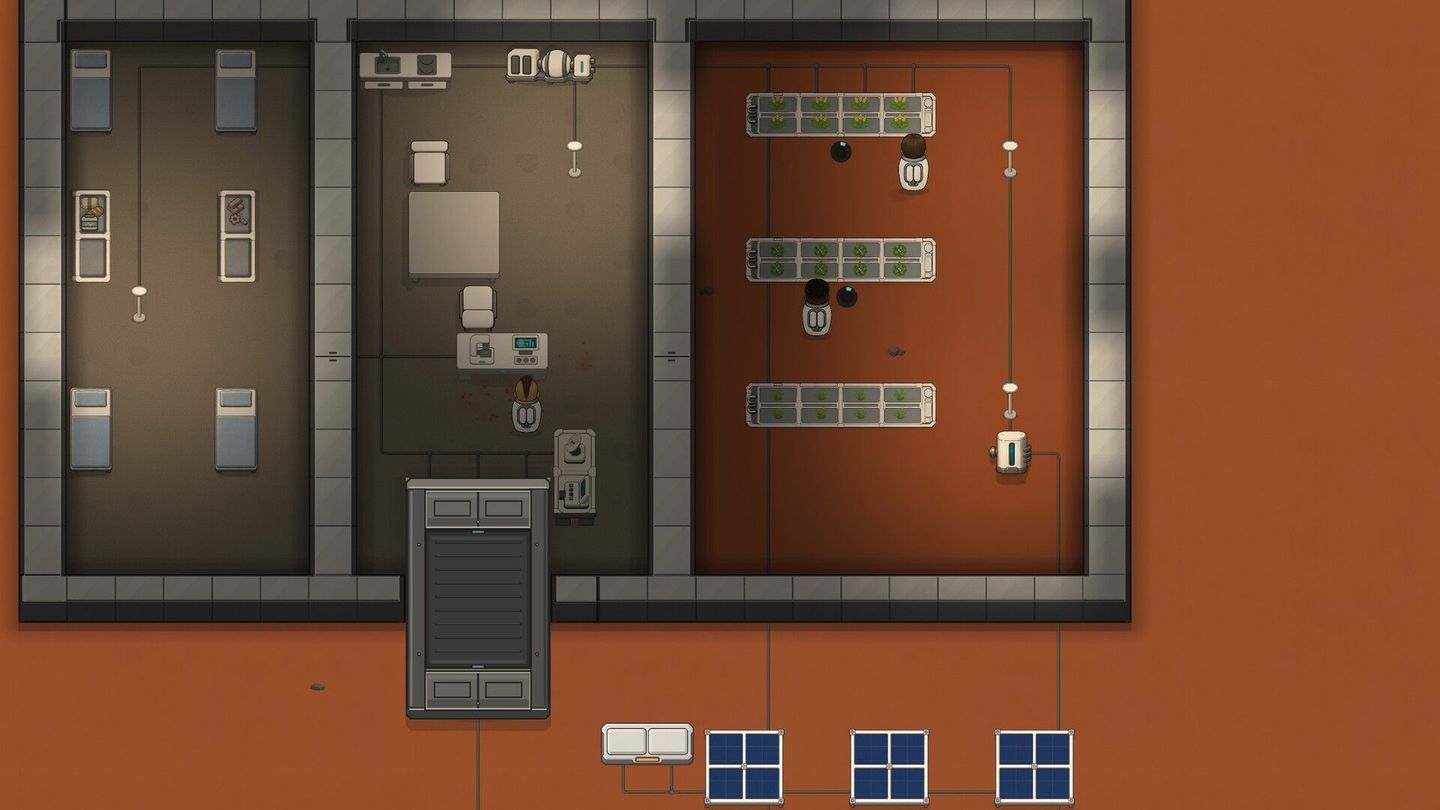
Radio contact unlocks visitors and traders. MARSTEAD populates Mars with traders, government troops, deserters and alien species. There are five alien species with different specialties and buying habits. Trade becomes a tool for getting food, medicine, parts or technology, and your interactions shape relations with factions.
Hostile encounters are on the menu too. You can arm colonists, build turrets and research security robots, mortars and eventually missile launchers and their ammunition. Combat matters tactically and logistically. You need to watch firing ranges, obstacles and friendly positions, and the wounded must be treated afterward. Captured enemies can be taken into custody and potentially recruited through conversation.
Research, Rovers and Long-Term Projects
Research spans life support, industry, power, defense, suit tech and planetary science. Advancing tech unlocks suit modules, precision manufacturing and new facilities. Later in the full game you can use scanners to locate buried ruins and send rovers to mine deposits. Rovers bring cargo back to their docks, and ancient documents or artifacts you recover can fuel research or be sold to traders.
Long-term projects are the real endgame goals in the full version. You can gather materials for terraforming facilities that change atmospheric pressure, temperature, oxygen or biomass. Alternatively you can prepare a return to Earth or plan a voyage to another planet. Each project has stages, material needs and operating facility demands. When you finish preparations you choose if and when to take the final step that ends that particular settlement story.
Demo Details and Difficulty
The demo covers the first 10 sols and includes saving and loading so you can refine your approach. It focuses on establishing shelter, basic life support, food production and working toward radio contact. The full game continues beyond this window with deeper research, larger constructions and the long-term projects described above.
MAP seed based maps and three difficulty settings Calm, Standard and Harsh let you tailor how punishing the environment and faction placement are. That gives players room to learn the systems before committing to tougher runs in the full game.
MARSTEAD looks like a careful, system-rich colony sim that balances hard survival mechanics with character-driven management. The demo is a good way to feel out the pacing and priorities before the later technological and planetary-scale ambitions arrive.