
What if the surface of your canvas was not paper or fabric, but water?
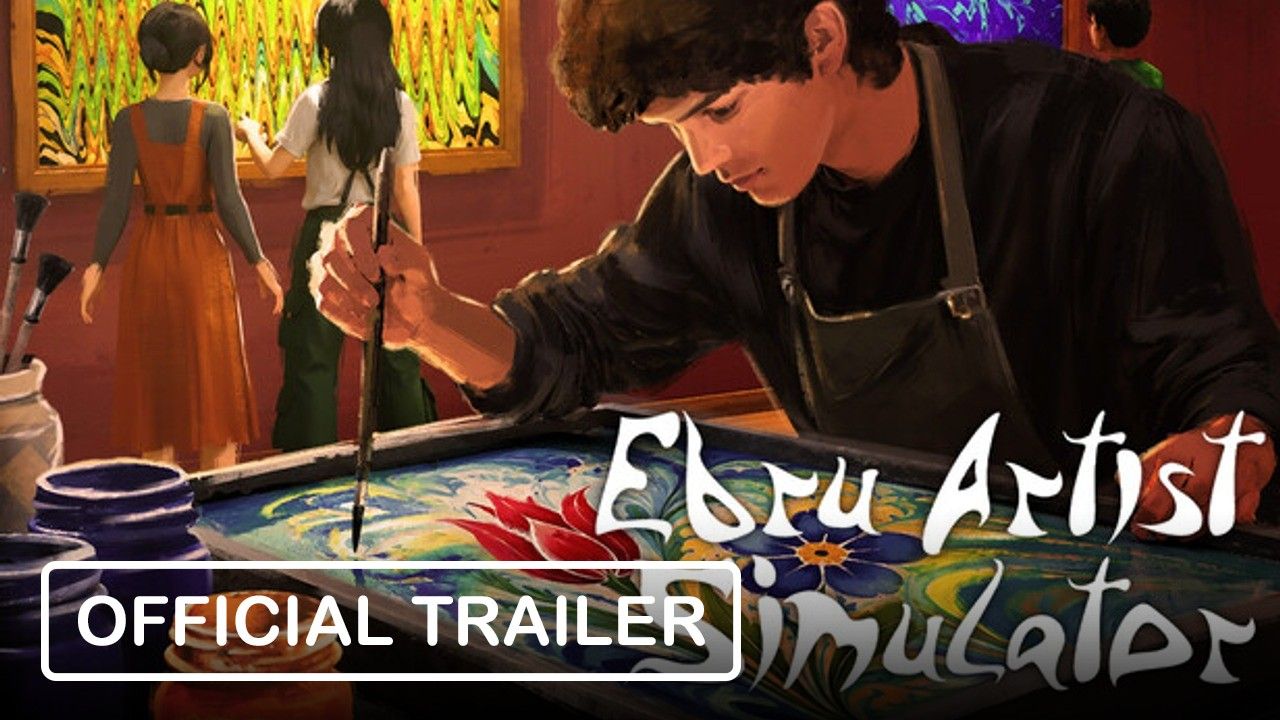
That is the idea behind Ebru Artist Simulator, a cozy art and workshop simulation game from Stillwater Studio. Inspired by the traditional Turkish art of Ebru, also known as paper marbling, the game combines a physics-driven painting system with crafting, customer commissions, workshop management, exhibitions, and long-term artistic progression.
At the center of it all is Ebru itself.
The centuries-old technique involves applying pigments to the surface of water, where the colors float rather than immediately mixing together. Artists then use tools such as needles, combs, and rakes to push, stretch, and shape those pigments into elaborate patterns before transferring the finished composition onto paper.
It is a process that can produce remarkably intricate results from relatively simple movements, and Ebru Artist Simulator is built around recreating that sense of experimentation.
Painting Directly on Water
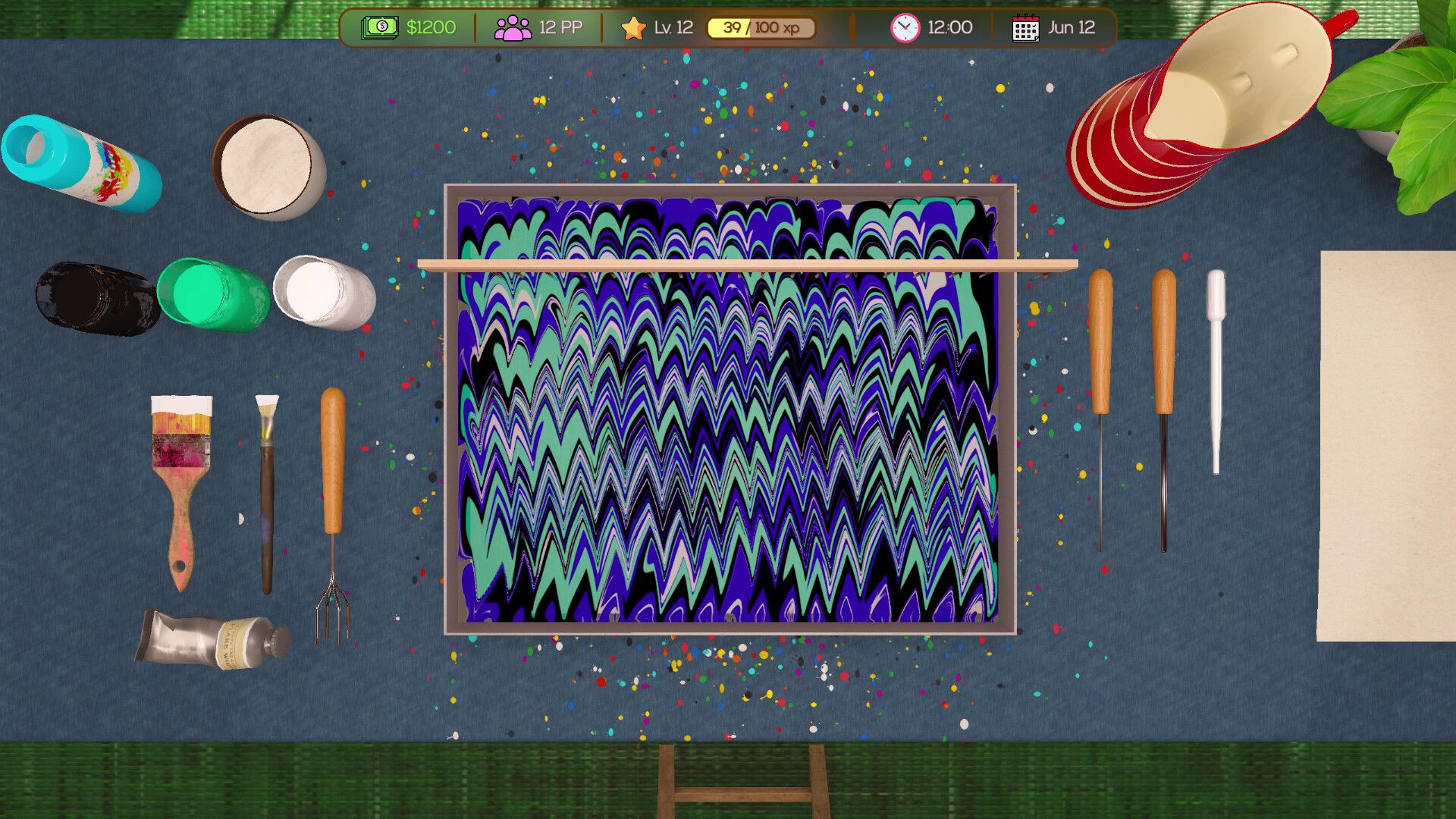
Rather than asking players to choose finished patterns from a menu, Ebru Artist Simulator gives them direct control over the painting process through a real-time physics system.
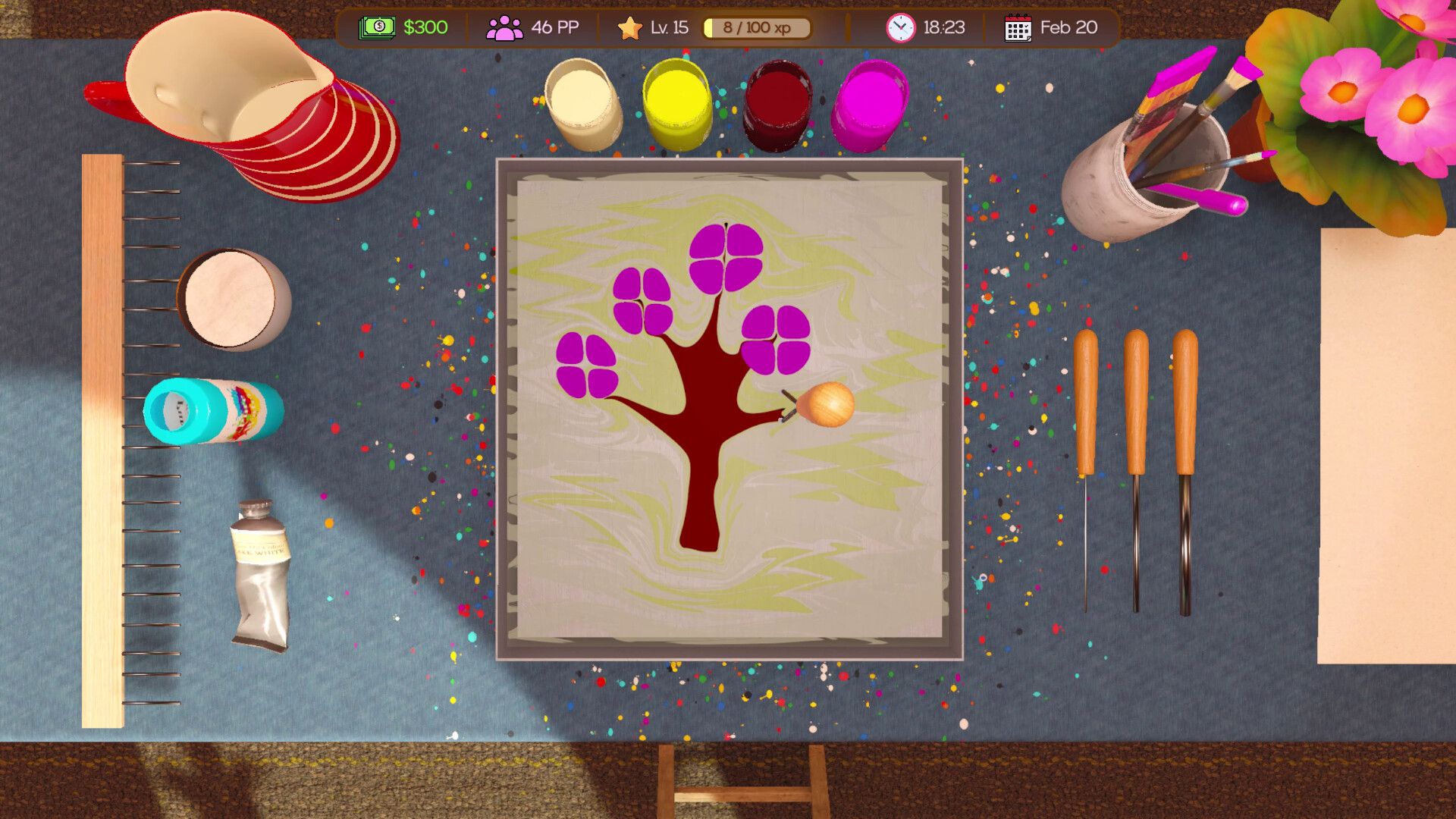
Colors can be dropped onto the water and manipulated across its surface. Players can pull pigments in different directions, stretch them into new shapes, combine colors, and use traditional tools to transform simple droplets into increasingly complex designs.
The important part is that paintings are created through interaction rather than selection. The exact result depends on the colors, tools, techniques, and movements used along the way.
That should give each piece a more personal feel, particularly for players who enjoy creative games where experimentation matters more than finding an optimal solution.
There is no need for every painting to look the same, and that appears to be very much the point.
Build and Customize Your Own Tools
Creating artwork is only one part of the experience.
As players develop their skills, they will also be able to craft and customize the tools used during the marbling process. Traditional Ebru equipment such as rakes and needles can manipulate paint in different ways, giving players more control over the shapes and patterns they create.
Learning how those tools interact with the game's water and paint simulation forms another part of the progression.
Instead of simply unlocking a stronger version of the same item, new equipment can potentially change how you approach a painting altogether. A different rake, needle, or technique may lead to patterns that would be difficult to reproduce by hand alone.
The result is a system that encourages players to keep experimenting, even after they have become comfortable with the basics.
Take on Customer Commissions
Of course, running an art workshop means eventually having to create something for somebody other than yourself.
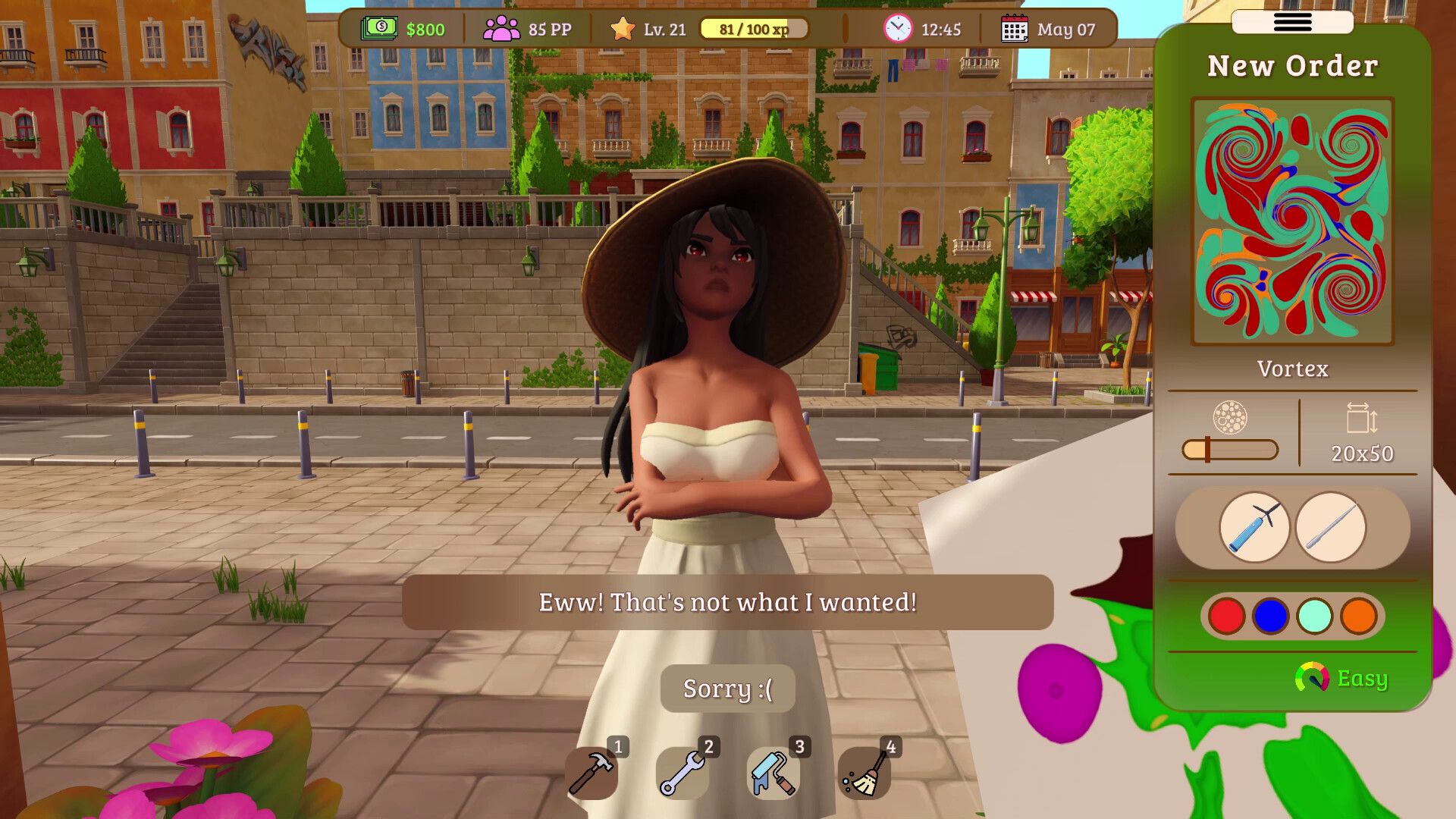
Customers will visit the workshop with requests for particular pieces, turning the game's freeform painting mechanics into creative challenges. Completing commissions earns money and improves your reputation, giving you the resources needed to continue developing both your skills and your studio.
It adds some structure to a game that could otherwise be entirely open-ended.
One moment you might be experimenting with colors simply to see what happens. The next, you could be trying to produce a piece that satisfies a specific customer request while still putting your own artistic touch on the finished work.
As your reputation increases, new opportunities and possibilities become available, gradually taking you from an inexperienced artist to a recognized Ebru master.
Turn a Small Workshop Into Your Own Studio
Your workspace grows alongside your artistic career.
The workshop can be expanded and customized with furniture, decorations, and other improvements, allowing players to shape the studio around their personal tastes.
That customization is not just about making numbers go up. In a game so focused on creativity, having a space that visually reflects the player makes sense. A modest workshop can gradually become a much more personal studio, filled with the tools, artwork, and decorations collected over the course of the game.
For players who enjoy the decorating side of cozy management games, it gives Ebru Artist Simulator another creative outlet beyond the paintings themselves.
Put Your Work on Display
Eventually, finished paintings do not have to remain inside the workshop.
Players will be able to organize exhibitions, display selected pieces, welcome visitors, and sell their artwork. It is a natural extension of the game's progression, turning paintings created during earlier stages of the game into part of a larger artistic career.
There is also something appealing about the idea of looking back at a gallery filled with pieces created through your own experiments.
Because the painting system is based around physical interactions with color and water, those works should function as a record of the techniques you discovered along the way, from early attempts to more deliberate and complicated patterns.
The ultimate goal is to grow from a beginner learning how pigments behave on water into a respected Ebru artist with a thriving workshop and a collection of work worth exhibiting.
A Different Kind of Creative Simulator
Ebru Artist Simulator looks aimed squarely at players who enjoy relaxing creative games, crafting systems, light management mechanics, and the freedom to experiment without being pushed toward a single correct solution.
Its subject also helps it stand apart.
Plenty of games let players draw, paint, decorate, or build, but paper marbling is a less familiar foundation for a simulation game. Even players who have never encountered Ebru before can use the game as an introduction to the basic ideas behind the traditional art form.
That mixture of cultural inspiration and hands-on simulation could be its most interesting quality.
At its heart, Ebru Artist Simulator is about putting color onto water and discovering what happens next. You add a pigment, watch it spread, move it with a tool, adjust the pattern, and gradually turn an unpredictable collection of shapes into something intentional.
Sometimes the experiment may produce exactly what you imagined. Sometimes it may create something completely different.
Either way, that unpredictability is part of the appeal.
Ebru Artist Simulator has been officially announced, and its Steam page is now live. Players interested in following its development can visit the store page and add the game to their wishlist.