
Close the Sky Puts Industry into the Gunsight
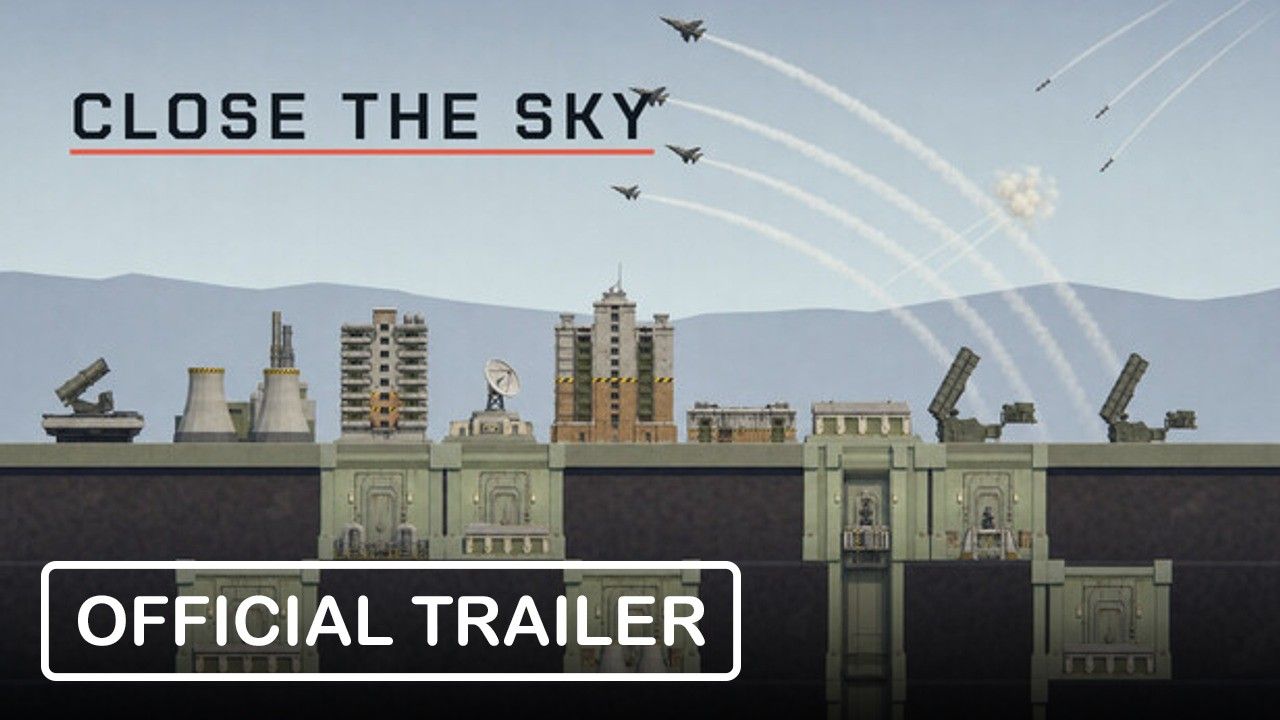
Close the Sky sets its battlefield across a single side-on cross-section. There is a sky above and a strip of ground beneath it. You run a nation's war machine from that one view: factories, warehouses and batteries on the surface, everything valuable dug in below. The enemy mirrors you, and both sides rebuild, research and fire in real time.
This is not a unit-management sim. There is no front to take. Success comes from protecting what matters, making smart strikes, and keeping your nation's will to fight higher than the opponent's. You will dig, you will build, and you will aim missiles yourself.
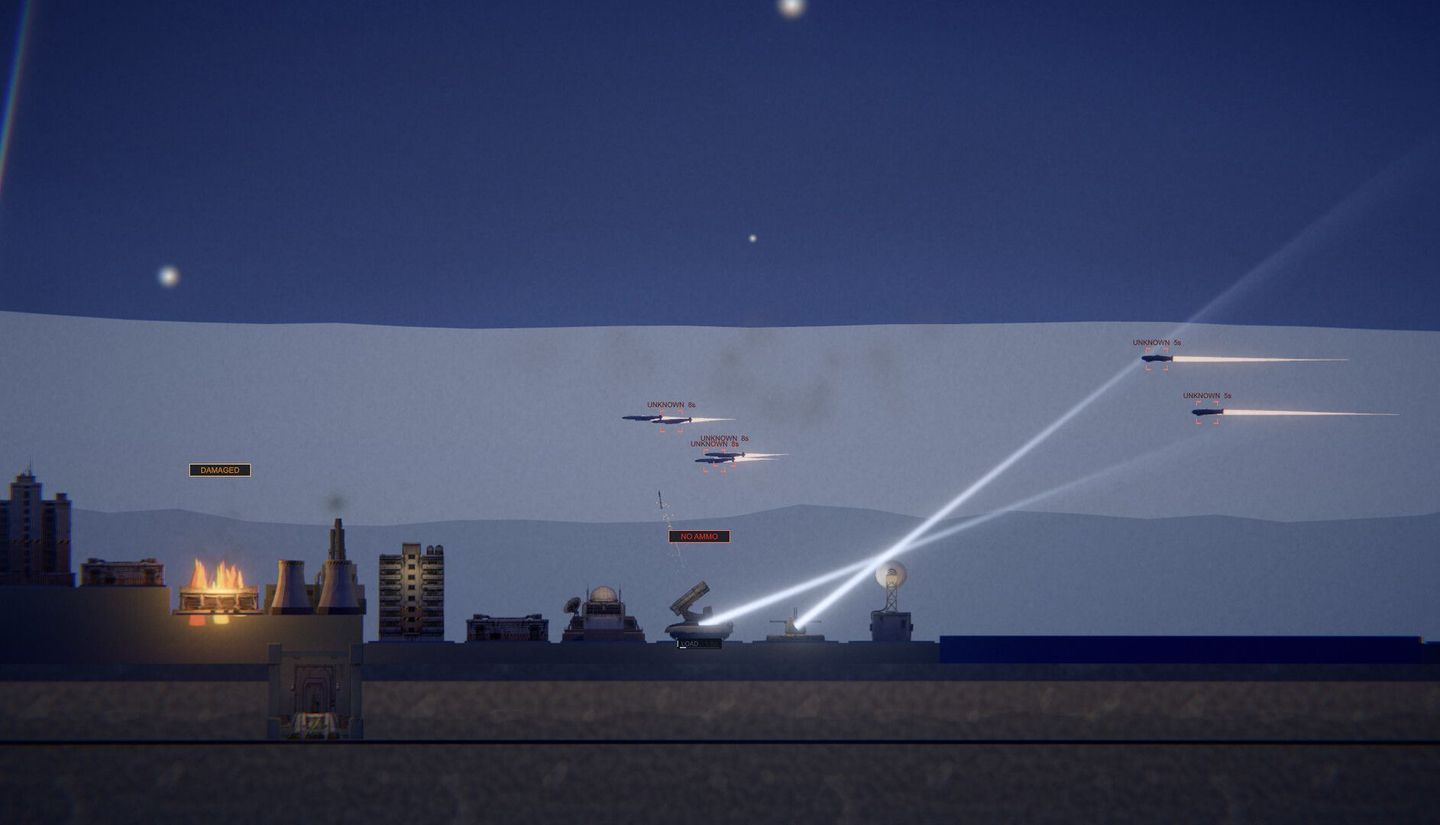
A Side-On Battlefield
Every plot of land in Close the Sky goes three levels deep. Depth multiplies cost and time - x2, x4 and x8 - and only penetrating warheads can reach the deepest shelters. A GBU-57 is the sole conventional way into a deep bunker. That creates clear, brutal choices: what do you bury, and what must stand exposed?
Batteries and radars cannot be buried at all. They need line of sight to the sky, which makes the things that keep you alive the very things that must remain visible. That trade-off is the game's heartbeat: put your economy underground and shield it as best you can, while accepting that your air-defence nodes will be targets.
Interceptors Are Ammunition
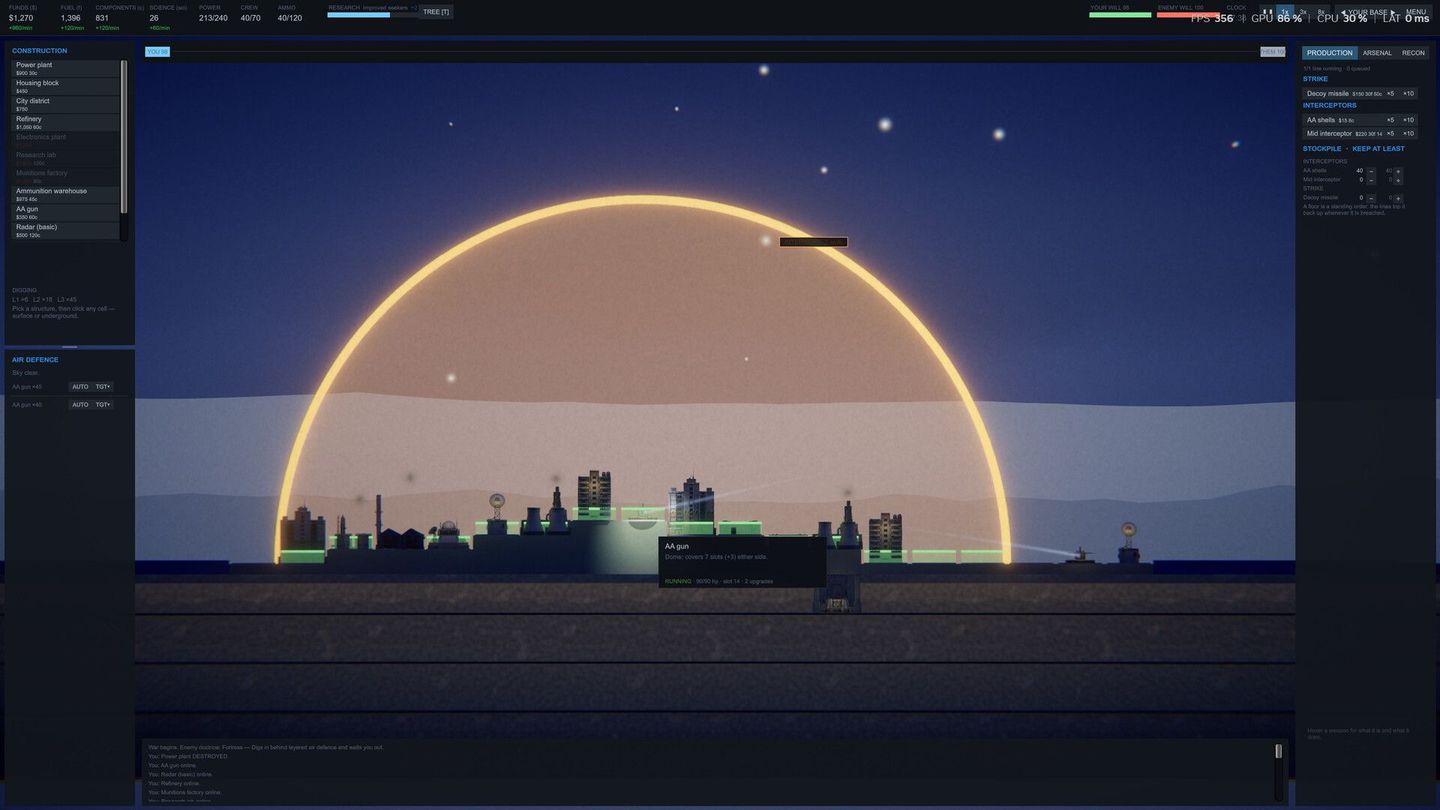
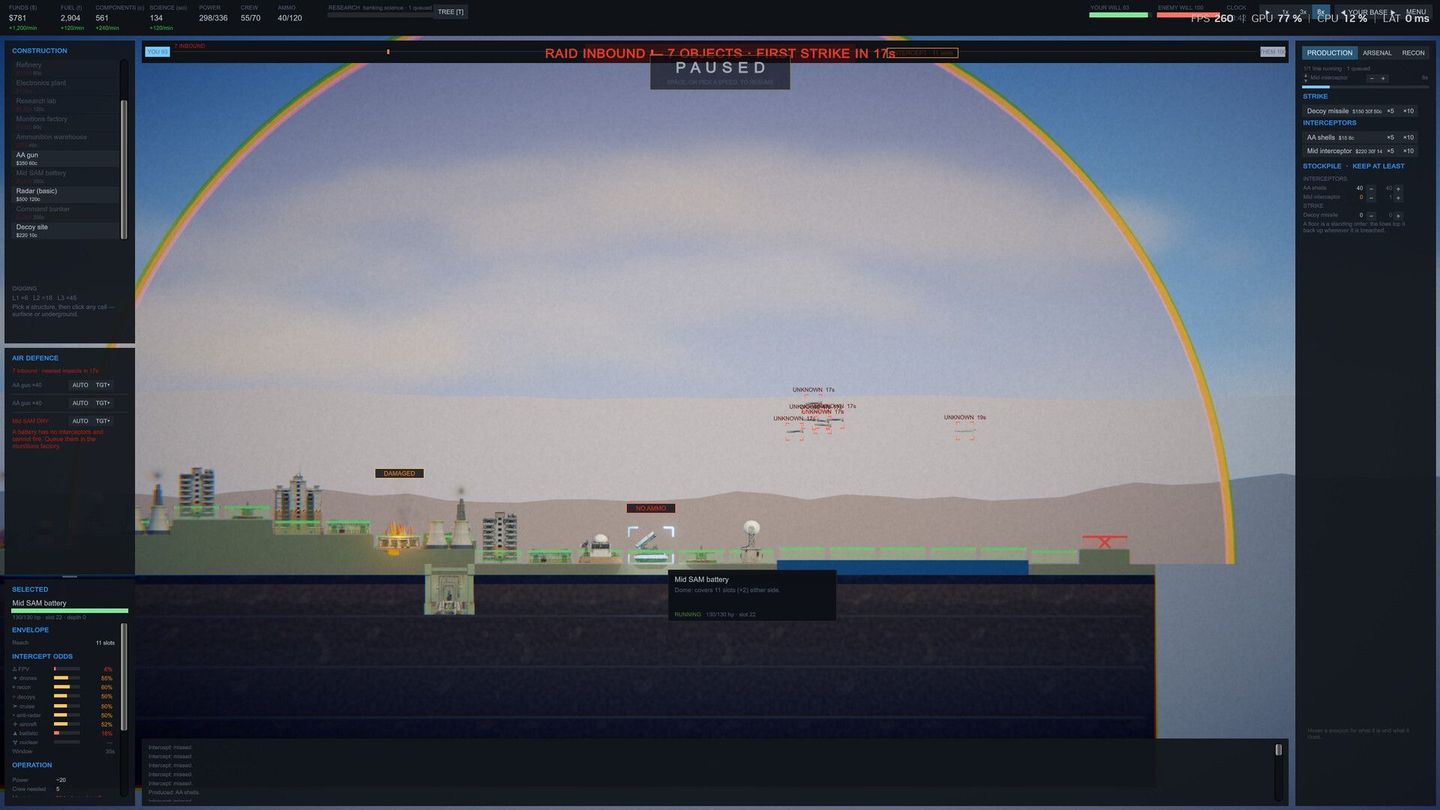
Close the Sky treats interceptors as stockpiled ammunition. SAM sites fire from a national warehouse, and a site with nothing on the shelf is just scenery - the air-defence panel will mark it DRY in red. Every round you produce uses warehouse space. Different munitions consume different crate counts: a shell is one crate, a ballistic missile five, a nuclear warhead ten.
Production lines are fragile. A line that finishes a round with nowhere to put it jams at 100 percent and holds up everything queued behind it. And warehouses are themselves a weapon pointed at you. A depot that dies takes its stock with it and the stock goes off. Damage scales with how full the depot was - a full one reaches six slots either side and can chain-detonate other full depots it touches. Burying a depot halves its blast reach per level, which makes storage placement a tense design problem: next to a power plant invites catastrophe, across from the enemy invites victory.
You Fire at Cells, Not Buildings
Intelligence in Close the Sky is always a snapshot and it ages. The enemy base starts dark. Recon drones photograph cells they overfly and a satellite station sweeps on a timer. From then on you are working from that picture, which fades from white to amber as it goes stale. Strikes are aimed at places, not buildings - a missile impacts whatever occupies that cell when it arrives. That means stale intel costs you missiles, and decoys are a real threat.
Firing is hands-on. Arm a weapon, switch to their base, and the cursor becomes a gunsight: an aim box, blast footprint, what your intel believes is in the cell, the damage profile, and whether any battery you know about can engage it. Click to fire, and click repeatedly to saturate. It is tactile and unforgiving - you do the aiming, and that makes every shot meaningful.
Warheads are not interchangeable. Each munition carries a profile across four channels - structure, personnel, electronics and incendiary - reflecting its real-world role. A TOS-1A will gut a garrison and barely mark the walls. CHAMP burns out electronics without knocking much down. Weapons carry their real designations and full profiles are visible on hover, so choosing the right tool for a specific target matters.
Tech, Doctrines and How the Enemy Thinks
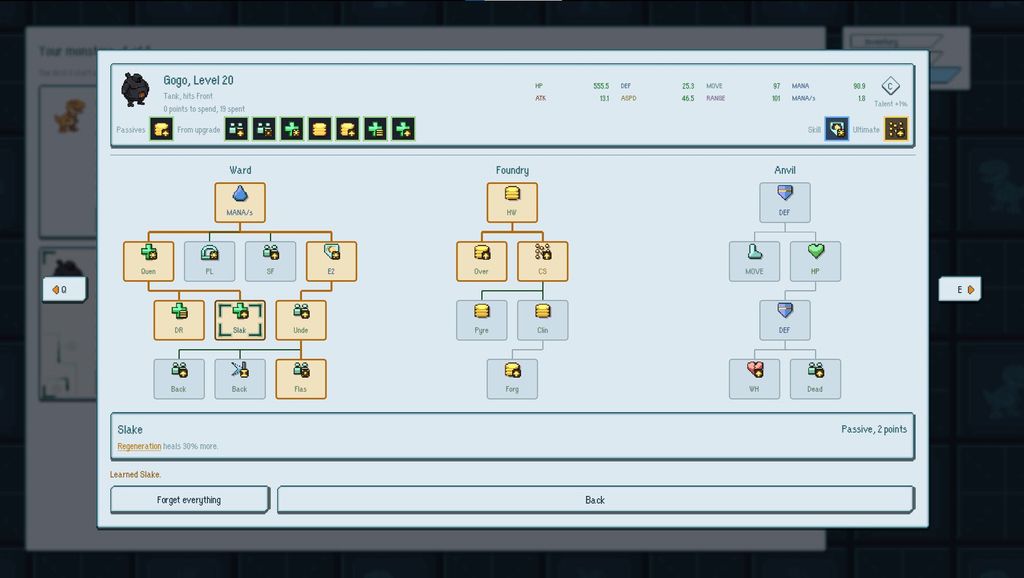
Close the Sky offers a full-screen tech tree with 51 technologies across detection, air defence, strategic, strike and reconnaissance branches. Hovering a node dims everything that is not one of its prerequisites, making research paths clear. Research halts if your labs lose power, so the domestic economy and grid are strategic too.
An opponent runs one of three doctrines, chosen by the match seed and announced in the log. Swarm floods the sky with cheap drones and wins on the exchange rate, Fortress digs in behind layered SAMs and waits you out, Blitz races to heavy missiles and hits before your defences exist. Difficulty alters only how fast the AI thinks - not the tools it gets. That predictability lets you plan around doctrine rather than arbitrary AI bonuses.
Multiplayer, Simulation Integrity and Victory
Multiplayer runs the same war against a human opponent. Each client runs the full simulation and only orders cross the wire, so play feels sharp even over a poor connection. The war clock is locked to 1x and every five seconds the clients compare a hash of their entire state to keep things honest.
You do not win by taking ground - there is none to seize. Victory is about will. Each nation has a will to fight that drains from civilian casualties, lost buildings and strategic target losses. The command bunker alone is worth 30 will. Nuclear weapons crater the opponent's will but dent your own, so escalation has real strategic cost.
Where to Look Next
If you like tight systems that force trade-offs between industry, detection and kinetic force, Close the Sky wears its rules on its sleeve. The game puts strategy into the mechanics of production, storage and targeting, and makes every decision have immediate, visible consequences. The developers also run a Discord for the project where players can follow development, discuss doctrines and share tactics.