
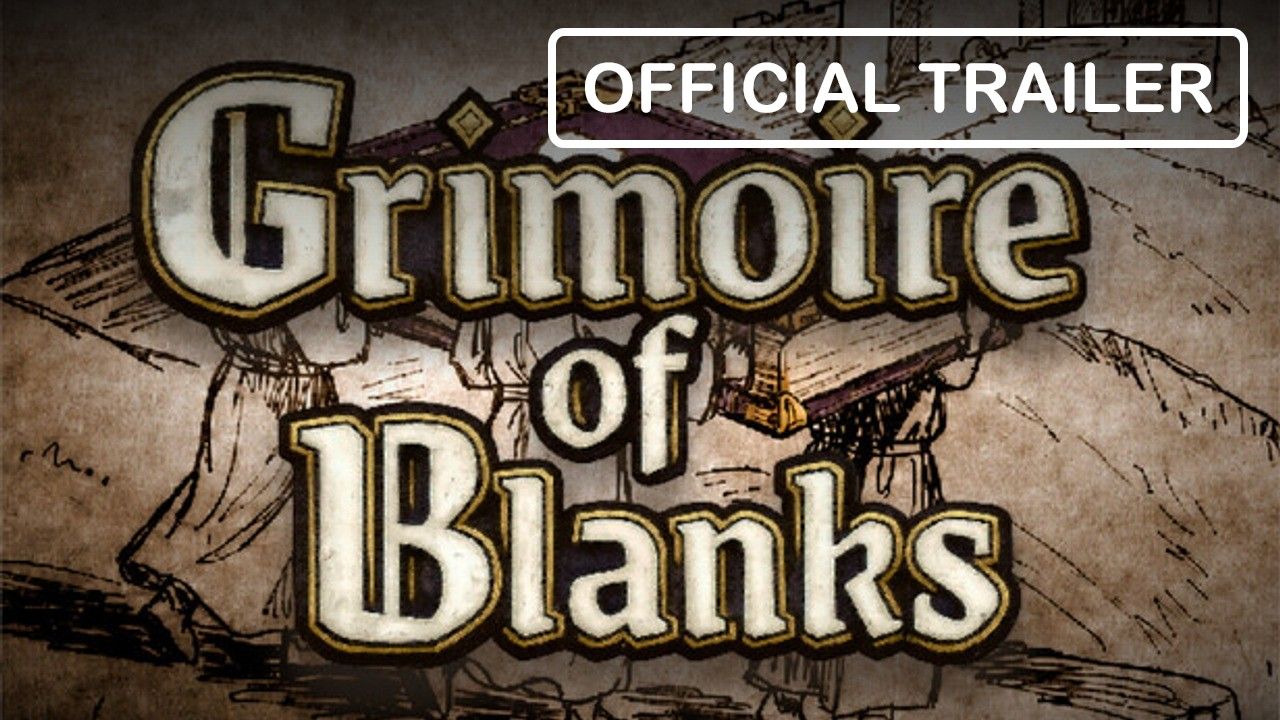
Grimoire of Blanks Puts a Pen in Your Hand and a Spell in Their Face
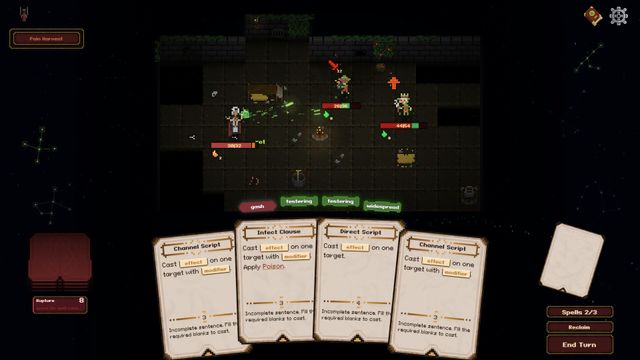
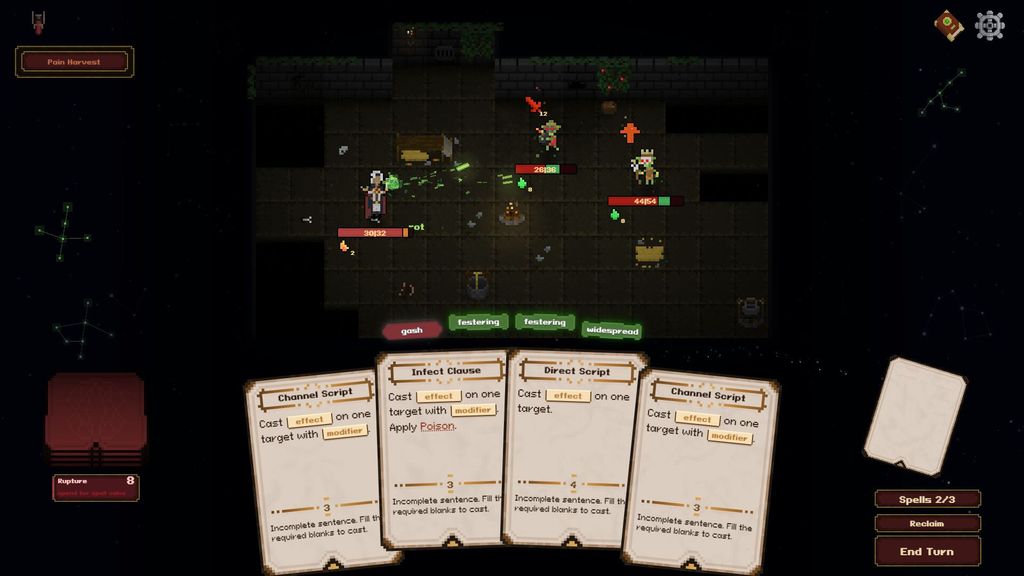
Grimoire of Blanks turns deckbuilding into creative danger. Instead of fixed card text, each spell is a sentence frame with blanks. You drag words from your hand into those blanks to decide how a spell behaves, who it hits, and what it costs. A tame spark can become a furnace, a delayed trap, or a forbidden rupture that extracts something in return. The thrills come from writing the magic and owning the fallout.
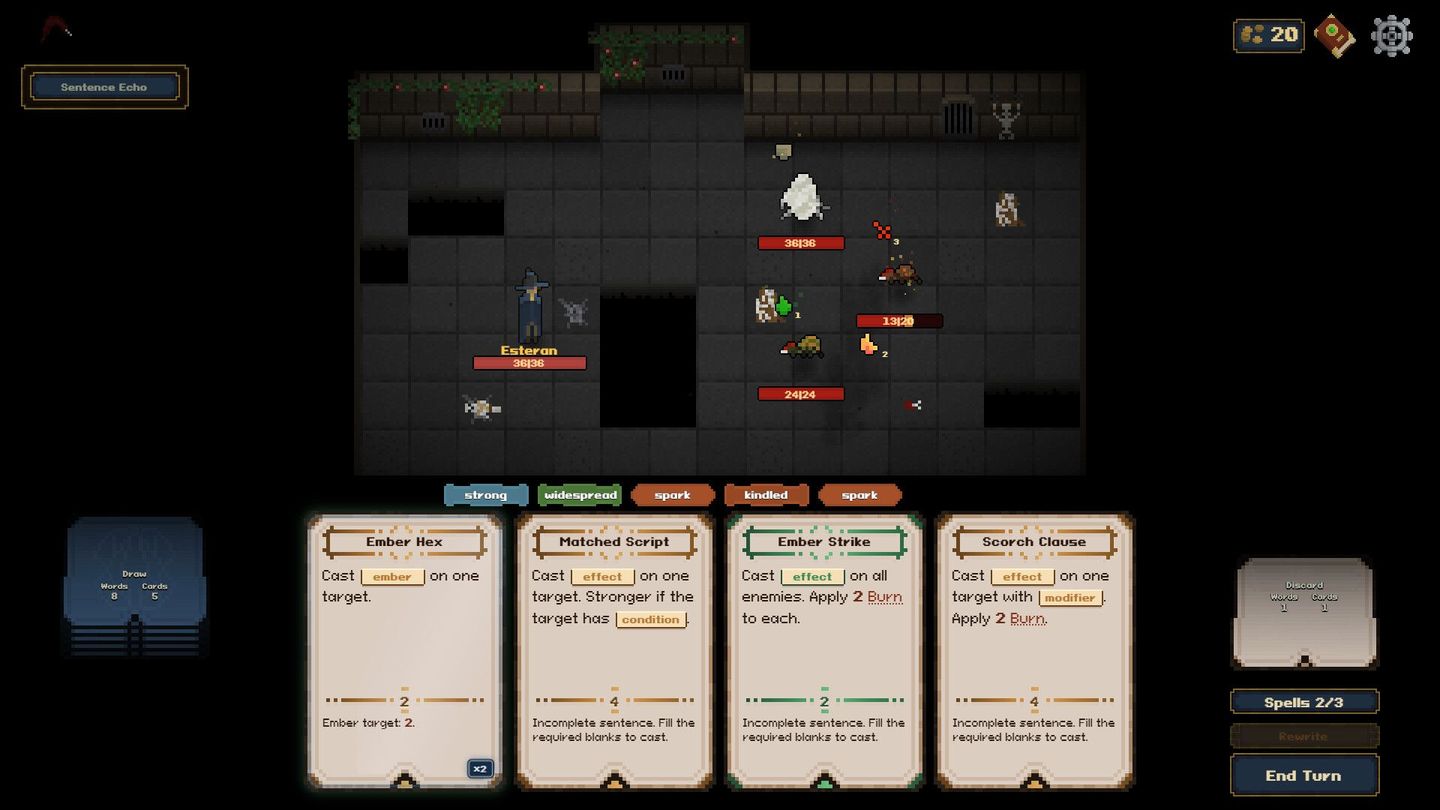
Write the Spell
Cards are not finished objects here. They are invitations. During combat you construct sentences by placing words into blanks. Effects, modifiers, conditions, and intent words can bend the same card in wildly different directions. The game shows a preview of what you are about to cast, so there is no mystery about the immediate outcome. The choice is the fun part: play conservatively and chip away, hold words to set up a trap, or push a card into reckless territory and watch the room regret it.
Words are the volatile resource. Some spells ask for health, hand discard, word erasure, or other tradeoffs. Those drawbacks can be the hook of a run as much as its hazard. Learning which costs become advantages is part of the craft.
Cast Alone or With Allies
Co-op is built into the loop rather than tacked on. Up to four players can run the ritual together, each choosing a class and building a personal spellbook. That means coordinated sentence design matters. One player might seal or freeze a target, another might apply punishment when that status triggers, while a third keeps the party alive and a fourth turns the setup into an explosive finale. The system rewards communication and role synergy as much as individual creativity.
Because every player controls their own words and cards, runs evolve into improvised choreography. You can specialize or deliberately overlap roles to explore strange team combos.
Choose Your School
Classes in Grimoire of Blanks shape your approach to the same sentence system. They give you direction without locking you into a single playstyle.
- The Scribe prizes repetition and word economy to milk damage spells over time.
- The Binder manipulates enemy intent with seals, traps, frost, and punishment loops.
- The Heretic trades life for explosive forbidden power and converts pain into fuel.
- The Starmage orbits moon phases, starlight, void, and astral payoffs.
Each class branches into subclasses, letting you push a run toward different strengths and eccentricities. Your school steers how you think about blanks and words; the words themselves decide how weird the run becomes.
Survive What You Wrote
Power comes with a price. Some spells cost HP. Others burn your hand, erase words, or leave behind junk that alters future choices. The best runs come from embracing tradeoffs and building around drawbacks before they destroy you. The game emphasizes learning which risks are worth taking and when to patch holes in your deck or your strategy.
Read the Ritual
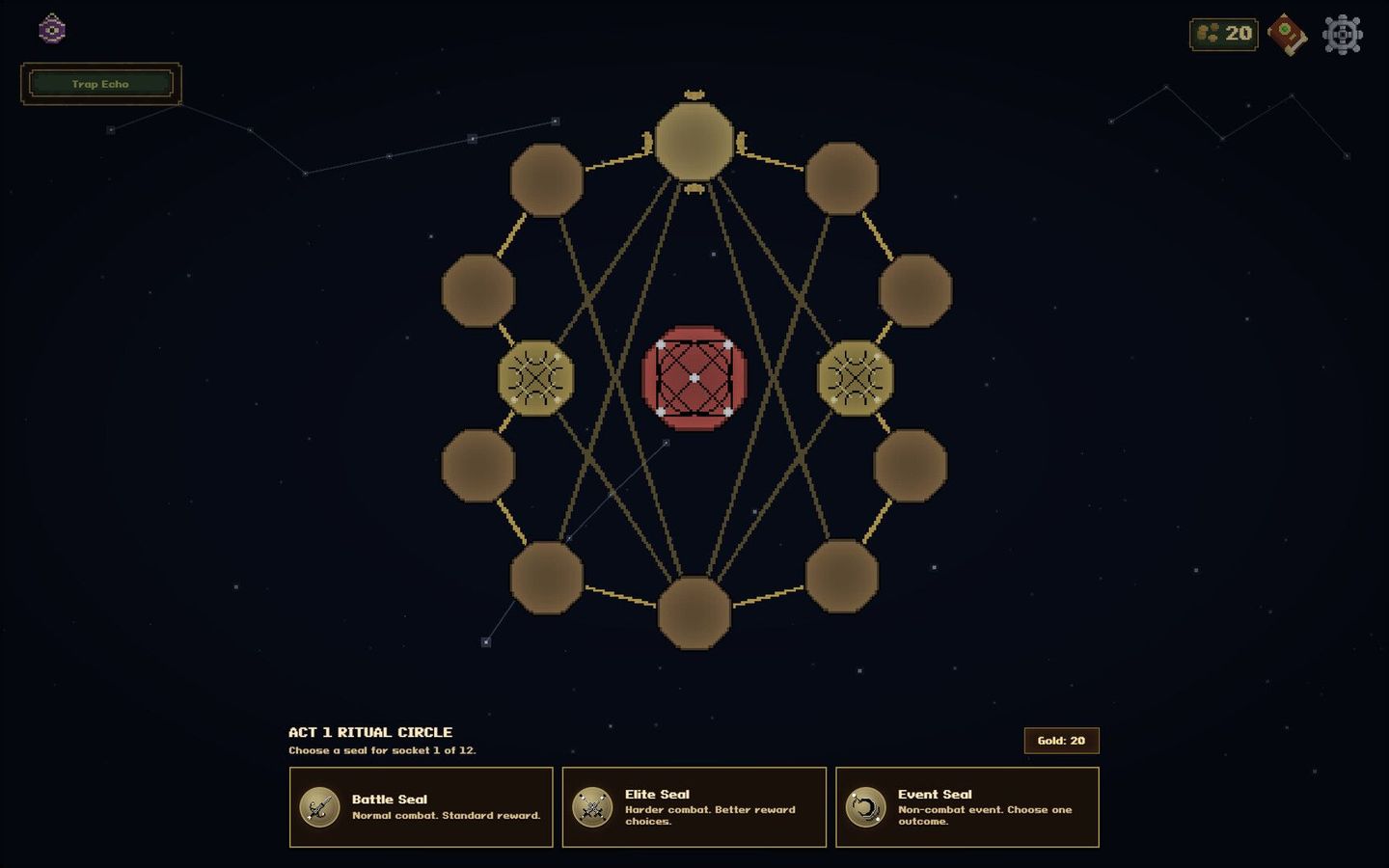
Between fights you pick the next seals to open. Paths through battle seals, elites, events, shops, upgrades, healing, and bosses define each act. This maplike choice structure lets you pursue upgrades, hunt for trinkets, or attempt riskier fights for stronger rewards. Manage your deck, cull poor words, and prepare your spellbook for the next room before the ritual closes around you.
Built for Different Runs
Grimoire of Blanks aims to support varied runs: solo or cooperative, four core classes with subclass branches, and a changing pool of spell cards, words, trinkets, events, shops, elites, and bosses. The combination of sentence crafting and roguelite progression promises high replayability. Whether you prefer precise setups that loop forever or theatrical, high-cost gambits that end in spectacle, the system encourages experimentation.
This is a game about authorship under pressure. It rewards players who think syntactically and strategically, and it makes each run read like a short, dangerous story.