
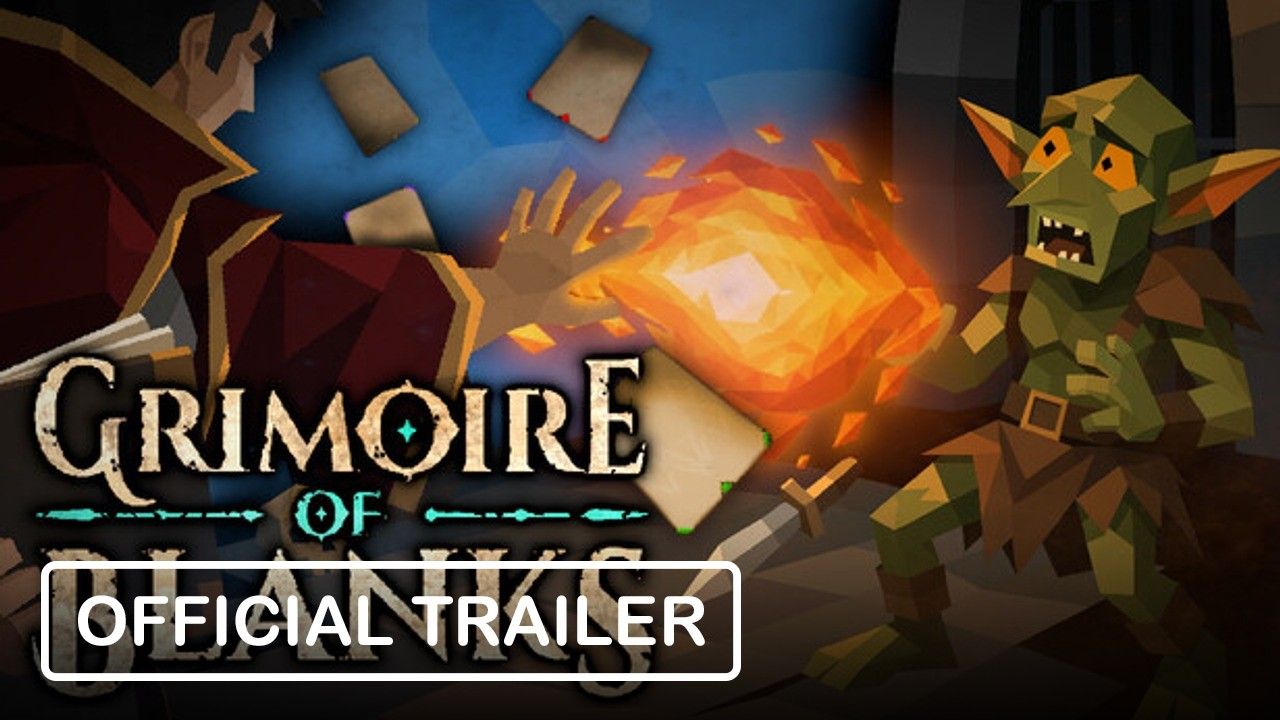
Grimoire of Blanks: Every Spell Is Unfinished
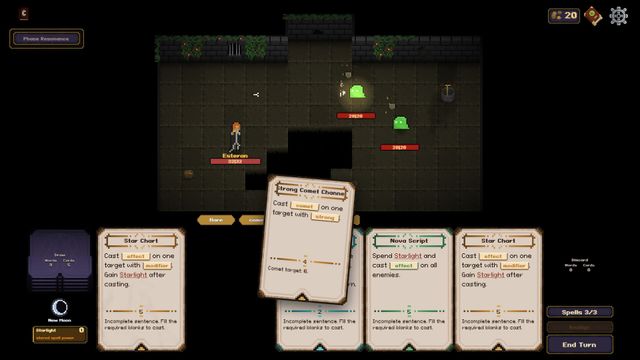
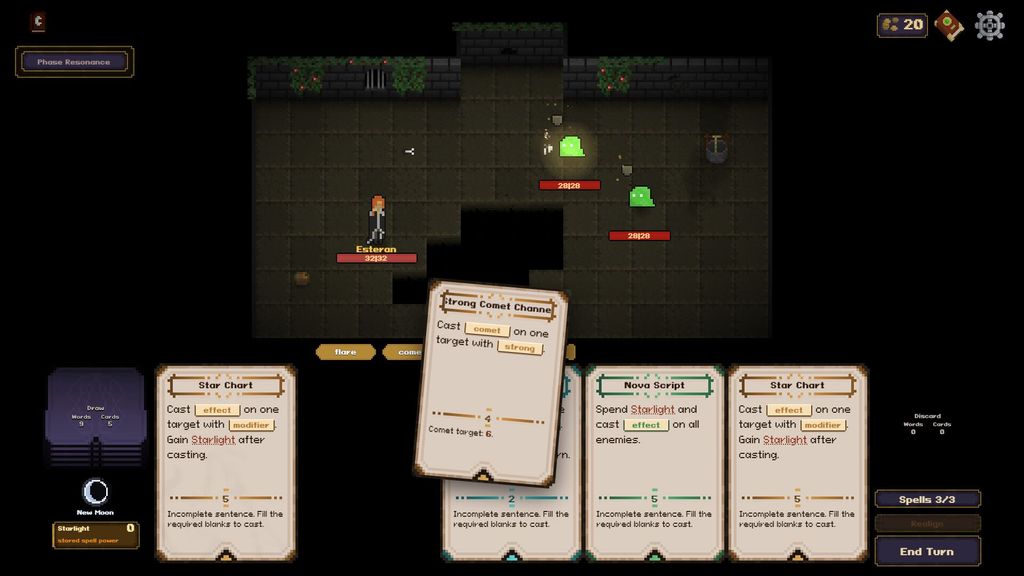
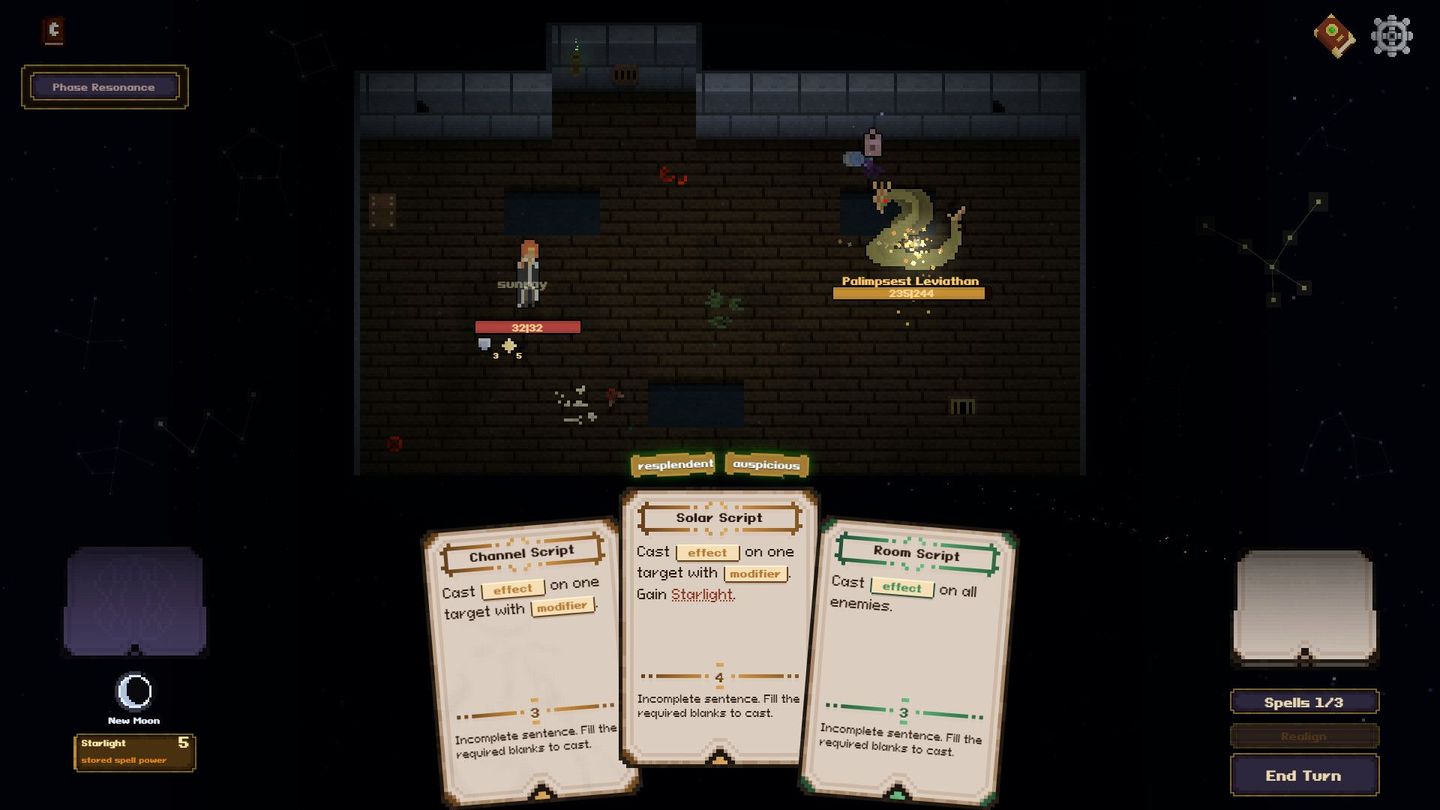
Grimoire of Blanks hands you sentence fragments and a handful of dangerous words, then asks you to make decisions that will ripple through a room. It is a roguelite deckbuilder built around writing magic into unfinished cards. During combat you drag words into blanks to decide what a card does, who it targets, and how far you are willing to push it. The preview shows the result, but the consequences come after the cast.
The core conceit is deliciously simple and surprisingly deep. The same fire sentence can become a neat single-target hit, a trap that waits for enemy intent, a room-wide inferno, or a forbidden burst that costs you dearly. That flexibility makes each round feel like a tiny creative test: be safe, set up, or go mad and watch the battlefield obey.
Write the Spell
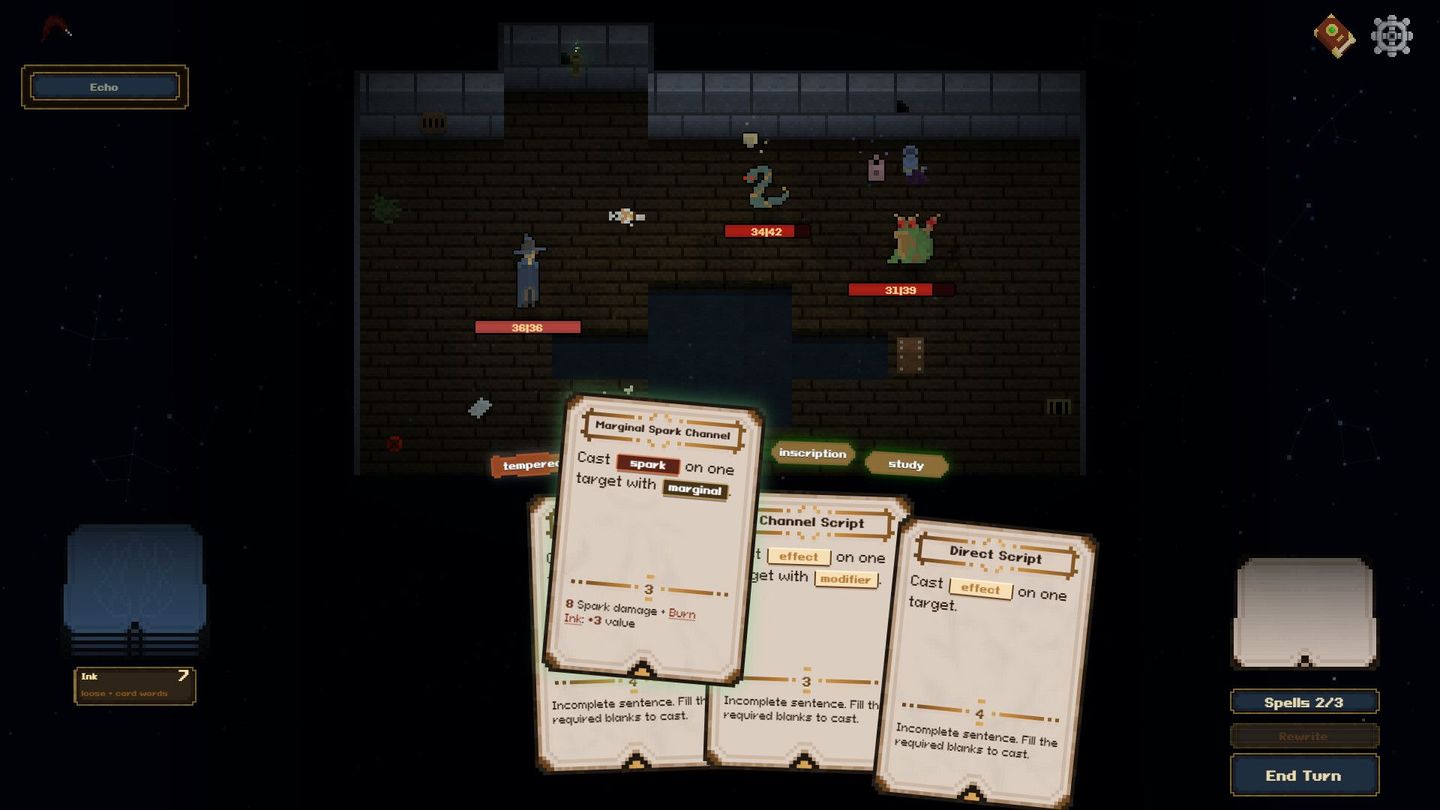
Cards in Grimoire of Blanks are sentence frames and your hand supplies the words. During a turn you assemble a sentence by dragging words into blanks. Effects, modifiers, conditions, and intent words interact to change a card's behavior. Intent words, for example, let you wait for or react to enemy plans. Modifier words reshape range, damage type, or side effects. The preview updates so you can see what you are about to cast, but it will not tell you whether the cost is worth it.
Magic has consequences. Some spells cost HP. Others burn through your hand, erase useful words, or leave behind junk you must manage later. There are forbidden phrases that spike power at a price. Learning to read a card's tradeoffs is as important as the words you happen to draw. Good runs come from making risky choices that you can live with, or from turning drawbacks into advantages.
Cast Alone or With Allies
Co-op in Grimoire of Blanks is not an afterthought. Play solo, or bring up to 4 players into the same run and make ritual-grade chaos. Each player builds their own spellbook and chooses a class. That means cooperative runs are about combining sentence craft rather than sharing a single hand.
Teamwork shines through macro setups. One player can seal or freeze a target so another can trigger punishments. Someone else might convert setup into protection, while a fourth turns everything into a catastrophic chain reaction. The system encourages role clarity and creative synergy, not flat multiplayer power scaling.
Choose Your School
The four classes change how you approach the same spell system.
- The Scribe focuses on repetition and word economy, wringing multiple uses from damage spells.
- The Binder manipulates enemy intent with seals, traps, frost, and punishment loops.
- The Heretic trades life for forbidden power, converting pain into fuel for massive effects.
- The Starmage orbits moon phases, starlight, void, and astral payoffs for delayed but dramatic returns.
Your chosen class sets a strategy direction. Your word choices determine how strange and effective a run becomes.
Survive What You Wrote
Power asks for payment. Expect spells that demand HP, exhaust your hand, erase words, or leave lingering penalties. The fun of Grimoire of Blanks is learning to accept, manage, or exploit those drawbacks. Late-game success often depends on sculpting your vocabulary and trinkets to turn liabilities into core mechanics.
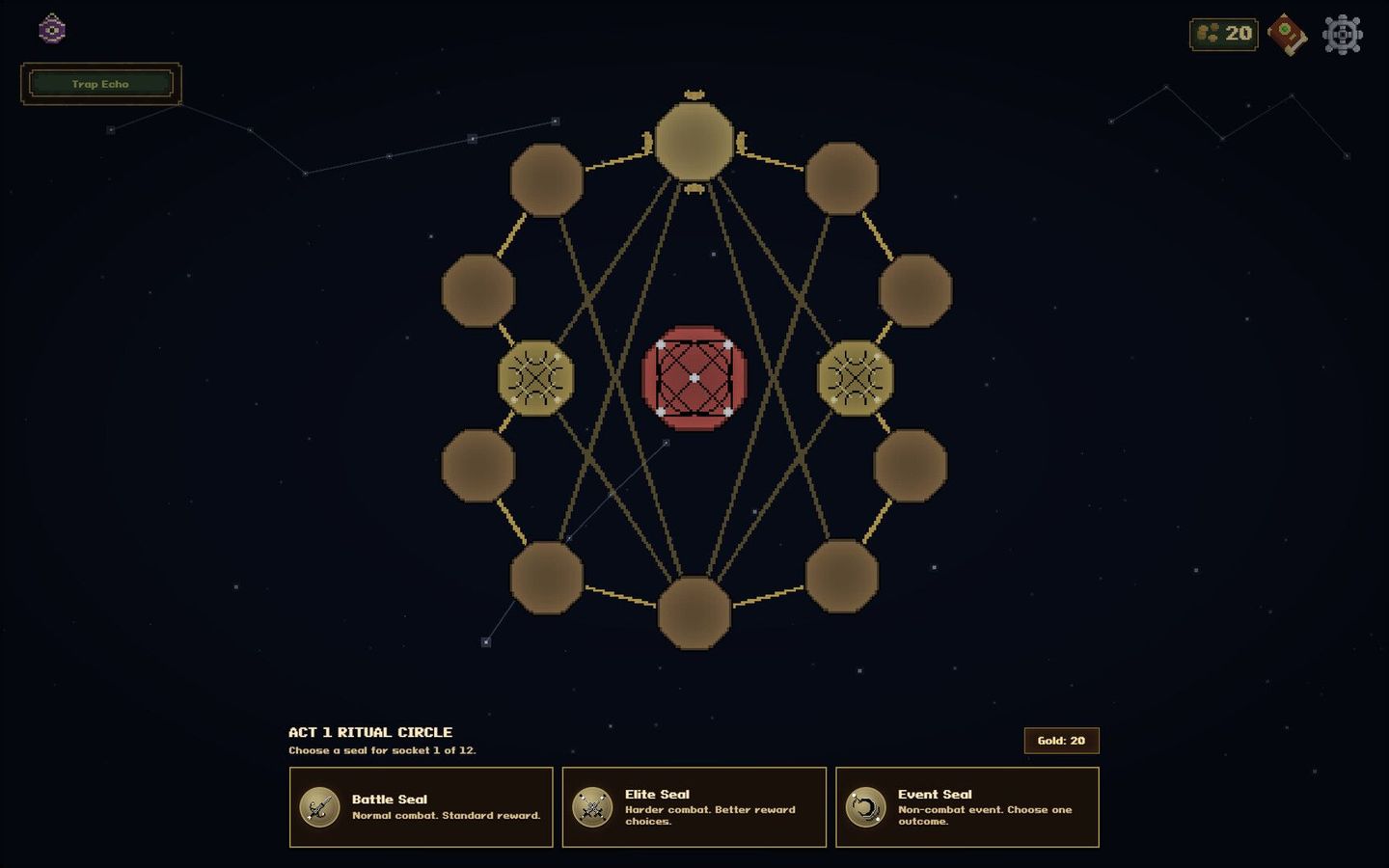
Between fights you make progress through a ritual map. Choose which seals to open next and balance shops, events, elites, and bosses. Pick upgrades, buy or discard words, and manage your deck and trinket loadout to prepare for tougher rooms.
Read the Ritual
Each act is a branching ritual. Battle seals, elite fights, events, shops, upgrades, healing, and bosses all appear as options. The game expects you to adapt: clean up bad cards and words when you can, lean into destructive combos if the tools present themselves, or patch holes and play conservatively when needed. That procedural variety keeps runs feeling different each time.
Built for Different Runs
Grimoire of Blanks is designed for repeats. Play solo for tight control and risk management, or bring friends for layered cooperative creativity. Between four classes, branching subclasses, changing pools of cards and words, trinkets, events, elites, and bosses, the systems invite experimentation. The trick is learning the language the game gives you and deciding which sentences are worth writing.