
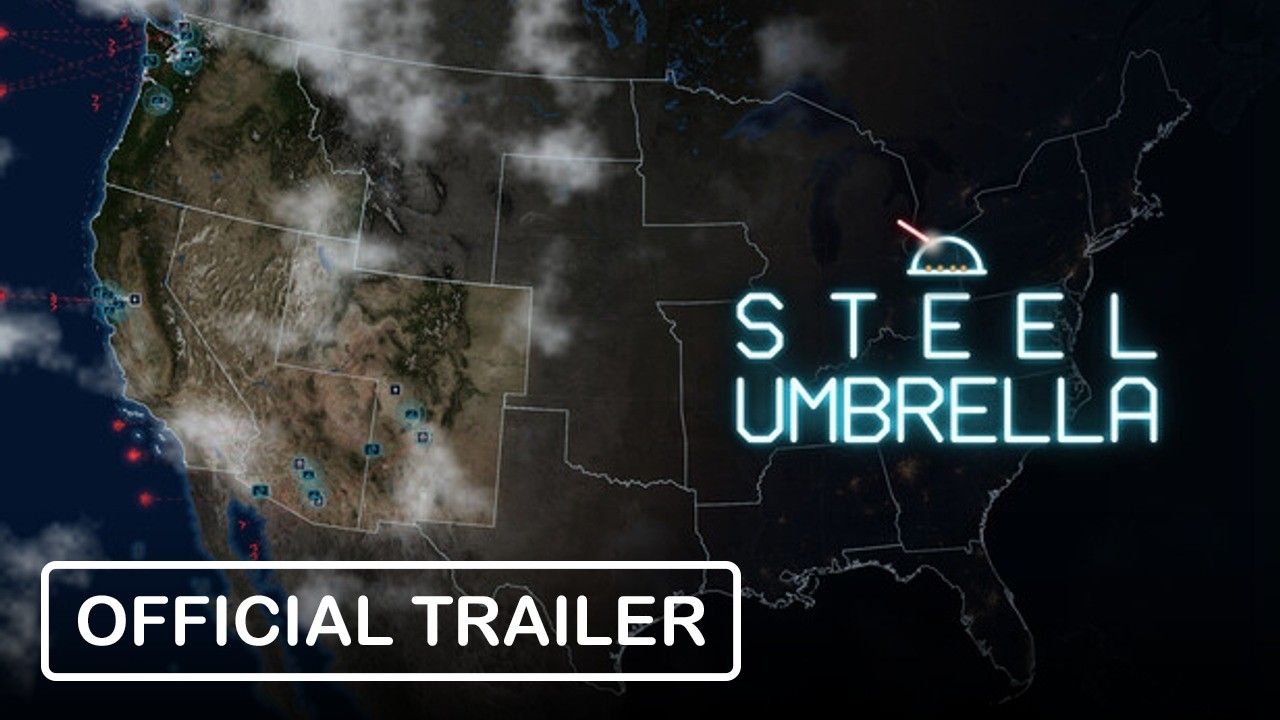
Steel Umbrella puts you on the night watch
Steel Umbrella is a real-time air defense strategy played on a satellite map of Earth. The game splits its tempo into a clear, strategic daytime and a frantic, sensory-limited night phase. By day you decide where to place launchers, nets and radar around a city. When night falls the attackers come out of the dark and every strike that gets through dims part of the city's lights.
The setup is neatly tense: your choices made in sunlight stand or fall when the blackout begins.
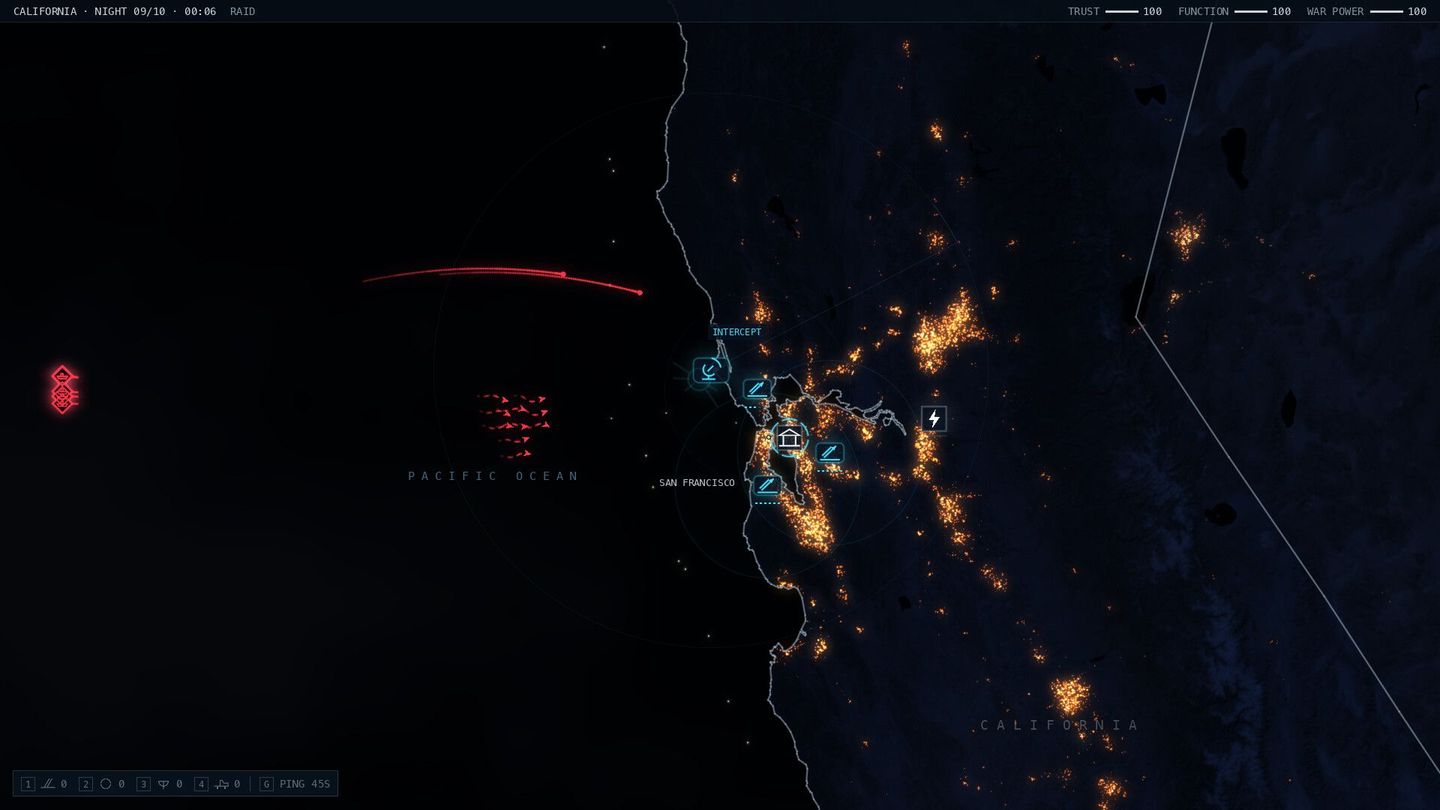
Build by day, fight by night
Day and night cross the map the same way they do on the real globe. During daylight you get time to think - who needs coverage, what launcher reaches where, and which site you can afford to leave exposed. Once darkness sweeps across a region your layout is locked in. Only mobile crews can still move during a raid, and the assault is already on its way.
That push-pull creates a familiar planning loop: prepare carefully, then watch how those preparations perform when information is scarce. Repairs and reloads mostly happen at dawn, so damage has consequences that linger into future nights.
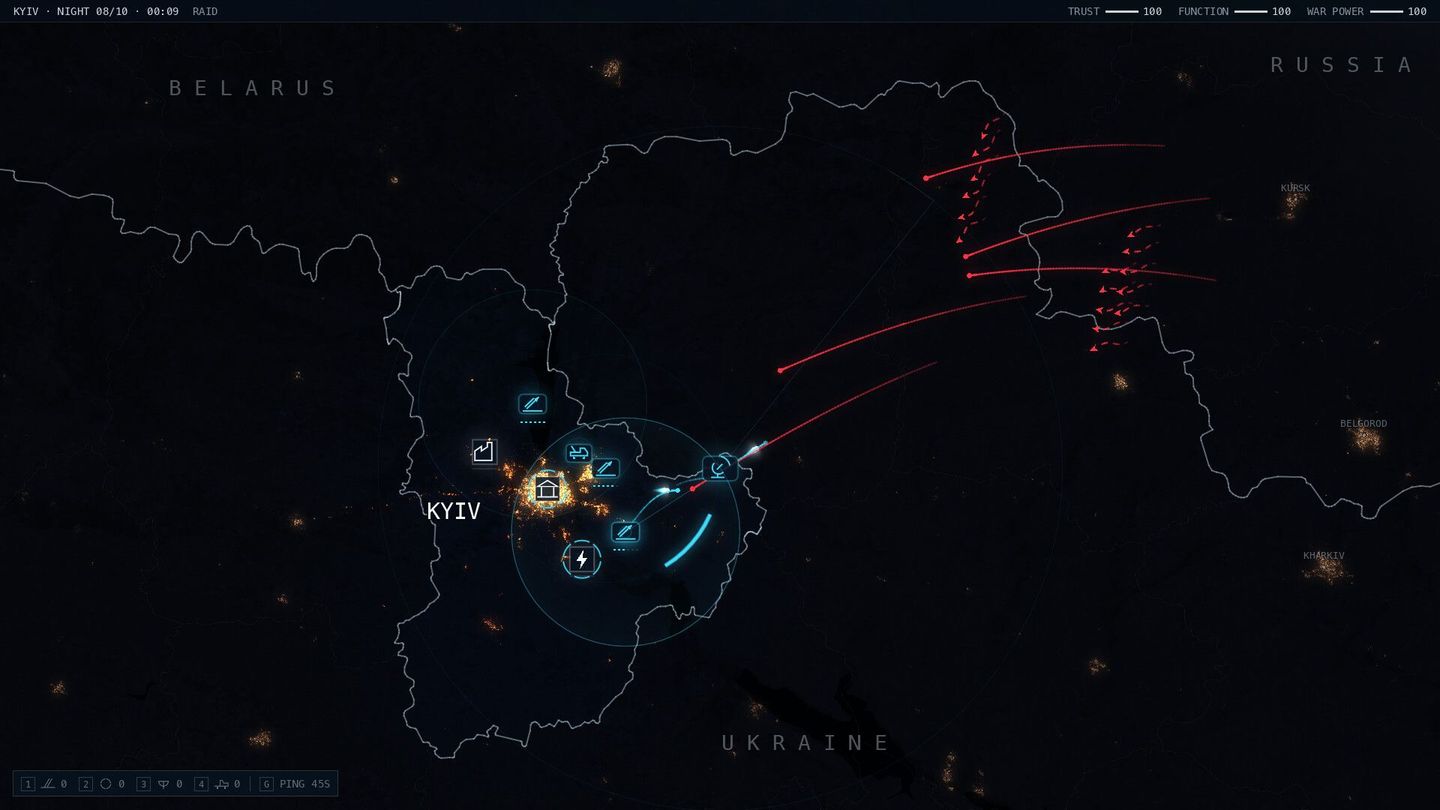
Find them in the dark
Visibility in Steel Umbrella is strictly tied to your sensors. A launcher reveals contacts only within its range. Radar sweeps mark contacts where they cross them, but those marks fade. You can press G to ping - every contact the ring touches lights up for four seconds, and your launchers lock on and perform better. The trade-off is that the radar then needs 45 seconds to recharge, so timing matters.
Mobile pickups are your active hunters. These machine-gun crews can be driven anywhere - even into the middle of a raid - to chase drones that slip past static defenses. Nets sit above sites to catch drones, launchers carry limited missiles with longer reach, and radar gives you the ears you need to find threats.
Stakes, upgrades and the long haul
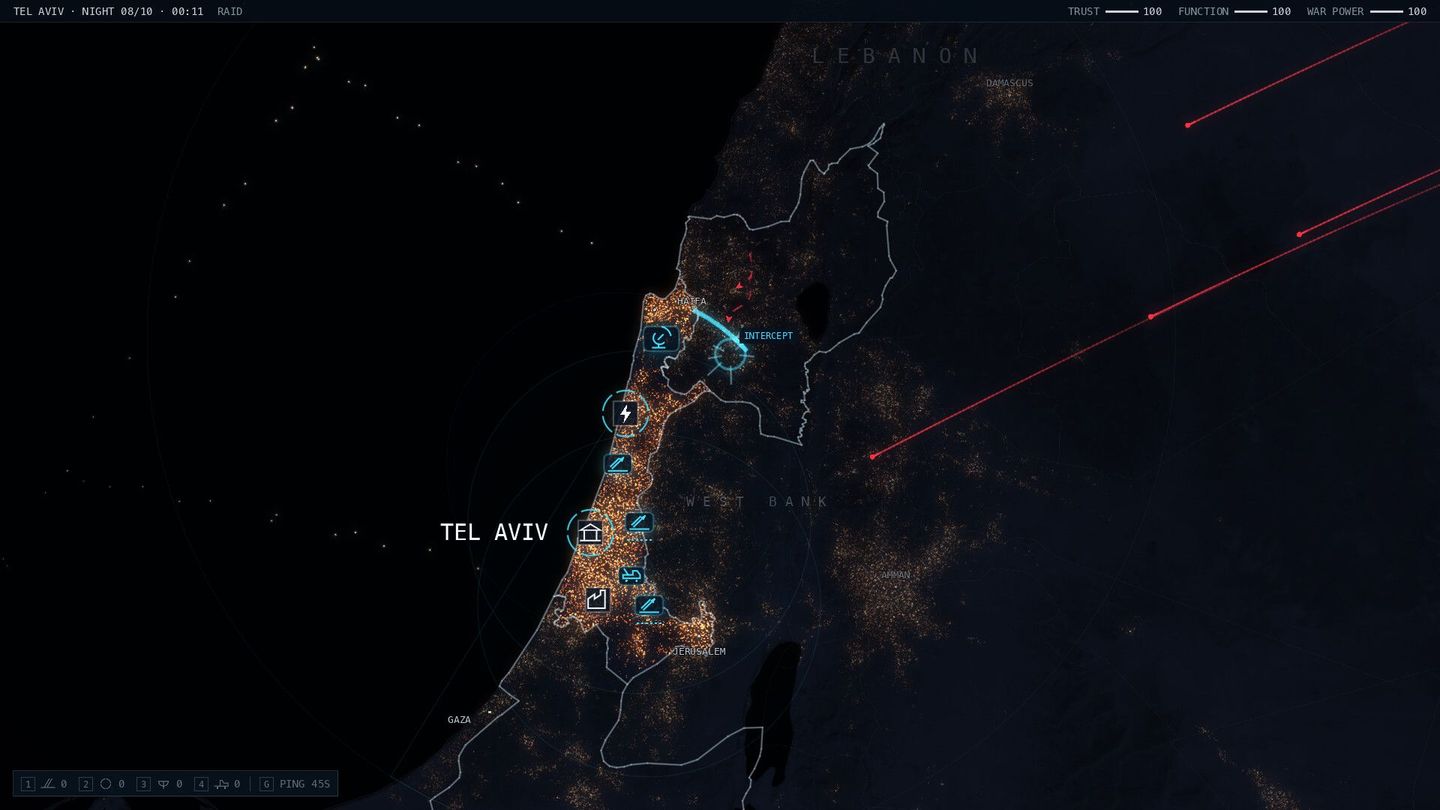
Each city depends on three sites: a civic center, a power station and a factory. Those sites feed three ratings that shape the entire campaign.
- Trust is the people's faith in you. It falls with hits on homes and power, and if it reaches zero you lose.
- Functionality covers power and industry. It determines how fast defenses set up, reload and repair.
- War power is what the factory can supply. It affects launcher accuracy and how many reloads reach them nightly. If war power drops below 50, upgrades lock.
Damage persists from night to night and only gets repaired at dawn. Survive ten nights to win.
Progression comes through a talents tree with three branches - Intercept, Shield and Home Front - and you earn a point every night. Every three nights you pick one card from three choices: new defenses, upgrades, emergency items, or, in the United States, an additional region to defend. Emergency items include a full repair of every site, an instant reload for every launcher, nets on every site for one night, or an early-warning that reveals where tonight's raid will launch from.
A quiet, serious premise
Steel Umbrella sets its gameplay over real countries, some of which face air attacks in the real world today. The developers frame the project as a defensive-only experience - you never strike back - and all sites in the game are fictional. No real weapon names are used. Borders are present for orientation and not intended to represent front lines.
Mechanically, Steel Umbrella is about constrained information, prioritization and making each resource count. Its mixture of day planning and night reaction makes a compact, focused challenge: protect the lights until morning.