
Torizon Telecom: A World Built From Words
Torizon Telecom is a 3D text-graphic first-person shooter that takes its name seriously. The entire game space is composed of characters. Floors, ceilings, enemies, pickups, and even each weapon are constructed from text. It is a shooter that invites you to interpret the world by reading it.
The premise is elegant and a touch surreal. Because every object is presented as readable text, you can identify items and interactions by sight and by language. That changes how you navigate, how you loot, and how you understand threats.
Text as Terrain
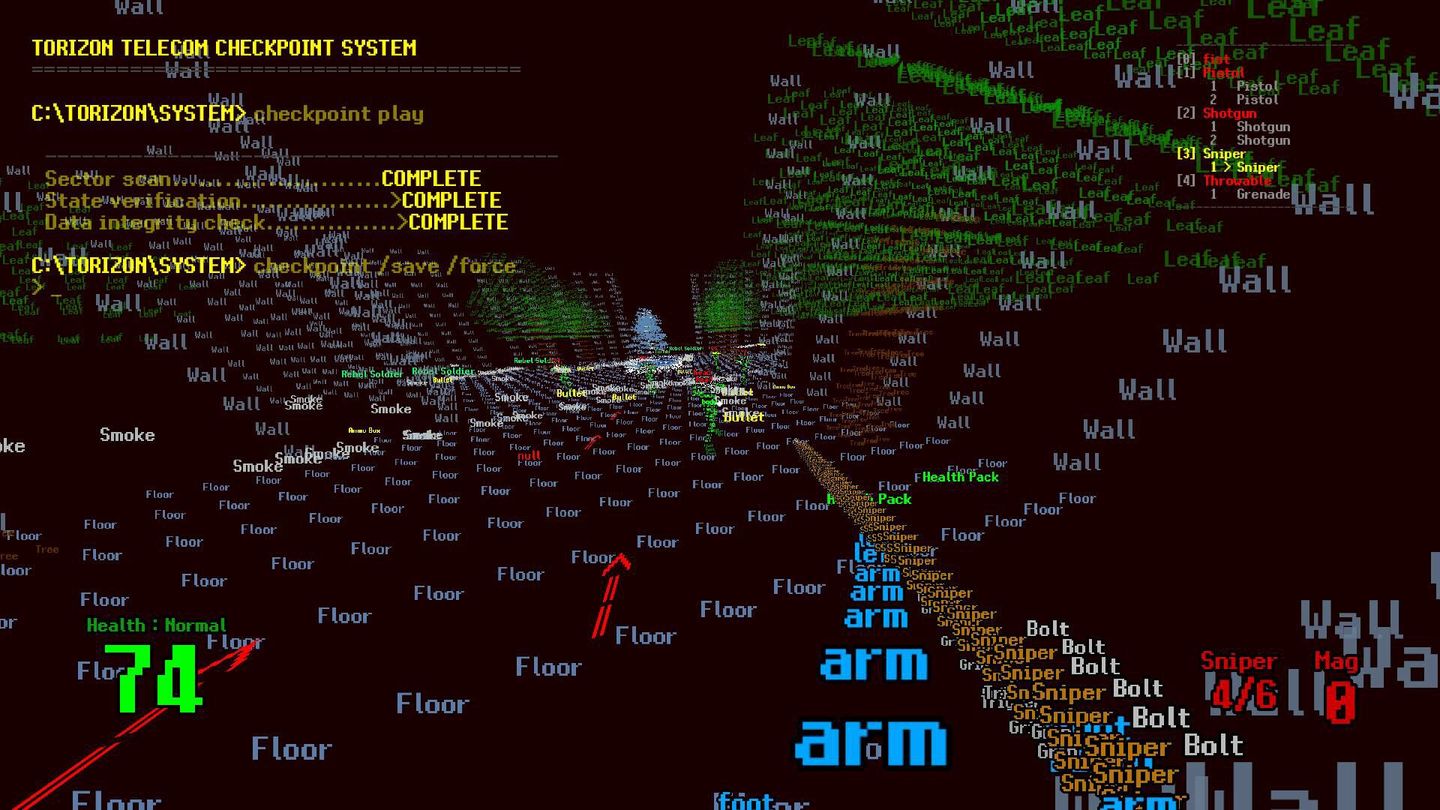
Visuals in Torizon Telecom are not a filter applied to a conventional 3D scene. Text is the geometry. Walls are layers of characters. Open vistas are paragraphs and patterns. This gives the game a unique readability: information is not hidden behind icons or vague silhouettes. It sits on the surface of the level in plain text.
A notable design choice is language support. Switch the language, and the characters that build the world switch with it. That means the same level can read differently depending on your language settings, turning environment scanning into a small linguistic puzzle. In practice that affects aesthetics and clarity but also creates a playful way to re-experience the same spaces.
The screenshots show how the effect shifts between dense blocks of letters and more airy, spaced layouts. It is minimal in concept but surprisingly expressive in execution.
Weapons That Read Like Labels
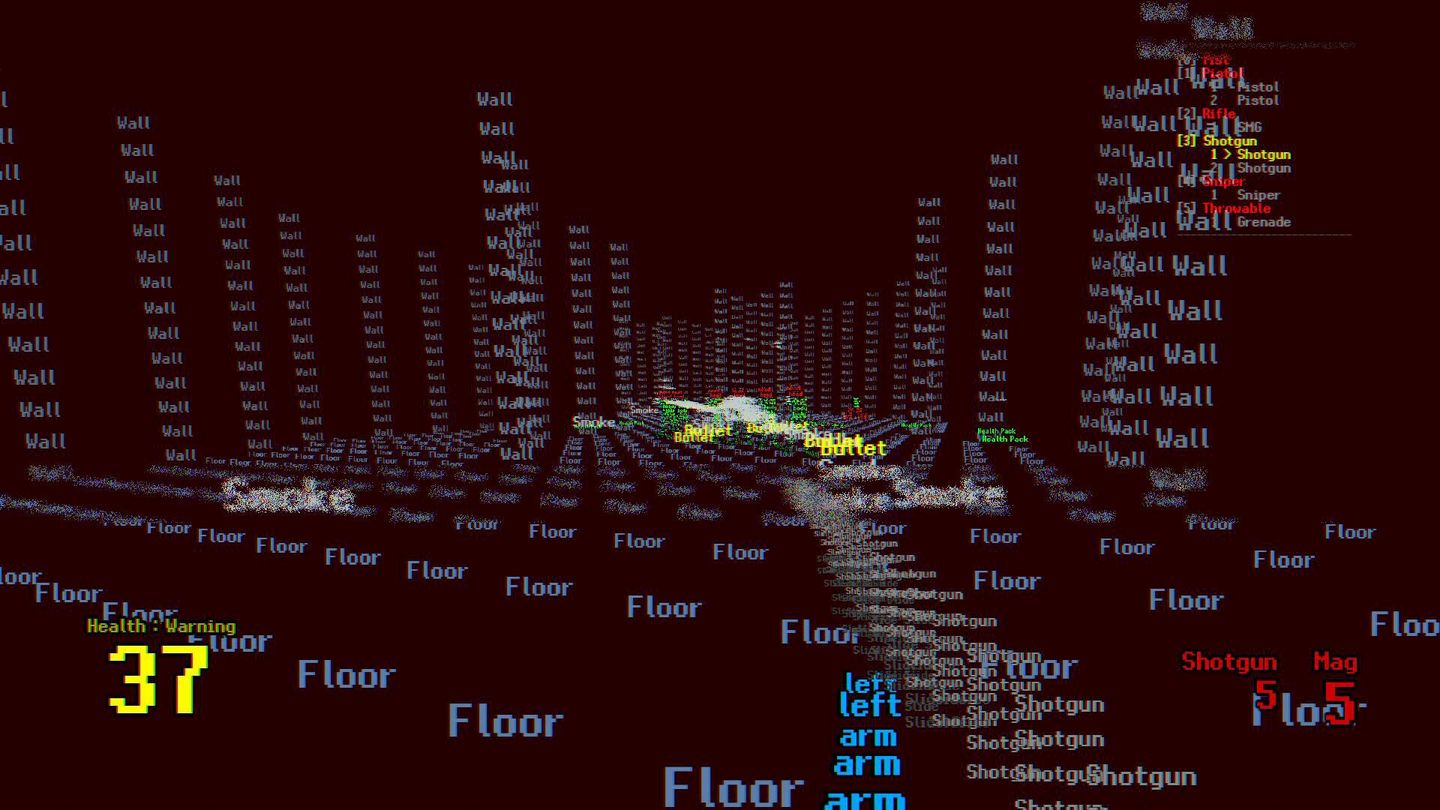
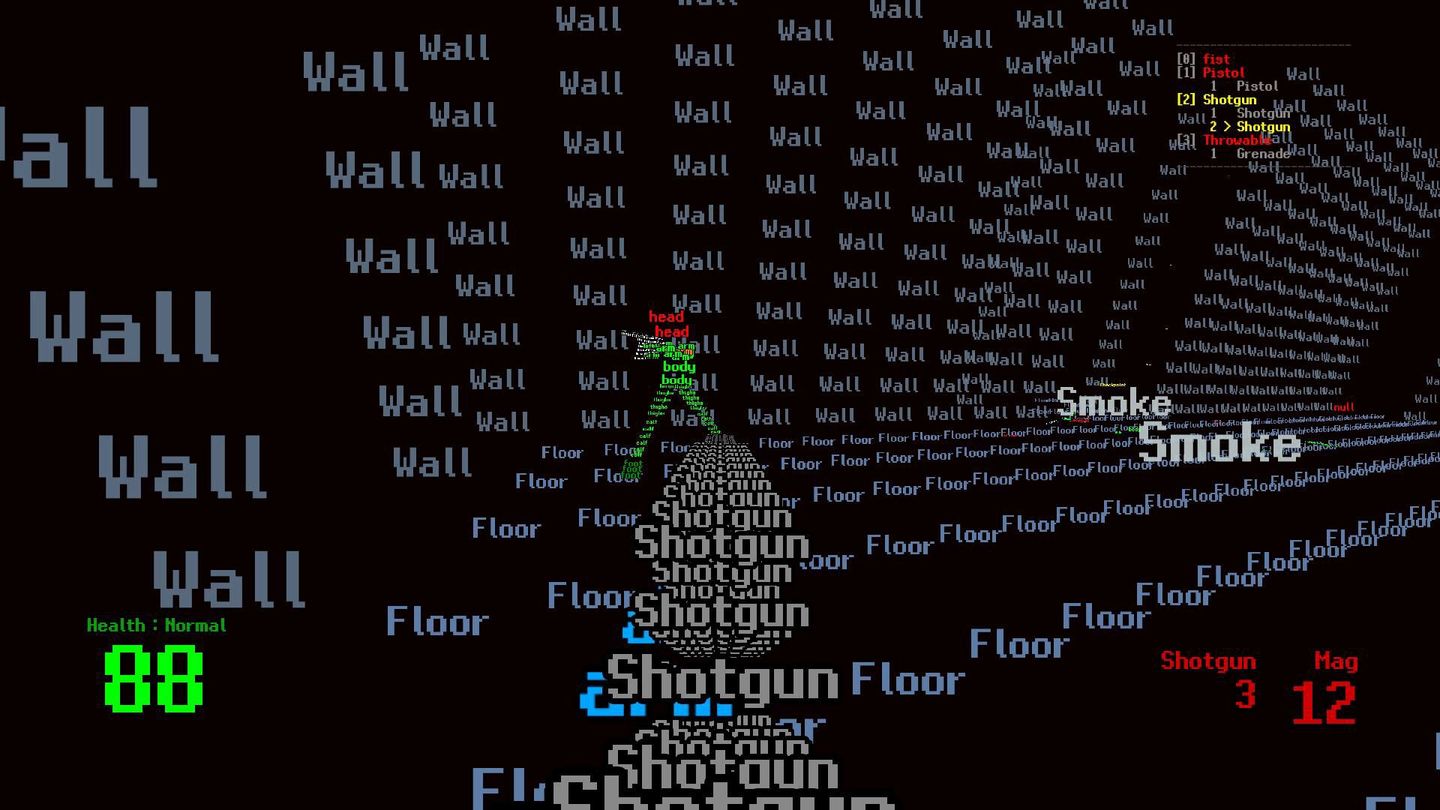
Combat in Torizon Telecom uses a surprisingly familiar FPS toolkit translated into letters. The game lists pistols, assault rifles, shotguns, sniper rifles and more. There is even a rocket launcher you can use to rocket-jump and the option to dual-wield akimbo guns. Each weapon is presented as text but retains the mechanical traits you would expect in a shooter.
Because pickups and weapons are text, you often know what you are grabbing before you get close. That removes guesswork from looting and lets you make split second decisions based on readable names and descriptors. The trade off is that the spectacle of traditional weapon models is replaced by typography, so the fun comes from how the text moves and reacts rather than ornate art.
Combat still feels grounded in conventional FPS design: shoot, take cover, manage ammo, and use mobility tools like rocket-jumping to reach new areas. The novelty is how those systems are communicated and stylized.
A Story About Control and Anomaly
Torizon Telecom frames its action within a short but intriguing narrative. You operate under the authority of Telecom, a system that governs emotions, thoughts, and even identities. You are a deployed subject in routine operations, controlled by Telecoms directives.
Then an anomaly appears. It has no known cause and it begins to disrupt that control. The core questions the game poses are simple and existential. Is Telecom all there is? Is there a world beyond the textual horizon? And what does it mean to be a subject inside a construction made only of words?
The setup mixes existential mystery with the immediate, tactical demands of an FPS. How the story unfolds will depend on how the developers balance narrative beats with emergent combat, but the premise gives a satisfying conceptual spine to the text-based art style.
Why It Matters
Torizon Telecom is not just a visual gimmick. It is an experiment in how readable information and language can reshape a familiar genre. By making text the medium and the message, the game forces players to interpret the world literally, and to consider what changes when the environment itself speaks.
If you are curious about games that rethink the tools of genre play, or you like shooters that twist a single strong idea into new mechanics, Torizon Telecom is worth watching.