

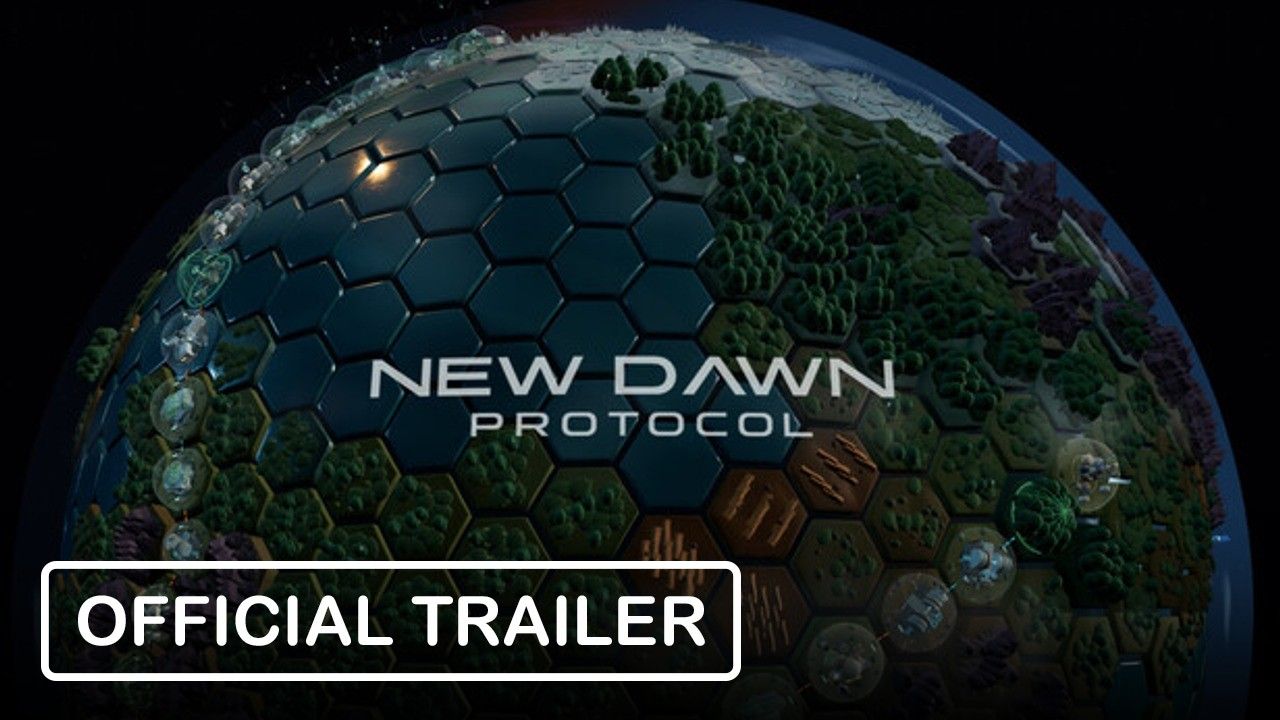
New Dawn Protocol Puts You in Charge of a Living Planet
Command went silent for sixty-three years. Humanity carried on. When the planetary network flickers back to life, responsibility lands on your shoulders - but the world you find is no blank slate. Millions of people, thirteen settlements, and layers of local history already exist. Councils run things. Trade finds its routes. Loyalties and grudges have long memories.
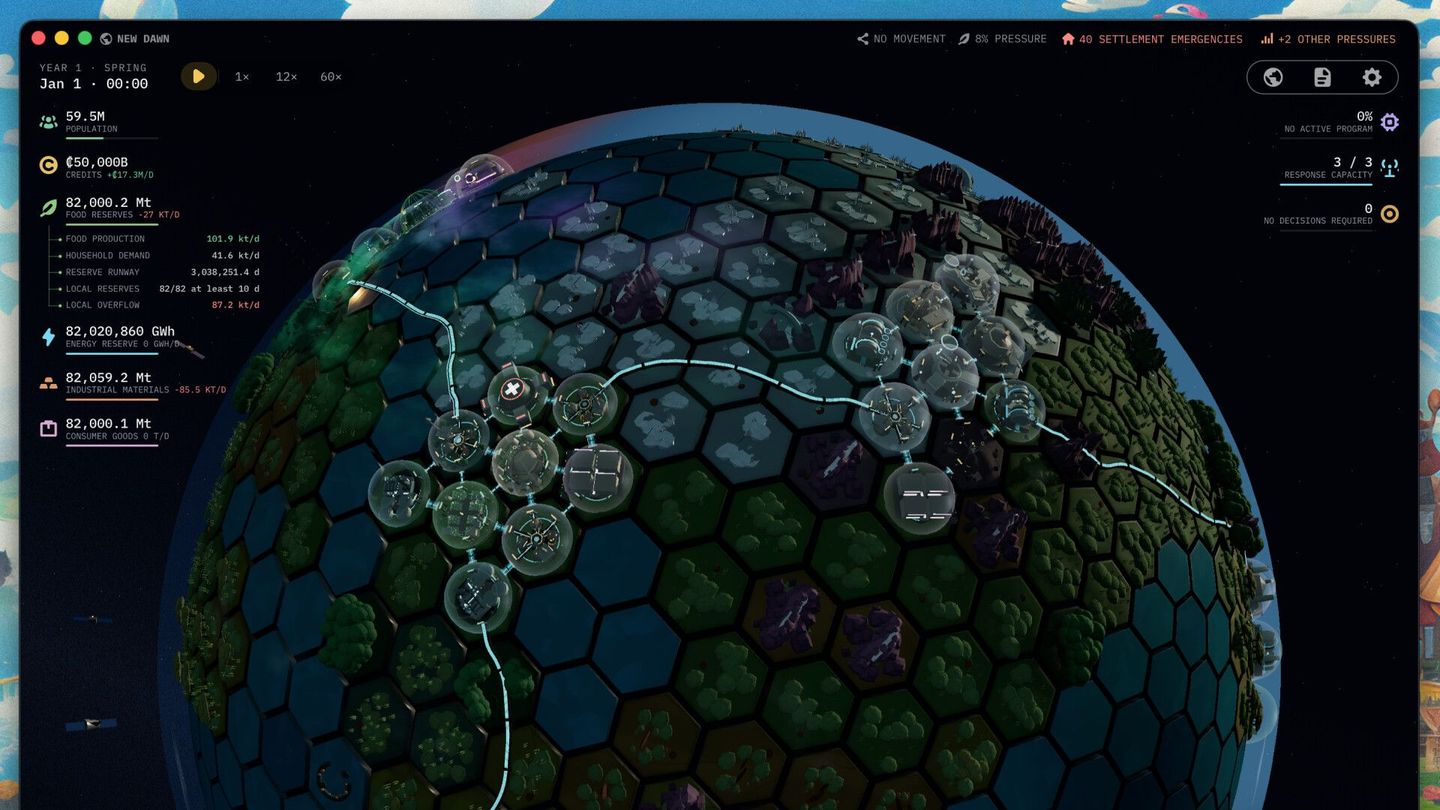
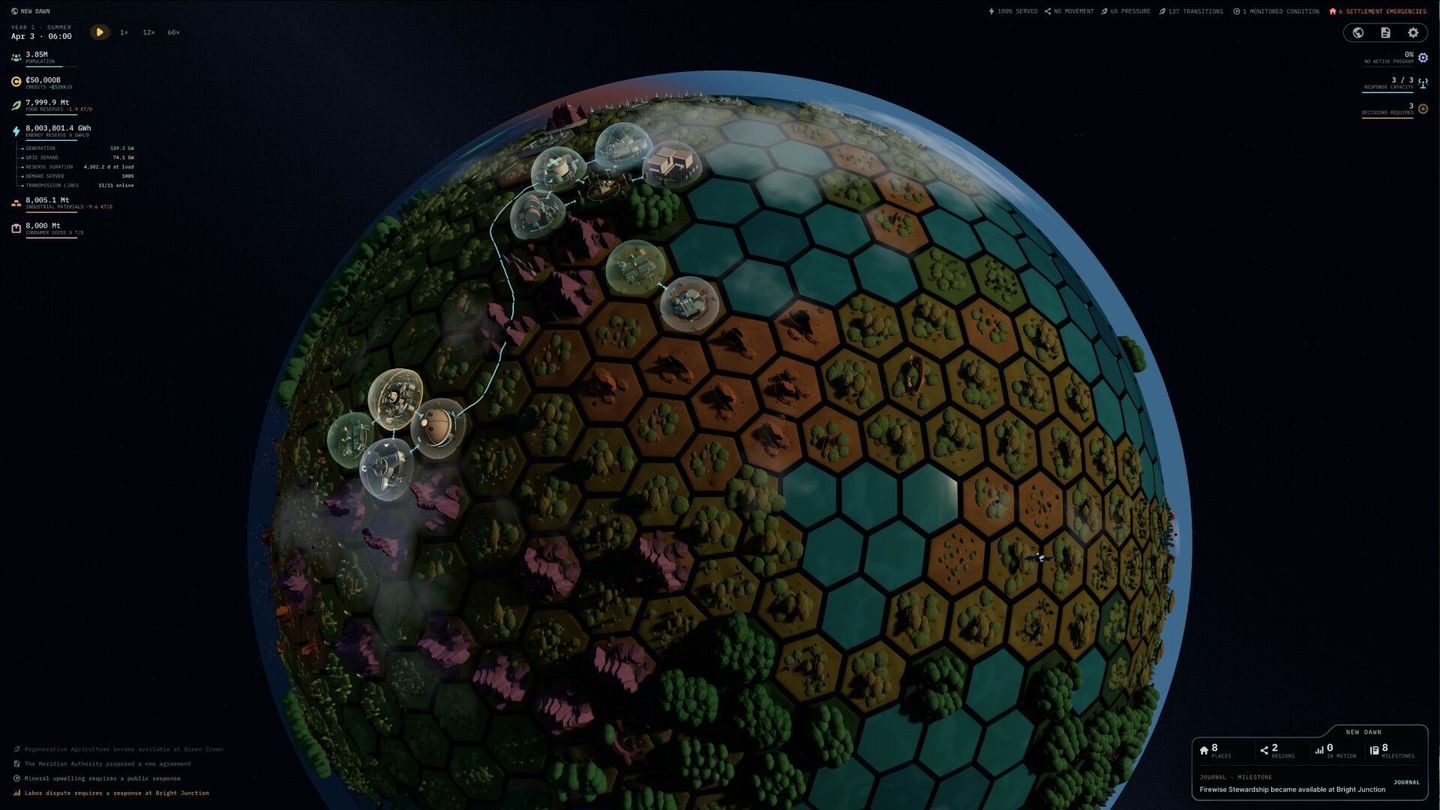
New Dawn Protocol is a globe-scale civilization sandbox about rebuilding shared systems and learning to live with what they make possible. You do not merely place buildings or tally resources. You restore corridors, reconnect power and water, and watch the planet react as people resume commutes, reroute freight, and change where they choose to live.
Rebuilding Systems That Actually Matter
Projects carry real costs. Every new corridor, treatment plant, or rail link requires material, labour, time, and ongoing support. When a structure becomes operational it stops being an abstract bonus and starts moving people, water, goods, and energy across the globe. That movement opens opportunities and creates dependencies.
That is the game's central design question. Where you rebuild determines who prospers, who migrates, and which towns become hubs. Infrastructure ages and fails. Storms probe weak points. Shortages ripple across borders. The planet is less a table of numbers and more a system of cause and effect that you learn to read by watching it run.
Society Isn't a Meter - It's a Memory
Local councils do not vanish when you arrive. Communities keep authority, priorities, and hard-learned expectations. A temporary guarantee or emergency order can become an institution generations later. Promises kept or promises broken seed political memory. Aid, coercion, trust, and neglect all accumulate into the world you are building.
There is no morality meter to rise or fall. Instead the planet records outcomes: who gained, who lost, what agreements stuck, and what grievances hardened into politics. Your role is less judge and more architect of precedent. That framing lets the game explore complex tradeoffs without handing you an obvious good path to follow.
Watch History Grow From Everyday Choices
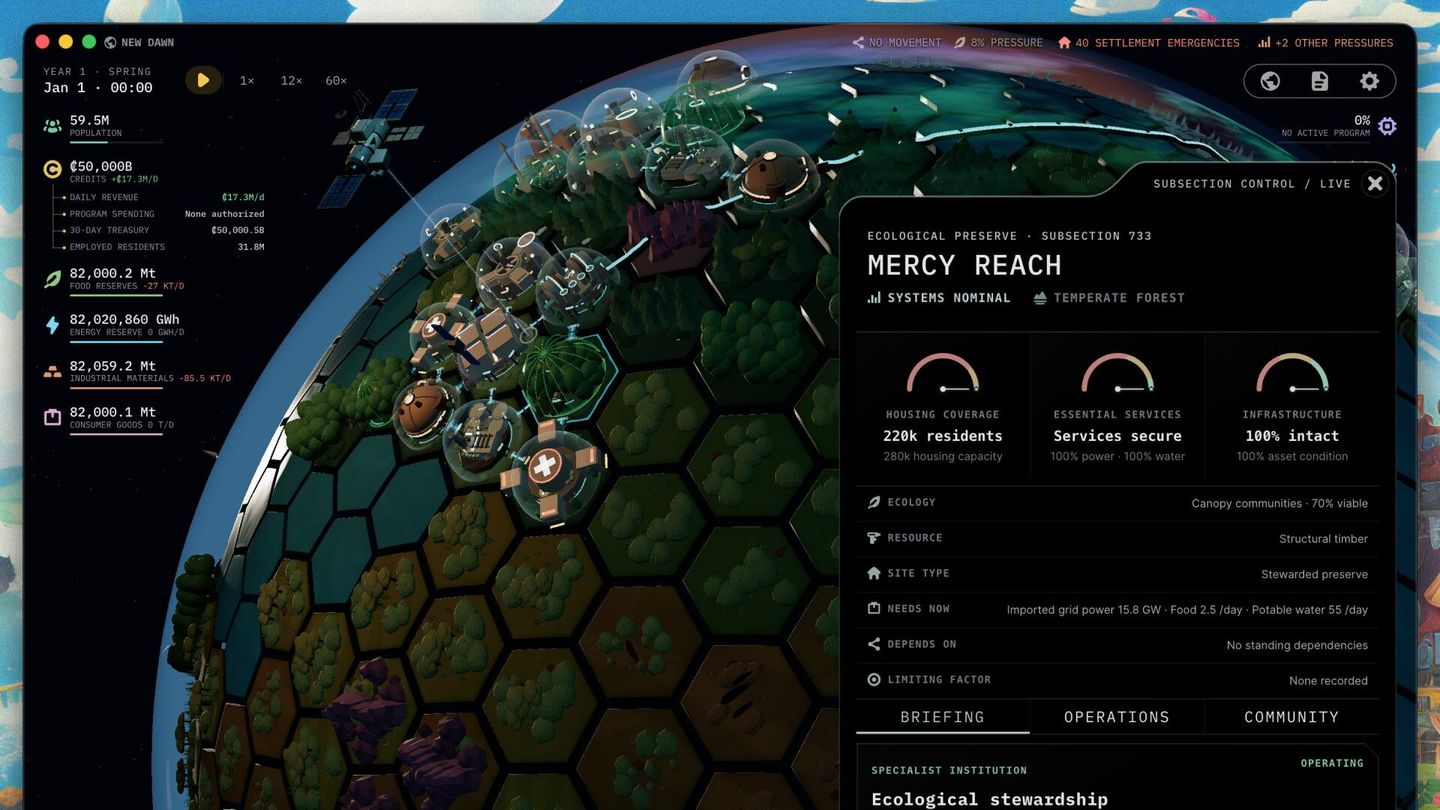
New Dawn Protocol invites you to follow named residents, shifting settlements, regional blocs, and the physical networks that tie them together. People commute. Households migrate toward opportunity. Institutions form and develop rules. Events leave traces in a living public record you can read to understand not only what happened but why.
No two runs will write the same history. Geography, climate events, the order in which you restore services, and local political reactions all conspire to produce emergent narratives that feel like genuine social history rather than scripted outcomes.
Decide Your Place Among Worlds
Your planet is not the only one rebuilding. Signals from other societies appear uncertain at first. You can choose how to respond: establish contact, trade knowledge and cargo, manage migration, or harden borders with sanctions and blockades. When your networks are ready you may activate the New Dawn Protocol and open your world to a wider human network.
Or you may keep the planet private and independent for as long as you like. There is no final victory screen and no single path to success. The game is about creating a civilization that continues to grow, adapt, remember, and surprise you.
New Dawn Protocol feels like a planner's toolbox and a storyteller's engine rolled into one. It asks you to think long term, accept messy consequences, and find satisfaction in systems that keep people alive and societies that, because of your choices, go on to carry histories of their own.