


It's the Insides That Count: Cooperative Alien Surgery
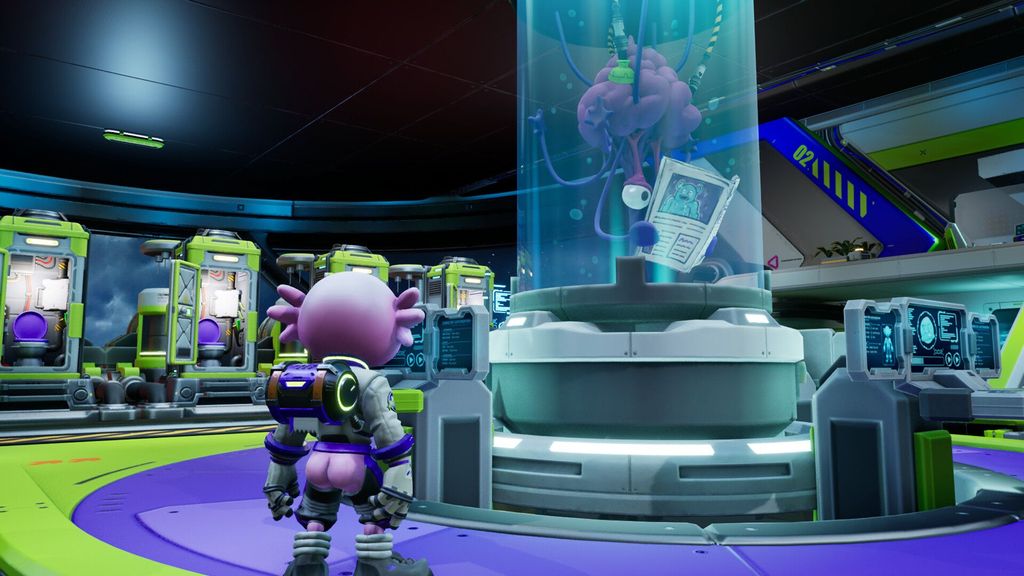
Congratulations, Specialist Team CLU-3L-355. You have been assigned your first human specimen and precisely 37 minutes of training to avoid the sort of "unfortunate accidents" that end careers. In It's the Insides That Count you and up to three friends become interstellar medical technicians with very little practical experience and a protocol manual that only sometimes helps.
This is a 1-4 player co-op surgery game where none of you has ever seen a human before. Your goals are simple on paper: extract the right organs, brew the correct compounds, contain mutations and do not let the human be reborn aboard the ship. Complexity arrives fast, courtesy of anchor points, unexpected growths, and equipment that enjoys spontaneous chaos.
It Takes a Team
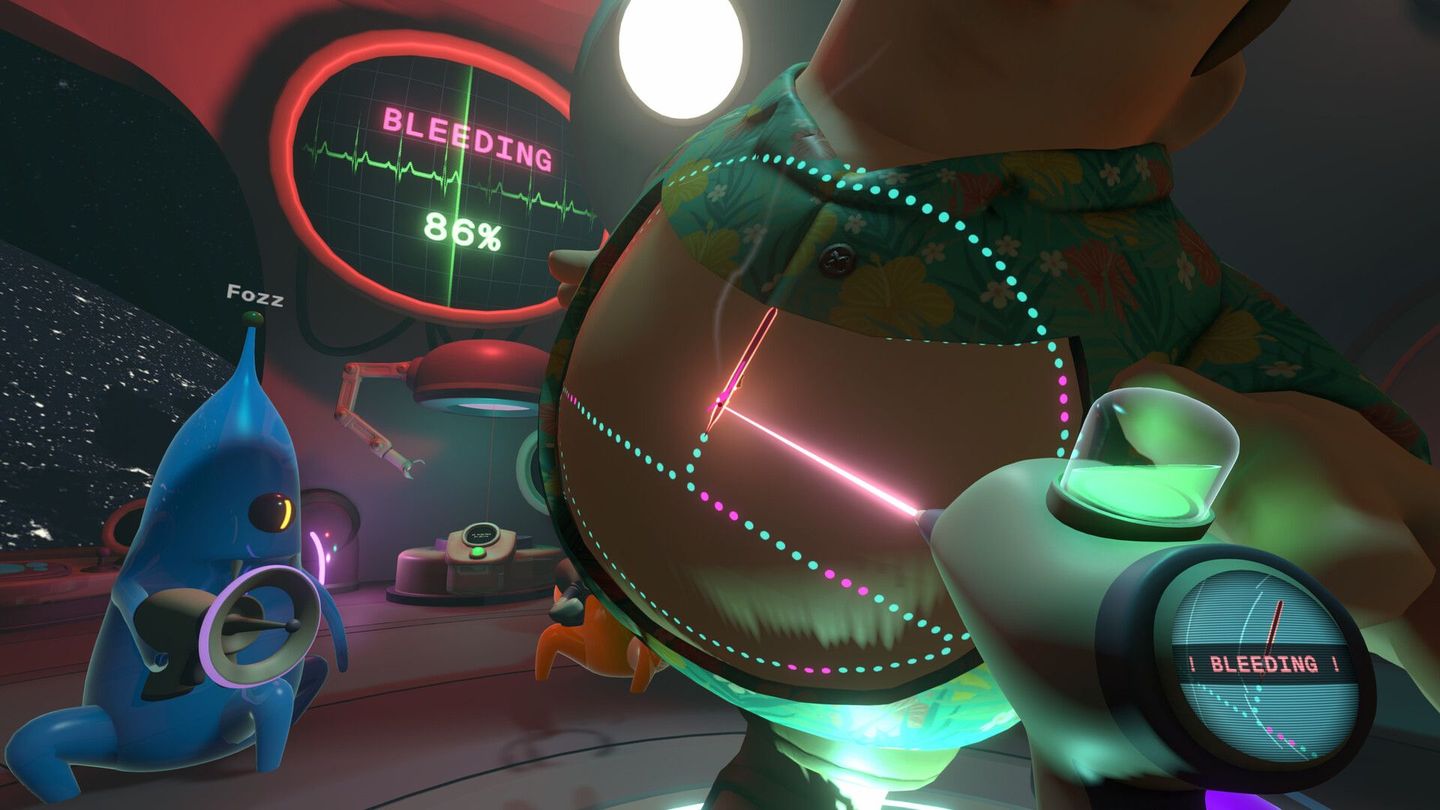
Roles matter and so does coordination. The operation splits into four jobs: someone scans for threats and anchor data, someone brews reagents, someone steadies and positions the specimen, and someone handles the laser. The only supervision you get is the not-entirely-reliable Human Extraction & Life-preservation Protocol Section 12.7 and the collective judgment of your team.
Cooperation is the recommended approach, but so is improvisation. The grav gun has no friendly-fire toggle, and the laser will overheat if you press your luck. Those are features that turn calm procedures into frantic, hilarious moments when organs, tools and teammates start flying around the cabin. The core loop rewards coordination but thrives on emergent chaos when plans go sideways.
Extract, Examine and Reinsert
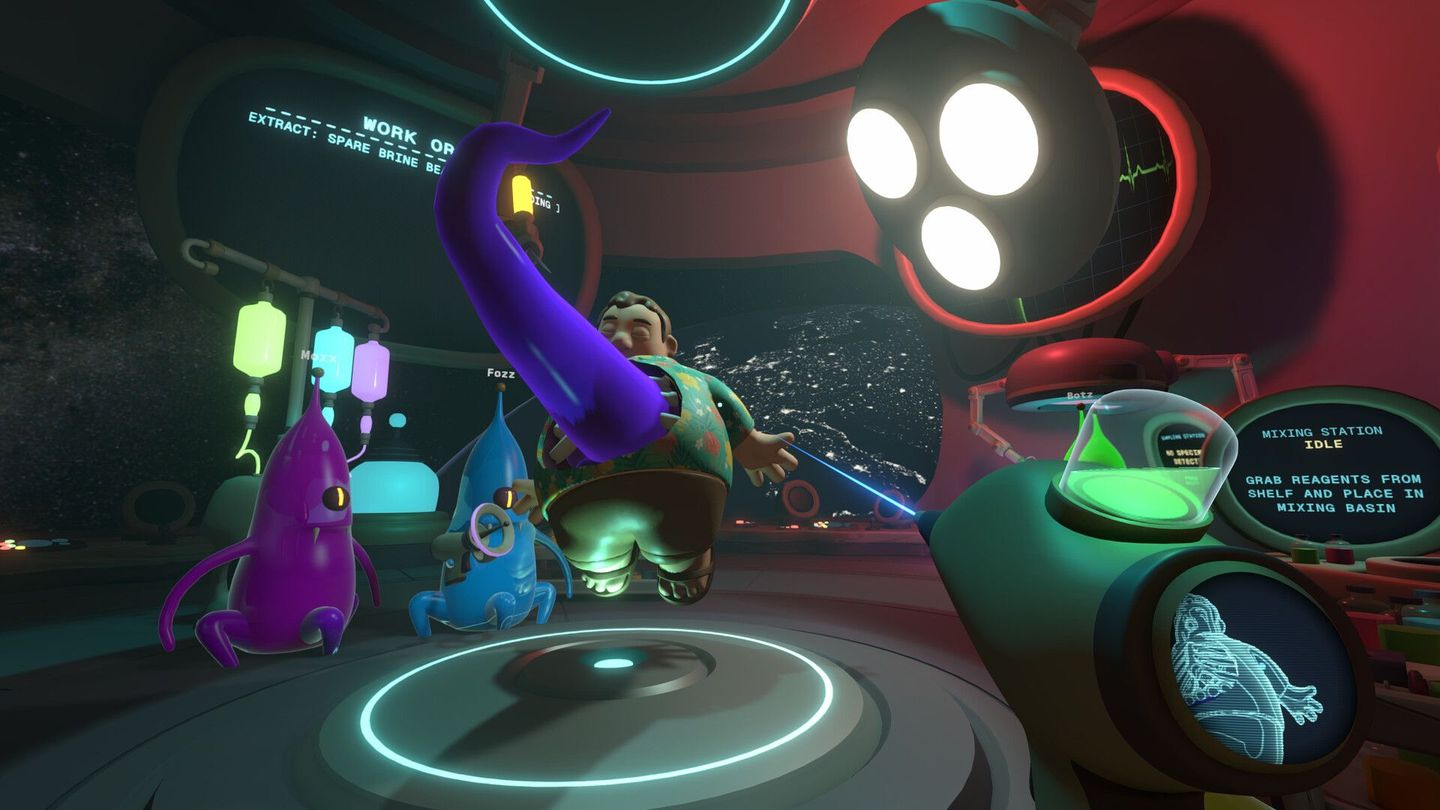
Organs are secured by anchor points that you must scan to learn their behavior. Some parts are safe to remove, some will bleed when disturbed, and some hide complications that get worse the longer you wait. Your job is to extract, examine and either study or reinsert organs before time runs out.
The "reinsert like nothing happened" option is a central beat. Pull the wrong thing, or wait too long, and you will be juggling hemorrhage control, mutated tissue and the grim possibility that the specimen will not stay comfortably inert. The tension between careful scanning and fast action is where the game finds most of its dramatic and comedic moments.
Reagents and Compounds
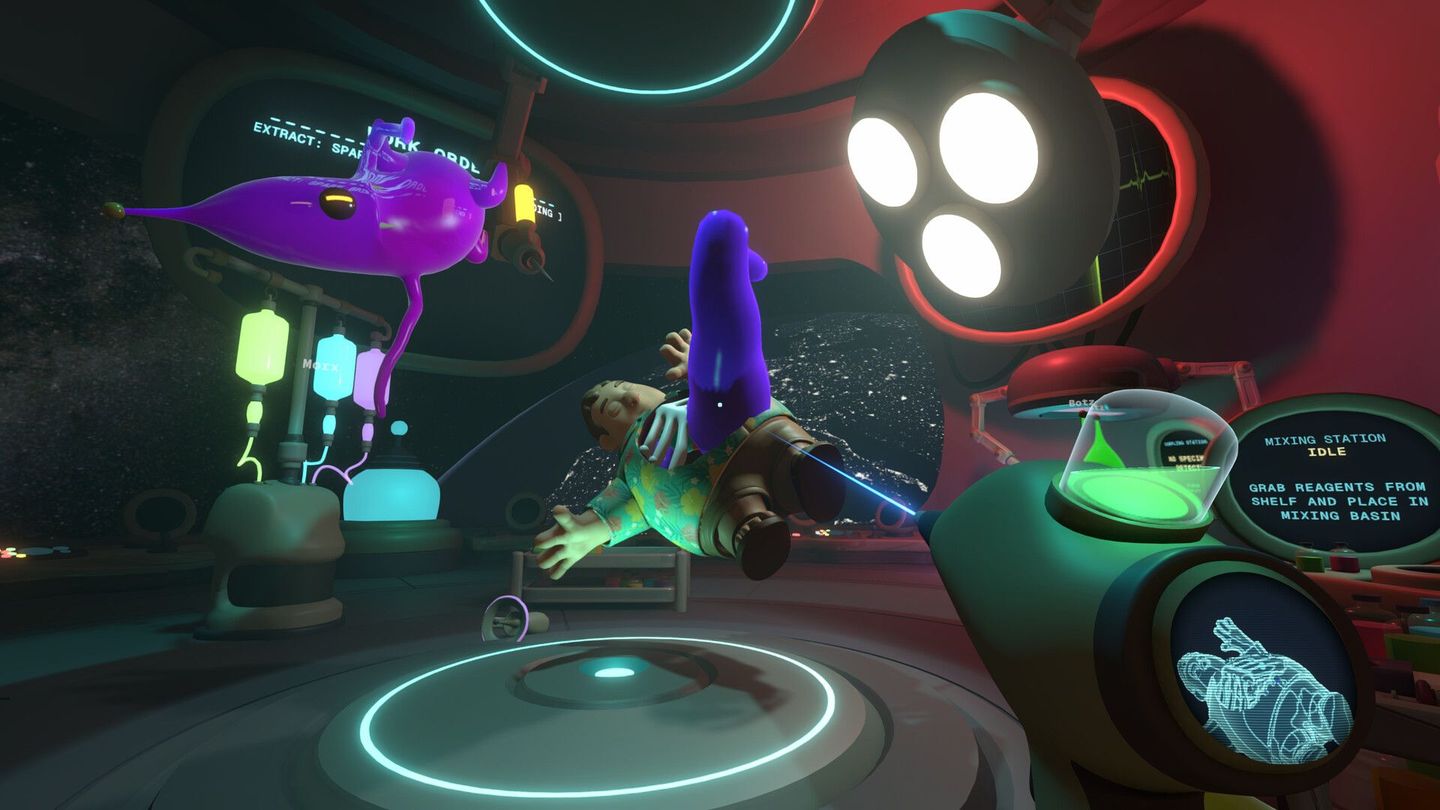
You are not limited to a standard medkit. Eight reagents are available, and their uses range from staunching bleeding to creating spectacular failures. The scanner helps you identify which compound to brew. Mix, heat and transport your concoctions across the room before the situation degrades beyond repair.
Brewing is a team activity in its own right. Time, temperature and delivery method matter, and teammates make unreliable moving parts. Expect to use hull sealant as a hemostatic agent, and to discover that colleagues make unexpectedly useful or inconvenient ingredients during frantic moments. The results can be brilliantly effective or explosively wrong.
All According to Plan
The complication that kicks the whole thing into high gear is the tractor beam. It has interfered with the specimen's DNA, producing unpredictable and invasive growths. Extra organs, random limbs and other new parts can appear mid-procedure. Meanwhile the ship barrels through asteroid fields and solar flares, providing environmental hazards you did not ask for.
Thankfully, eons of bureaucracy have produced H.E.L.P., a repository of contingency plans that range from "probably useful" to "questionable." Your success depends on reading those pages, but more on adapting when reality refuses to follow them. The game's balance of cooperative strategy, wild physics and surgical precision makes for a frantic, funny and oddly tender experience.
It's the Insides That Count positions itself as a chaotic cooperative party-surgeon: part puzzle, part panic, and all about trusting your teammates to keep the specimen from going full reincarnation.