
CENTAVO: Every cent is always in someone's pocket
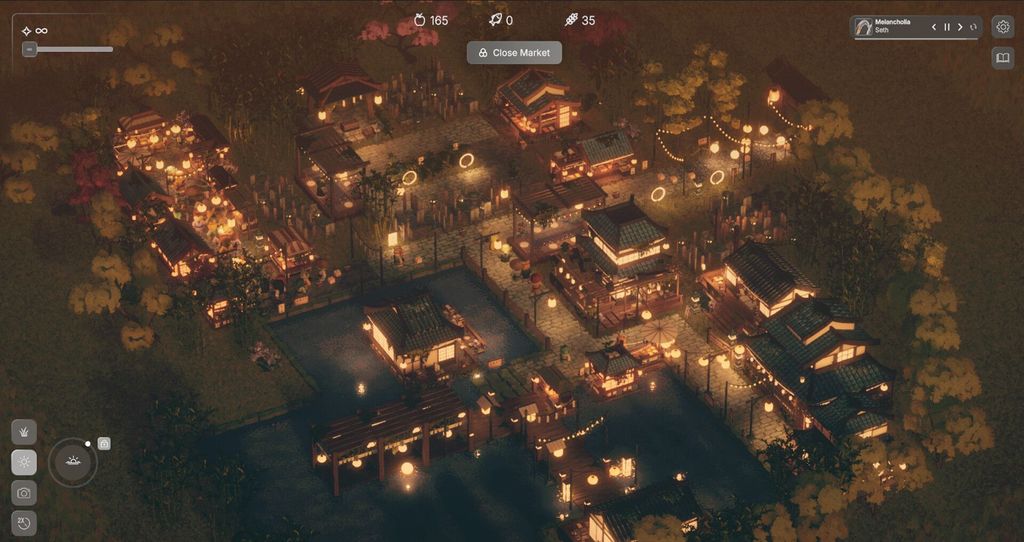
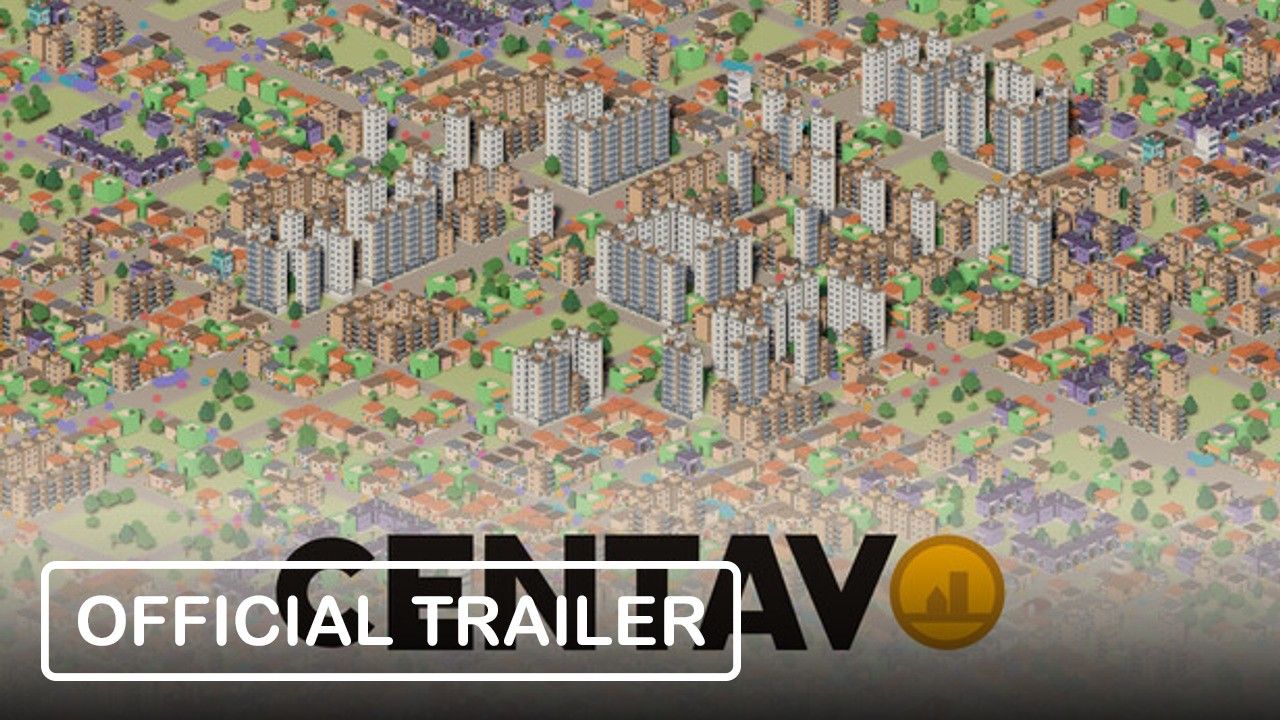
CENTAVO is a city sim with a single, neat rule: the total amount of money in the world is fixed. The game opens on an empty map and your tools are zoning, streets, taxes and welfare. You do not place buildings. Residents with money and ideas buy lots, construct, hire and run the economy. If the numbers do not work, businesses close and people leave with their money.
The result is a city that behaves like an economy you can read. Wages come from tills, tills come from customers, customers come from wages. Every payment has a payer and a payee, and you can open both sides to follow the chain.
Trace the money like a living ledger
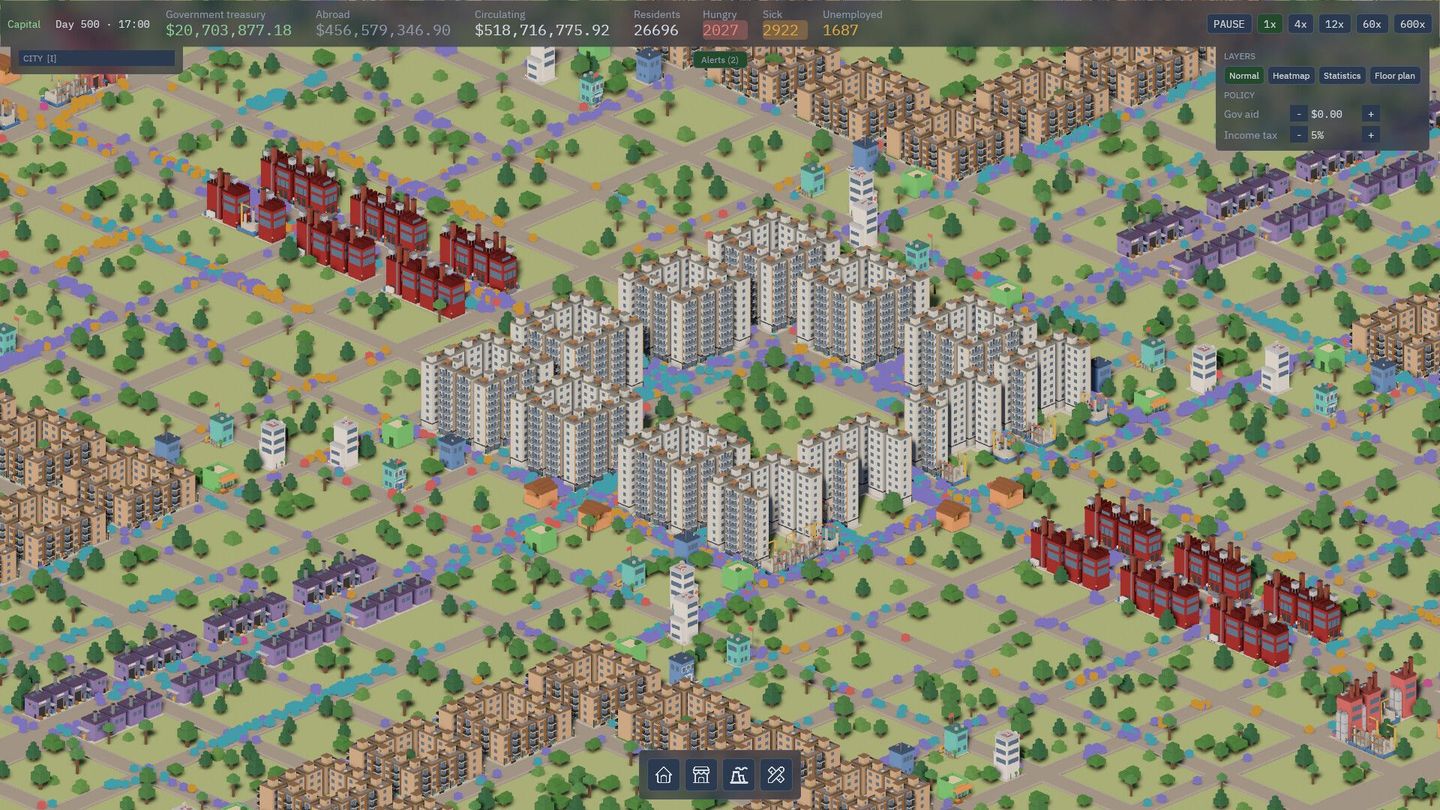
CENTAVO gives you a forensic view of every transaction. Click any resident or building to open Wallet, Vitals, Work, Housing, Family and a complete statement of entries. Each ledger line links to its counterparty. Tap a shop sale and jump to the customer who paid. Follow that customer's wage back to the employer. It is less about spreadsheets and more about narrative chains of decisions.
Heat maps help you read the results at a glance. Well being, Income, Land value and Money flow show, respectively, where life is good, who is earning, where land is prized and exactly where money is leaving the city. The Money flow map lights the streets where payments depart a pocket and where they land. City statistics track Population, Labor, Wealth, Prices, Government, Flows and Social measures with series going back to day one, so you can see how policy echoes through time.
You zone, they build - taxes, welfare and real materials
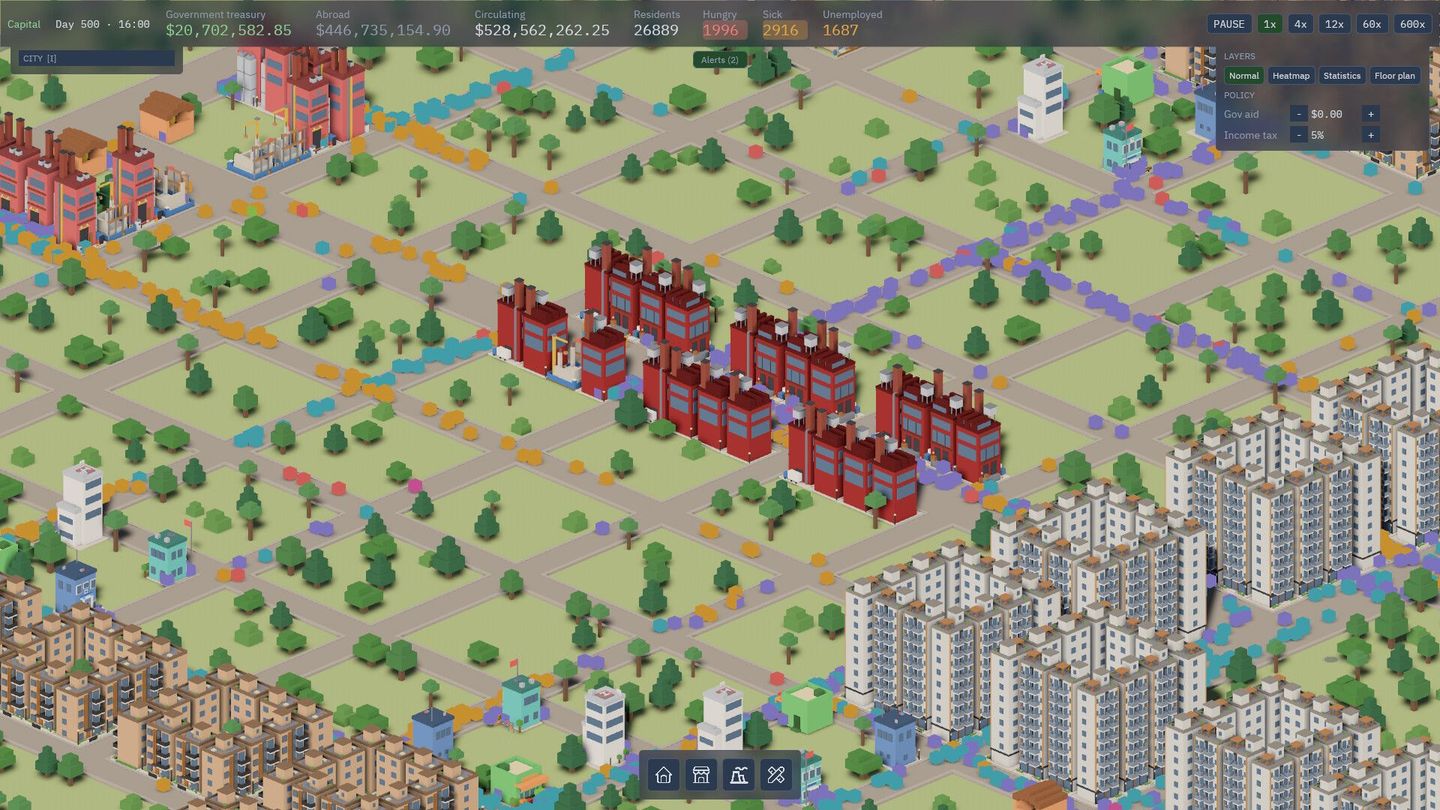
Your urban power is zoning and governance. Lay streets, zone lots as Housing, Commerce, Services or Production, then watch residents buy, pay for construction, and open doors. Building consumes real materials. If you lack a hardware store, construction sites import supplies and pay more. That simple mechanic forces you to consider supply chains, not just lamp posts and parks.
Government runs on two levers: income tax and government aid. Public coffers live on taxes and lot sales, and they can run dry. You may use Expropriate to buy a resident's house at above market price and rehouse the family before demolition. If there is nowhere for them to go, the family refuses. Those constraints keep decisions grounded in people, not abstractions.
A city of walkers, markets and consequences
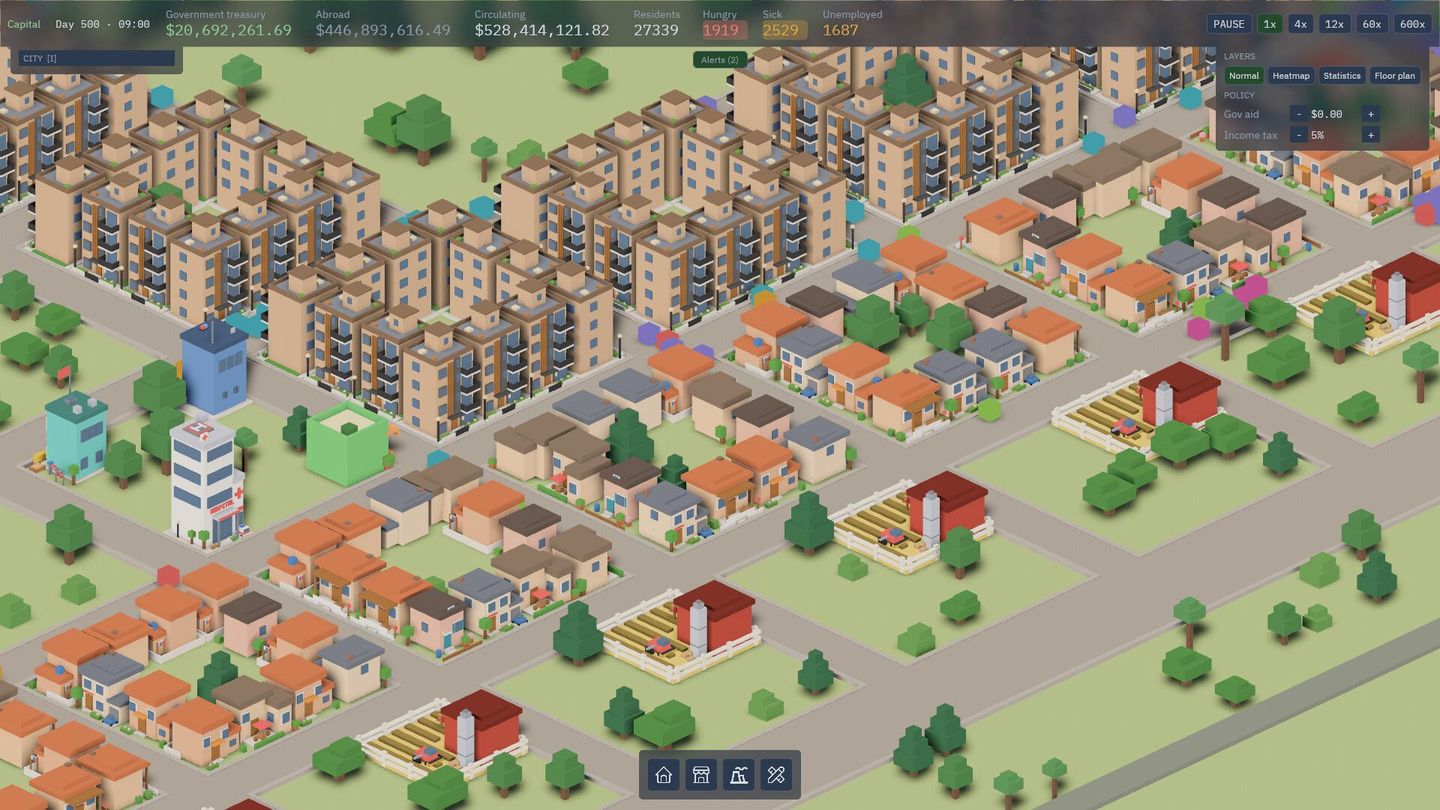
Residents actually walk. They commute to work, shop, go to the hospital, age, marry and die. Distance costs time, and empty shelves lead to queues which escalate into hunger. Prices are not hand set. Markets react to shelf stock and queues: low stock pushes prices up, idle stock drags prices down. A town with a single market can end up in queues and hunger if distribution fails.
The city grows in seven steps from Camp to Metropolis. Each step unlocks new zoning options and sets goals in residents, buildings and the share of the world's money your city holds. Note the wording: the goal measures how much of the world's money lives in your city, not how fat the coffers are. Full coffers with poor residents will not level you up.
Cities can end. Exodus, starvation or permanently empty coffers are all possible finales. When a city ends you can restart with the same seed and try another strategy.
CENTAVO is made by one person. Everything described on the store page is already in the game. Planned adjustments and future work are documented in the Early Access notes rather than buried in promises. For players who enjoy systems that reveal the human stories behind statistics, CENTAVO is an economy you can walk through and interrogate.