
Chess Army turns chess movement into brutal, permadeath tactics
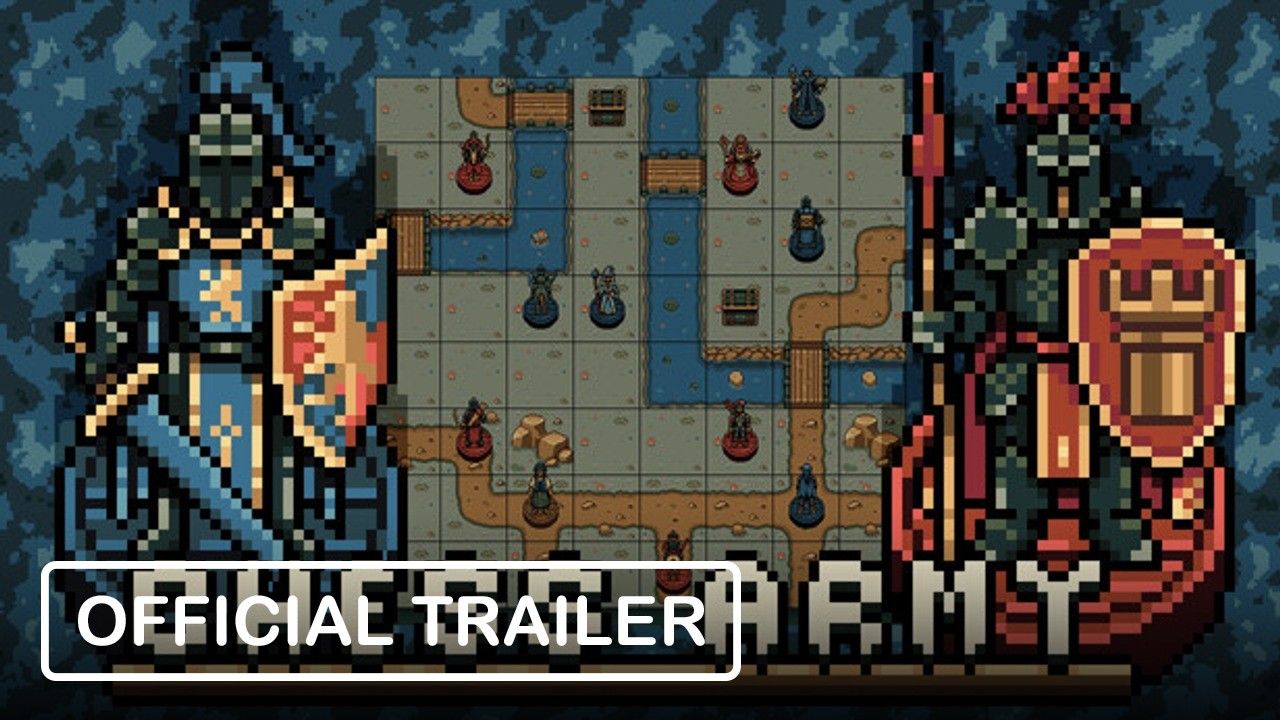
Chess Army borrows chess movement patterns and straps them onto an unforgiving roguelike. Your units are soldiers, mages, cavalry, and spearmen, each moving like a familiar chess piece, but here death is permanent. You get one action per turn, and if your commander falls the run is over. It is a tight, tactical loop built around positioning, unit evolution, and risk management.
Four corps, four distinct ways to cross the board
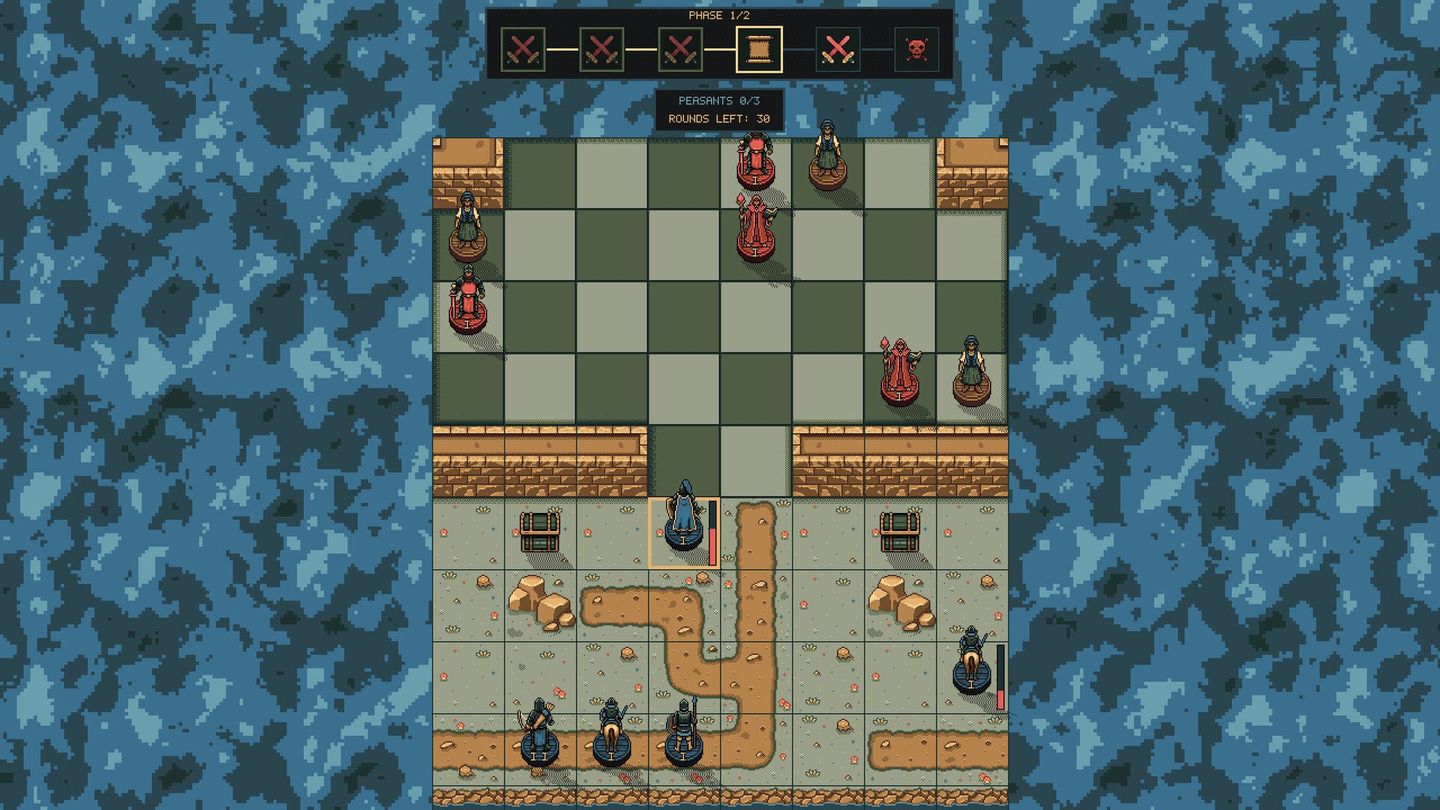
The game maps four army corps to chess movement in a very clear way. Mages slide on the diagonal like bishops, sending ranged strikes that avoid straight files. Cavalry leaps in an L like knights, vaulting over other units. Spearmen and guards advance and lock lanes in straight lines like rooks. Infantry moves in all eight directions like queens, offering the most flexibility and serving as your backbone. Those movement identities shape how you place units, control sight lines, and plan combos.
Your army is built from what you destroy
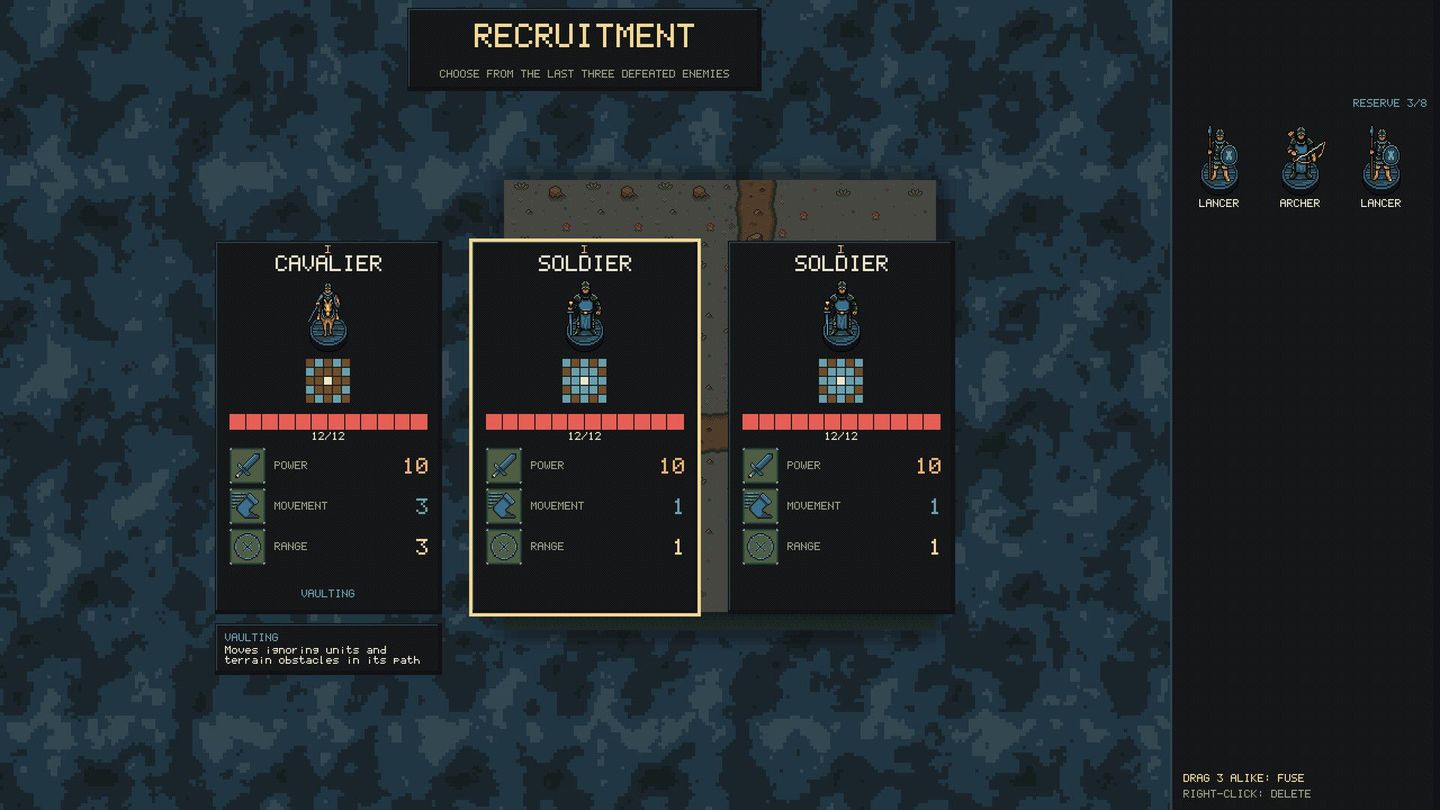
Recruitment uses a neat roguelike twist. After each battle you recruit one of the last three enemies you killed, so your roster literally grows from your victories. Between fights you can stash reinforcements in reserve, then fuse three identical pawns to evolve them. Each base class branches twice, with two specialisations per branch, yielding 28 playable classes in total. A plain soldier can end up as a barbarian or a weapon master, a mage can become a protective archbishop or a blood-drinking warlock. The fusion system makes unit planning and preservation key parts of long-term strategy.
Campaign structure, commanders, and permanent stakes
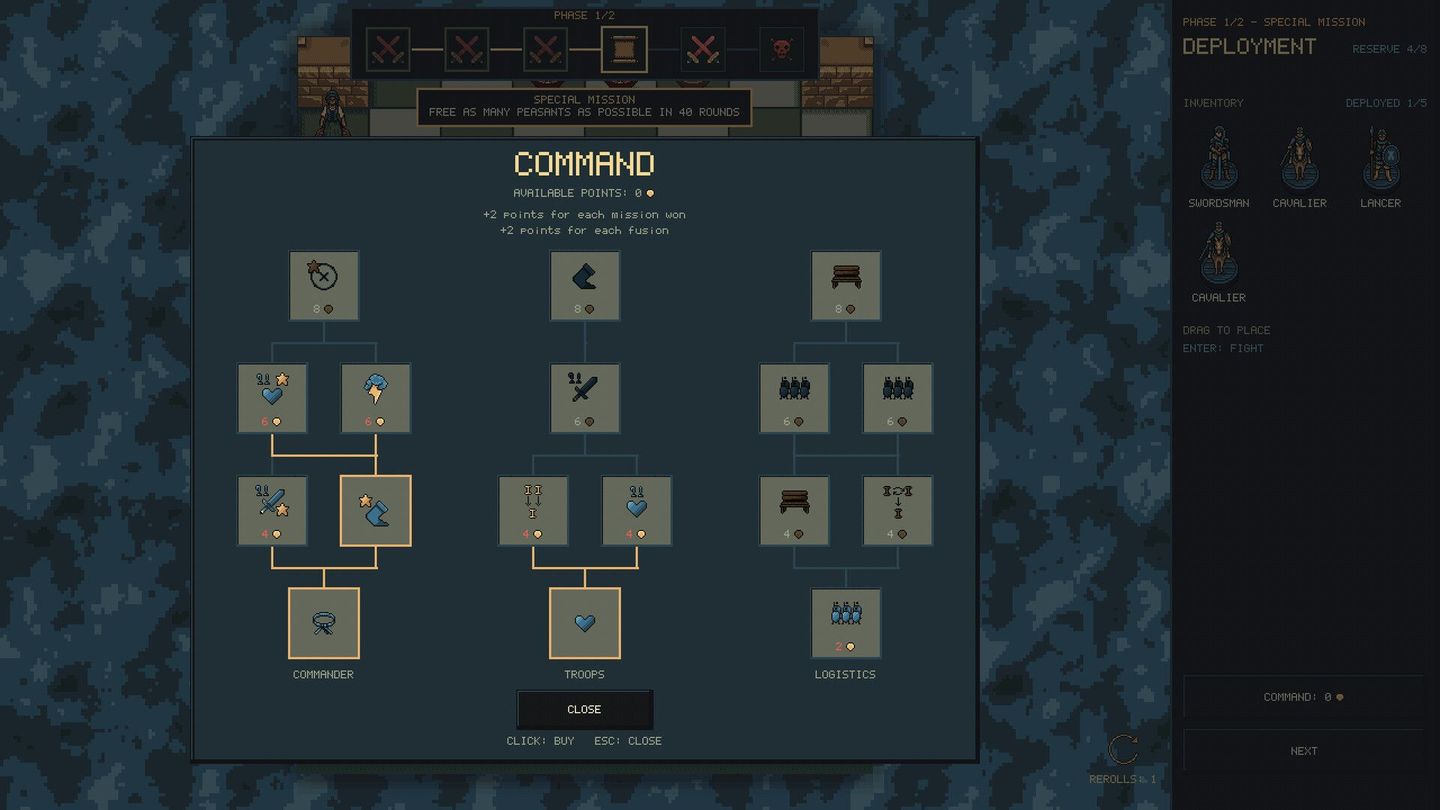
A campaign runs across three phases of six missions each, for a total of 18 battles. Each phase contains skirmishes, one special mission, and a phase-ending boss. You face three different warlords across the campaign, each with a distinct style. At the head of your force sits a commander you choose before a run. Commanders have their own command trees and earn command points between battles. You spend those points to shape a run by sharpening leadership, hardening troops, or expanding logistics to deploy and keep more units. Remember that the commander is irreplaceable: if they die the campaign ends.
Terrain, equipment, and one decisive action per turn
Terrain influences outcomes in concrete ways. A bush lowers incoming damage, a boulder blocks line of sight, and water reshapes available paths. Positioning often beats raw stats. Chests hide equipment in common, rare, and legendary tiers, and each unit may carry one item. Combine gear, unit traits, and tight movement patterns and the board becomes an exercise in chesslike spatial reasoning with roguelike stakes.
Chess Army is about building an army from scraps, setting pieces to deny space, and juggling evolution choices with permadeath tension. If you enjoy grid-based tactics where every tile and every recruit matters, this one looks worth watching.