


Slay the Demon Kings - Kill Them All Brings Party Deckbuilding to a Ticking Clock
Slay the Demon Kings, subtitled Kill Them All, is a single-player party roguelike that glues together three tight ideas: party RPG tactics, deckbuilding customization, and time-pressured enemy countdowns. You command three amnesiac adventurers who share a single hand of cards and one pool of Action Points. Every choice pushes enemy timers closer to zero, and the moment a countdown hits, that foe goes off. It is a compact premise with room for a lot of emergent tension.
The decision space here is built on tradeoffs. Do you spend scarce Action Points to heal and protect, or do you dump them into a lethal combo? How you route upgrades and which weapons you equip can turn the same card into very different roles across runs. If you like systems that reward planning, read on.
Shared Hand, Shared Fate
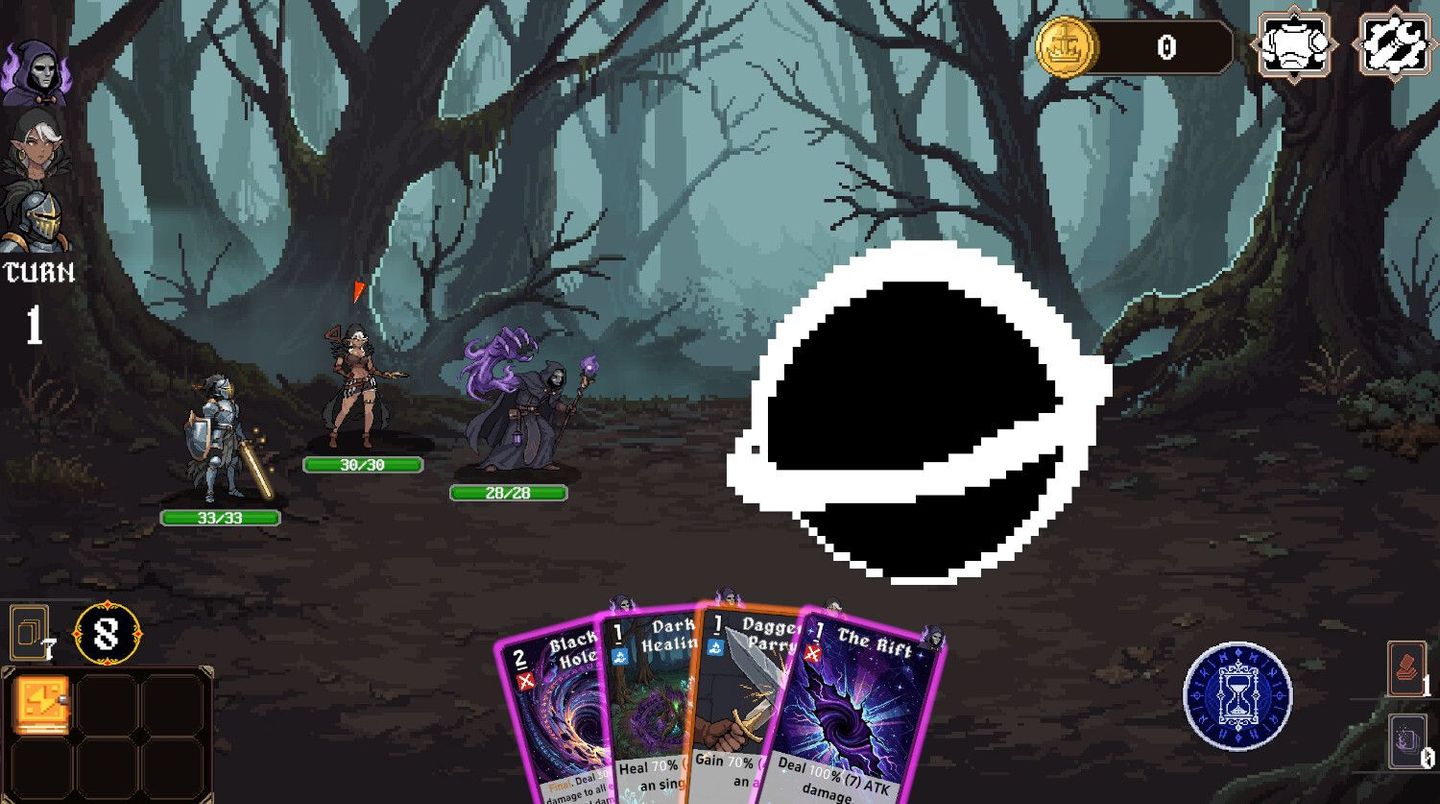
Pick three characters from a roster of very different combat archetypes. Some are tanks, some lean into heals, others chase crits, poison, or status-control synergies. Each character brings their own stats, card set, and progression path, but the twist is that the whole party uses a single deck, a single hand, and the same Action Point pool.
That shared-resources design forces constant negotiation between party members. You might need to spend points to interrupt an enemy about to act, or you might gamble on leaving a timer to finish a combo that kills two attackers. When an ally falls they do not instantly leave the fight. Their cards shift into rescue actions, so you must weigh continuing the offensive against bringing a teammate back. Those tense moments are where the shared-hand concept shines.
Cards, Upgrades, and Neutral Tools
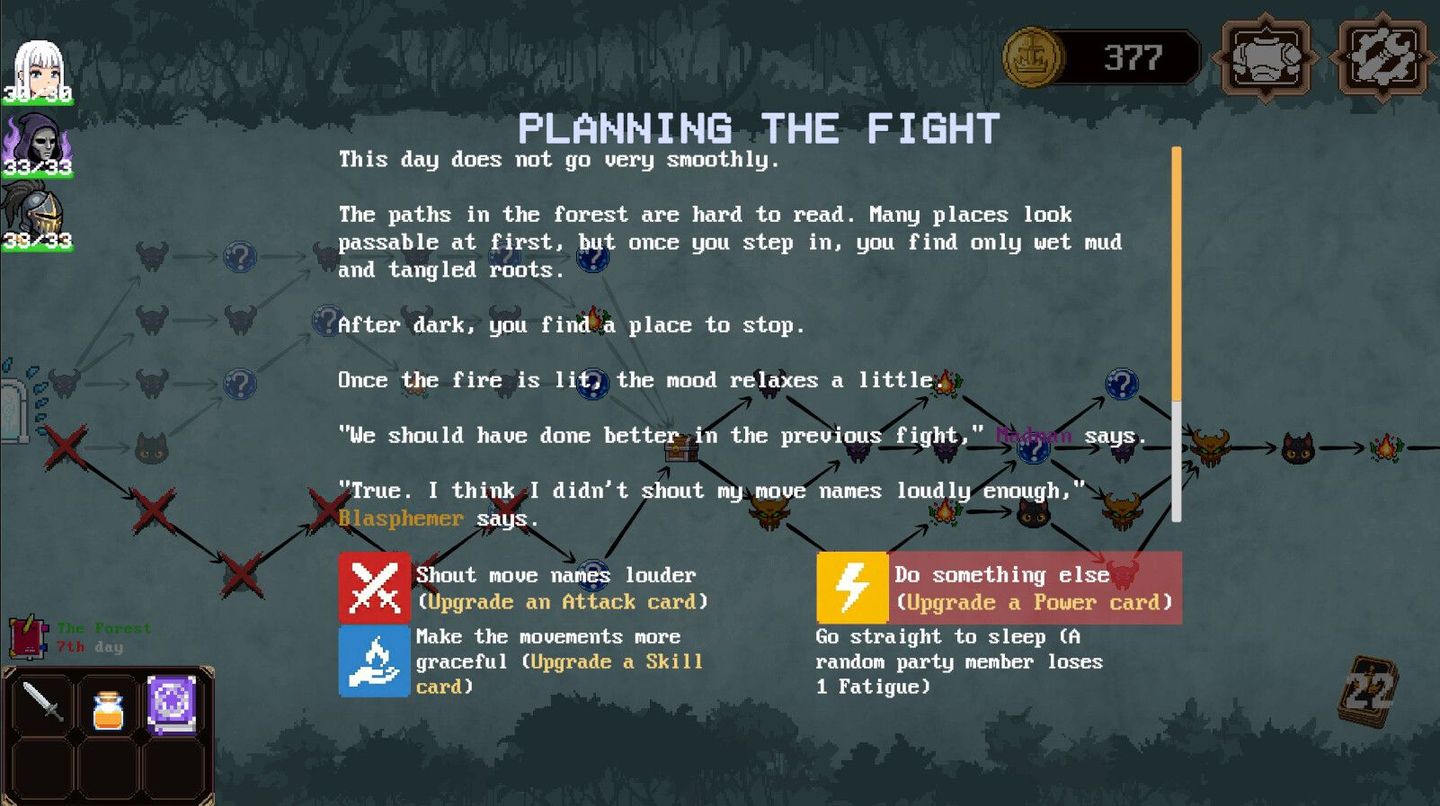
Each character has 13 class cards plus 2 Masterstroke cards, forming a coherent class system. Every class card includes three distinct upgrade paths, so the same base card can evolve into wildly different effects depending on your choices. That allows for deep replayability: a card can become the cornerstone of one build, a safety valve for another, or an odd synergy piece in a third.
On top of class cards, there are 41 neutral cards that you can add freely to your party deck. These neutral pieces can either bolster an existing strategy or provide the seed for a new archetype. Between class cards, Masterstrokes, and neutrals, the game wants you to experiment and discover combos that fit your chosen trio and the shared-hand constraints.
Gear, Treasures, and Build Synergy
Cards are only part of your toolkit. Weapons, treasures, and consumables all change combat stats like Attack, Spirit, and Critical Rate. Legendary weapons can redefine a character's role, while less flashy treasures might become the hub of a reliable archetype. Consumables are the classic roguelike swing items - one well-timed use can turn an impossible fight into a clear path forward.
Because equipment alters core stats and interacts with cards, every run feels like assembling a new machine. The shared deck rule makes equipment choices more meaningful: a weapon that boosts one hero can indirectly enable or limit the party's card economy.
Enemy Countdowns and Rescue Actions
Enemy timers are the heartbeat of the combat loop. Every action you take advances enemy countdowns, and when a countdown hits zero that enemy acts immediately. Reading enemy intentions, controlling action order, and prioritizing interrupts are crucial skills. This timing mechanic makes turns feel less abstract and more like a tightly choreographed dance where one misstep can trigger cascading consequences.
The rescue mechanic adds another tactical layer. Rather than an instant defeat, fallen allies become a new kind of resource problem. Their cards flip into rescue options, forcing you to decide between pressing your advantage or bringing a friend back. It keeps battles dynamic and raises the stakes without abrupt run-ending penalties.
Who This Is For
If you enjoy tactical party management with a strong deckbuilding spine and a preference for high-risk, high-reward decision moments, Slay the Demon Kings looks tuned to your tastes. The shared-hand and shared-Action-Point rules create memorable choices, while deep card upgrade paths and a robust equipment system promise varied runs.
There is an emphasis on reading the battlefield and on creative problem solving. If you like systems that let you craft unusual synergies or punish hasty plays, this one is worth watching as it develops.