
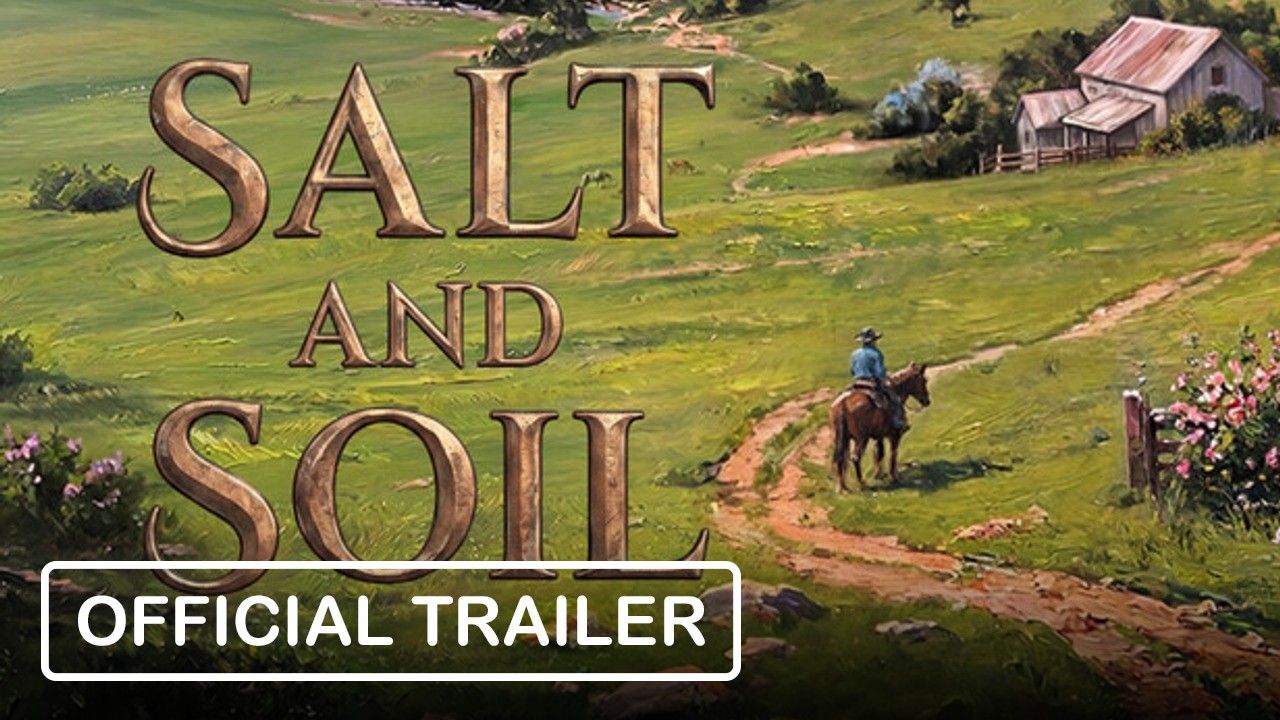
Salt and Soil: A Frontier Family Sim
Salt and Soil is a stripped-down, old-school roguelite colony sim that asks a simple question with weighty consequences - what does it feel like to keep a family alive, fed, and standing on the frontier across generations? You guide one homestead through the volatile years from 1609 to 1900, building farms, workshops, and relationships while juggling scarce supplies and limited labor.
This is not about a lone hero. It is about a household - parents, children, in-laws, rivals - each with traits, moods, and grudges that ripple through time. Every run becomes a unique family chronicle. When the year ends, your playthrough is distilled into a family council shaped by what actually happened to your people.
Minimalist mechanics, meaningful consequences
Salt and Soil leans into minimalism for clarity. The game asks you to plan each year like a budgeting problem that matters. Balance food, wood, metal, money, tools, goods, livestock, housing, buildings, and labor. Choose what to build, what to produce, and when growth is worth the risk - and then live with the human cost of those choices.
Good years let your ranch expand. Bad years demand painful sacrifices - livestock sold, a child sent away to work, or a planned barn left half-built. The roguelite element comes from that push-and-pull: you rarely get a perfect run, but each setback seeds stories, grudges, and lessons for the next generation.
Family members are more than stat blocks. They age, marry, bicker, fall in love, and sometimes die. When the head of household passes on the ranch, the next generation inherits not only buildings and animals but debts, rivalries, and reputations you created.
Family councils - play shaped into drama
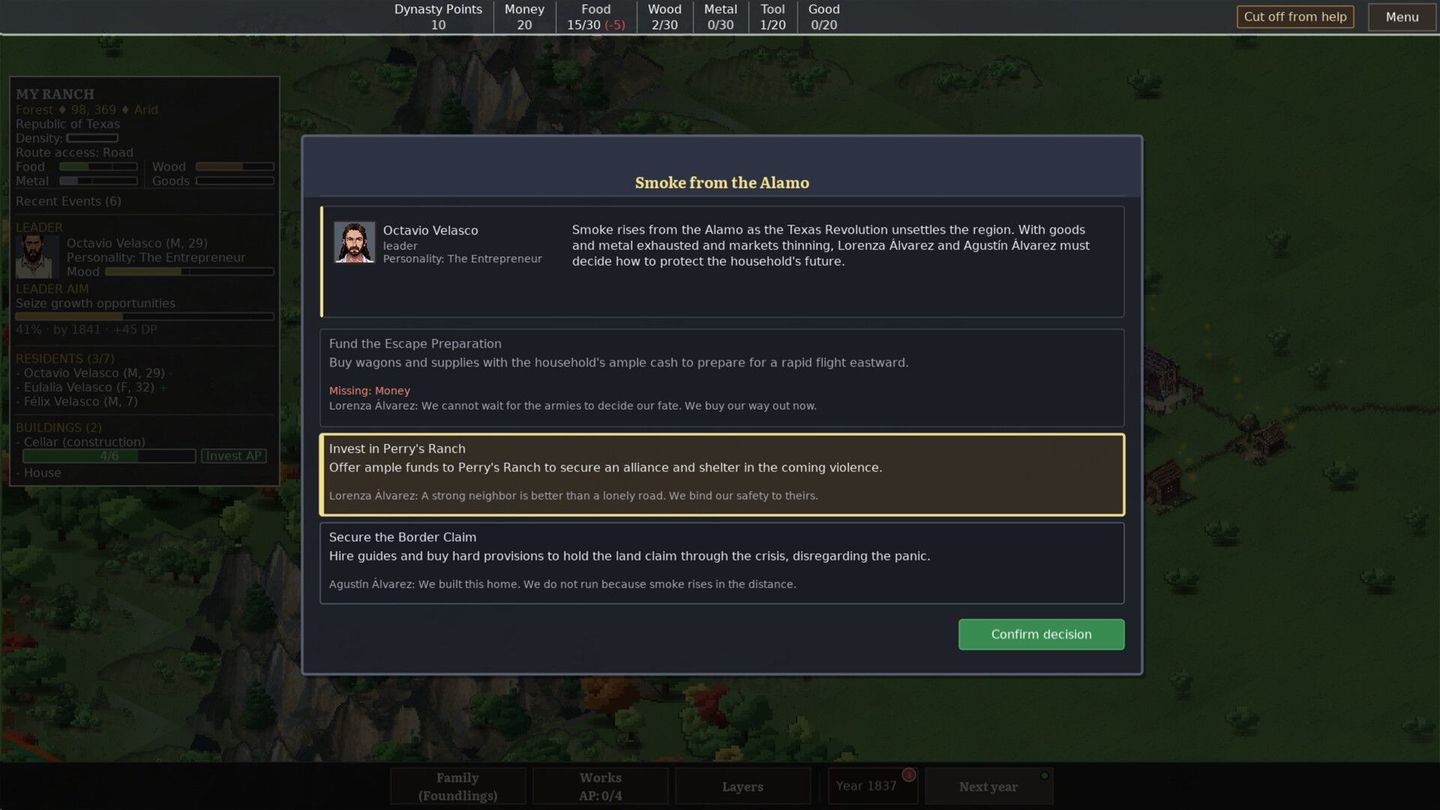
One of Salt and Soil's clearest hooks is its year-end family council. Instead of abstract scoring, the game takes the events you lived through - hunger or surplus, births, deaths, marriages, bargains, raids, debts, and victories - and turns them into personal dilemmas and turning points around a table.
Those councils frame your legacy. Who inherits the ranch? Who is forgiven or ostracized? Which choices are remembered as betrayals, and which become family lore? It is a clever way to make systems feel like story without scripting every beat.
Because the council is built from your campaign, two identical-looking farms can create wildly different dynasties depending on personalities, accidents, and hard choices. That makes replayability about more than new maps - it is about new families.
A frontier that changes as you do
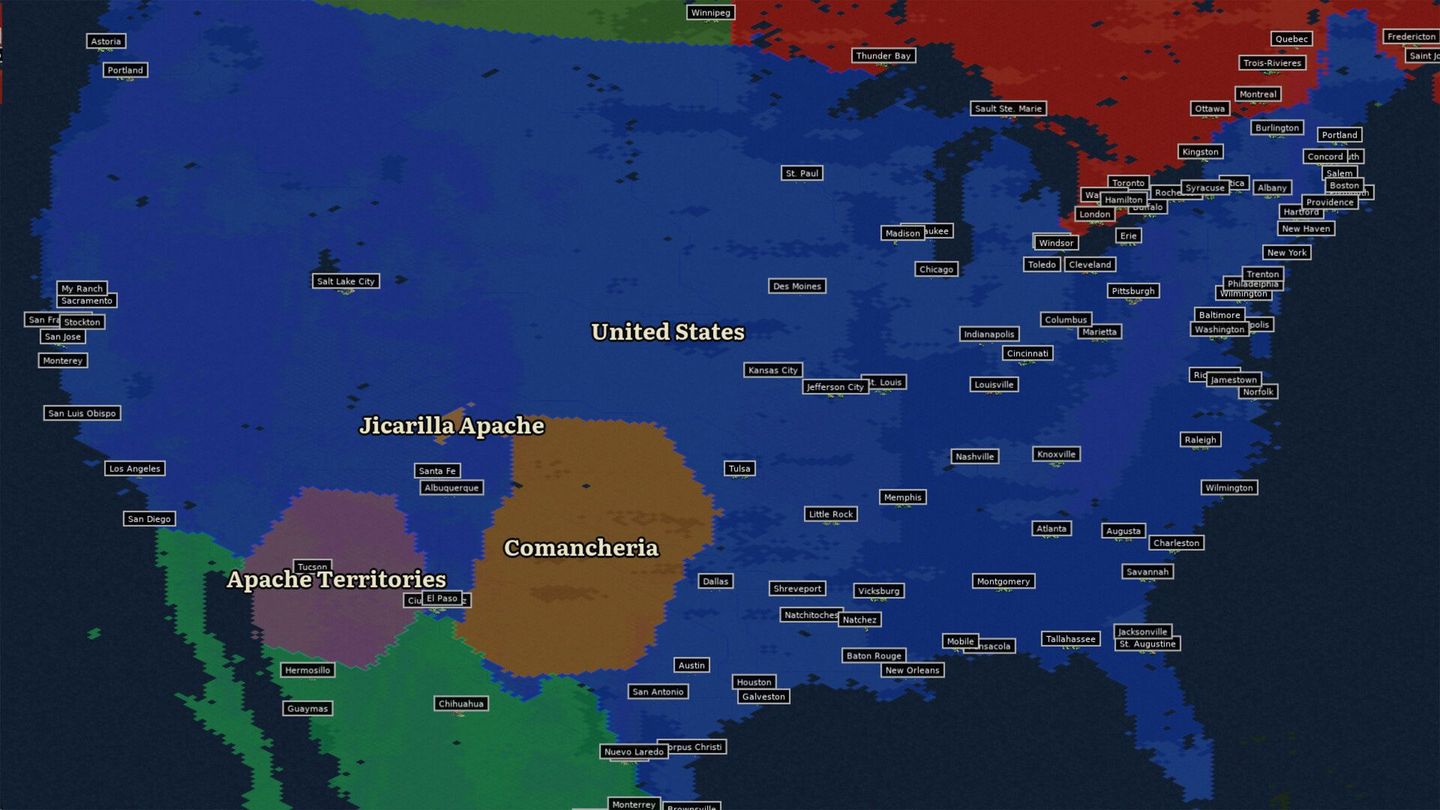
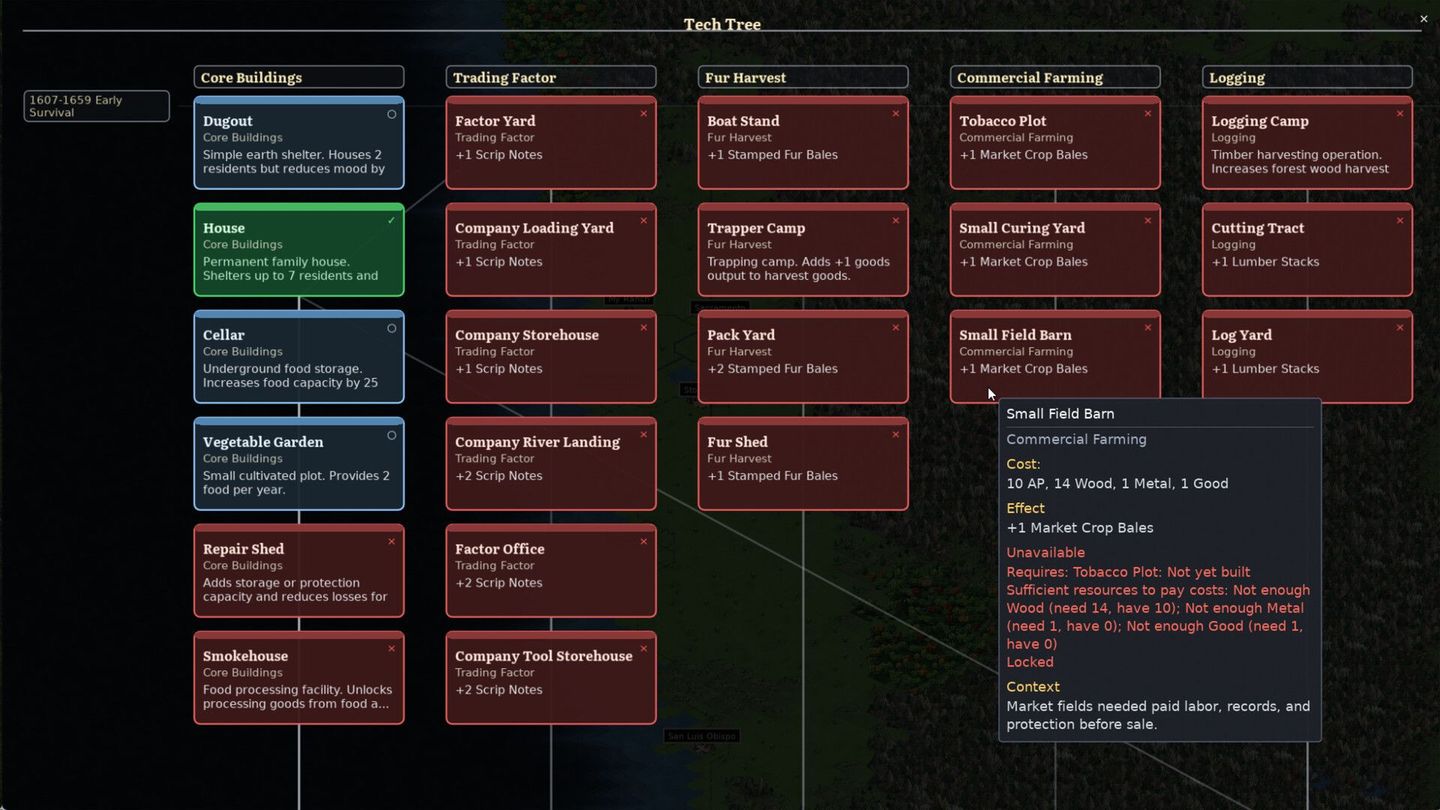
Salt and Soil situates your little world inside a broader, shifting frontier. Resource shortages, migration, shifting borders, market swings, and local conflicts all touch your homestead. Your neighbors range from traders and migrants to bandit camps and Indigenous nations. You can trade, cooperate, negotiate, or enter conflict, and those interactions affect safety, resources, and reputation long term.
The timeline focus - 1609 to 1900 - means the map and the politics around you will change as centuries pass. The developers highlight that Salt and Soil is also being made to mark the 250th anniversary of the U.S. Declaration of Independence in 2026, which gives the project a prompt to look beyond a single date and toward the generations who lived beneath big historical moments.
If you like colony sims where choices have human texture instead of only spreadsheet effects, Salt and Soil looks aimed at giving small-scale drama real weight.
Wishlist and follow
Wishlist Salt and Soil and follow its development to see how those family chronicles take shape. Every playthrough starts a new family story - the question the game leaves on the table is simple and potent: what will your family leave behind?