
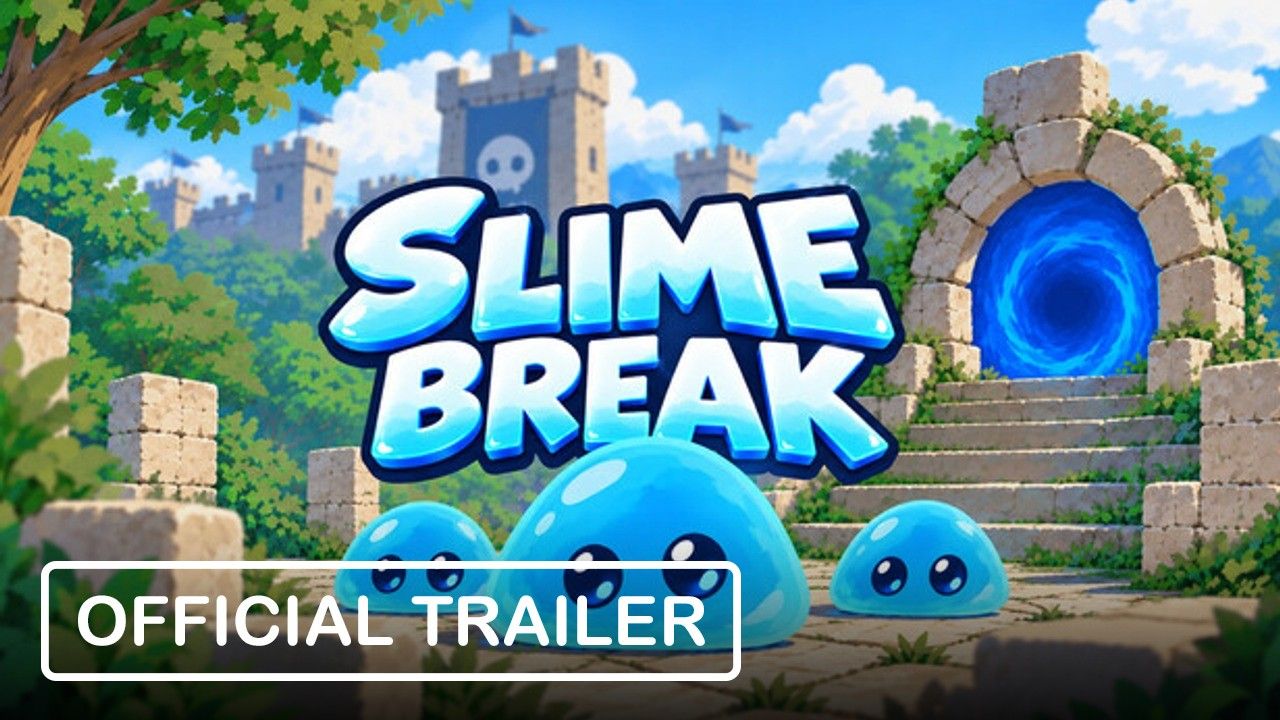
Slime Break: Tower Defense Against a Slime Horde
Imagine a siege where the attackers are soft, sticky and impossibly numerous. Slime Break makes that image literal. Thousands of individually simulated slimes march on your base, each with weight, collisions and simple instincts, and your job is to bend that living mass into a meat grinder of walls, towers and traps.
It is not about painting a path or placing chokepoints the usual way. The horde finds the shortest route and squeezes through any gap. They pile up, climb over each other and will pour clean over a short wall. That turns every construction choice into an experiment in flow, pressure and inevitability.
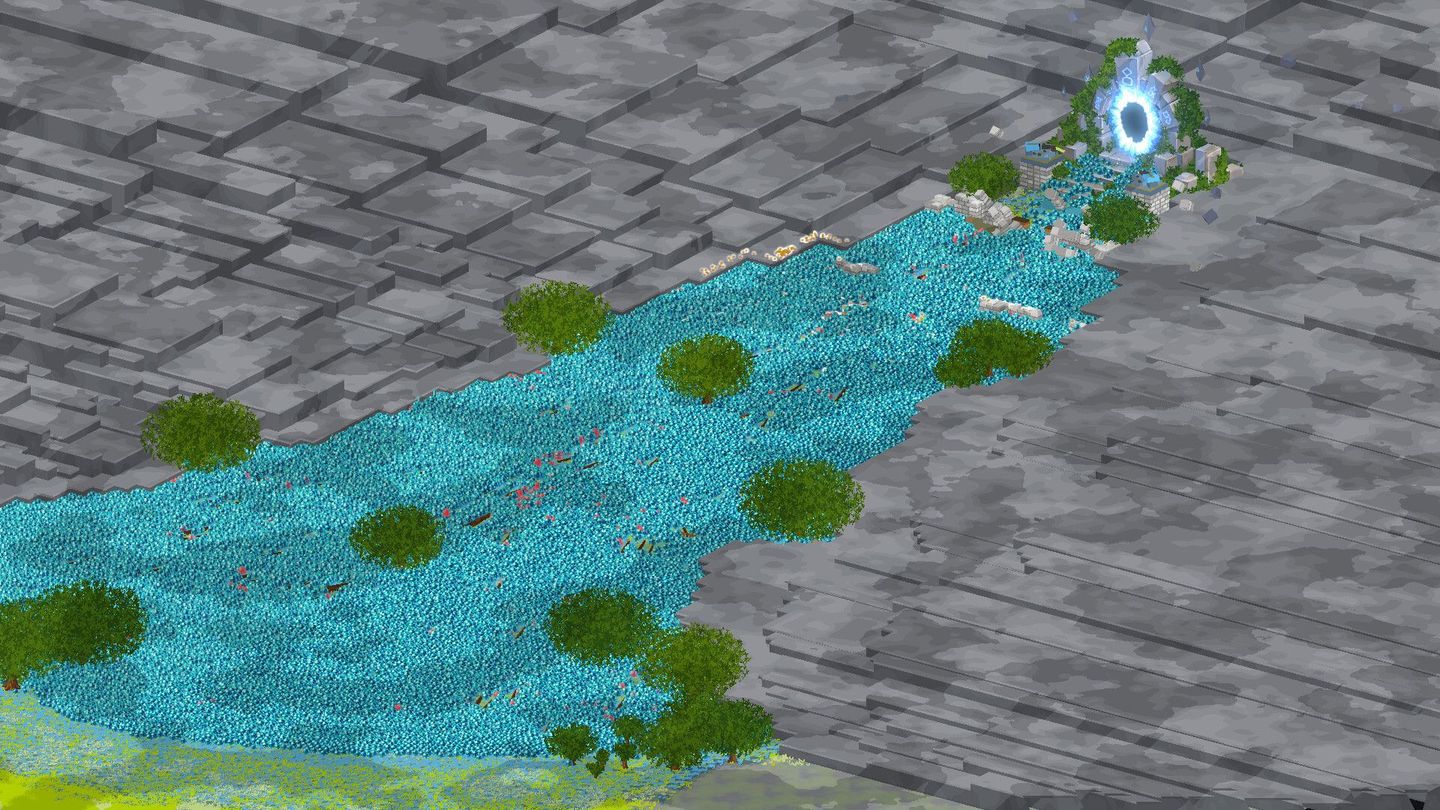
A Horde That Behaves Like Water
What sets Slime Break apart is simulation at scale. Every slime is simulated individually, so the collective behaves like a fluid that reacts to every obstacle. Close a corridor and they go around. Open a corridor and they charge through it. Block the entire path and they start tearing down whatever is in front of them.
Not all slimes are the same. Small ones are fast. Big ones break into smaller slimes when they die. Armored slimes wear shells that must be destroyed before the body takes damage. Each wave mixes these types differently, so a strategy that works for one wave can fail spectacularly on the next.
Walls feel pressure too. They chip away and crumble under weight, and when a section collapses it crushes whatever is beneath it. Tall walls hold more but fall from higher up, spreading damage across the horde. The forest is part of the physics - a toppled tree can become a temporary barricade, but you cannot bank on nature forever.
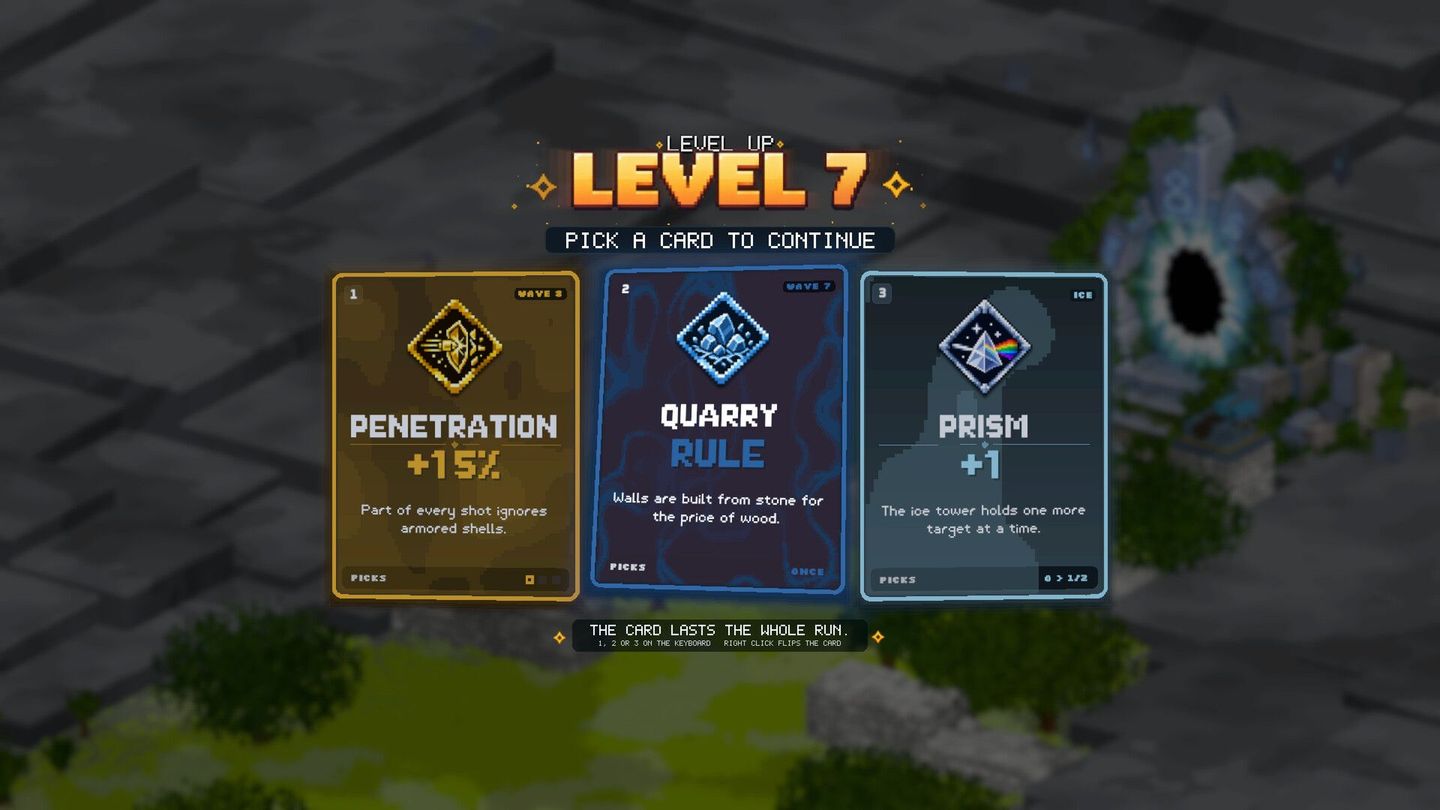
Cards, Chaos and Building on the Map
Between waves you level up and choose one of three cards. The deck has 40 cards and they do more than tweak numbers - they change rules. Dead slimes can become hazards that hurt whatever is stuck to them, shots can be modified to pierce armor, and thrown bodies can become projectiles that injure other slimes. With cards in play two runs rarely look the same.
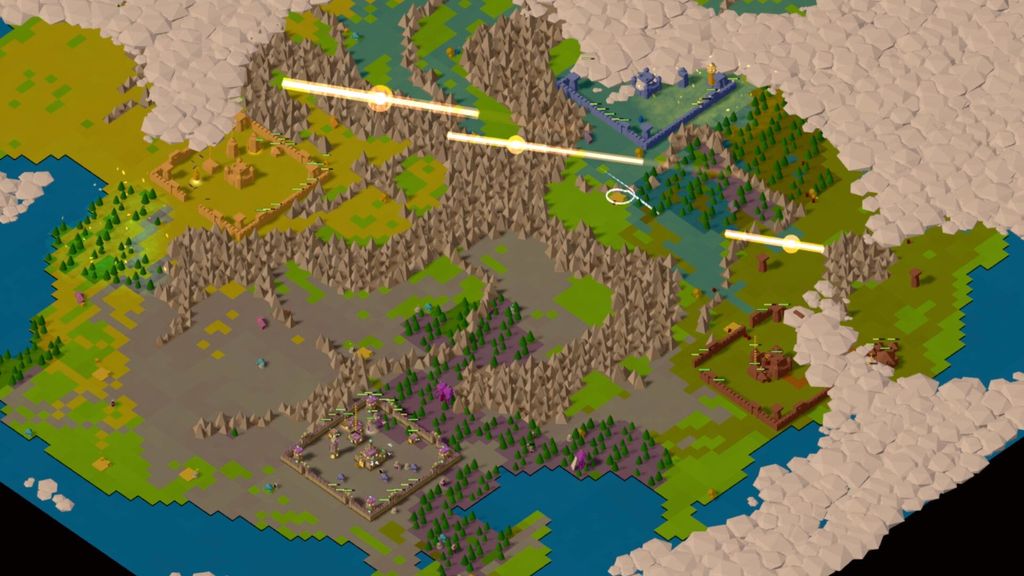
Everything you build appears on the map block by block. Drag to draw walls, pull up to stack floors and place towers on top for better sightlines or on the side to protect the base. You can upgrade materials from wood to stone to iron, sell pieces for partial refunds or undo your last move. The layout you draw changes the route of every slime at once, and a thoughtful funnel keeps the mass under the towers' fire for longer.
There are eight attack and control pieces, each offering distinct ways to handle the mass:
- Cannon - arcing bombs that burst, dig in and fly over walls, or boulders that roll along the ground.
- Machine gun - bursts that shred the line or precision shots that pierce armor.
- Tesla - lightning jumps between slimes or electrifies the ground they cross.
- Ice - pins a few targets or freezes everything in pulses.
- Flame - long jets that sweep the line or furnaces that roast up close.
- Glue and oil - puddles that stick, corrode, push back or ignite when the horde walks through.
- Piston - a heavy shove that throws the mass back.
Bawat piraso uma-upgrade hanggang level III, at sa tuktok pipili ka ng isa sa dalawang anyo. Mahalaga ang mga card at kombinasyon ng elemento - ang frozen na slime na napapaso ay pwedeng sumabog, ang kidlat kayang tumalon sa ibabaw ng glue nang hindi bumababa ang lakas, at ang nasusunog na langis ay kayang gawing labanan ang isang simpleng puddle.
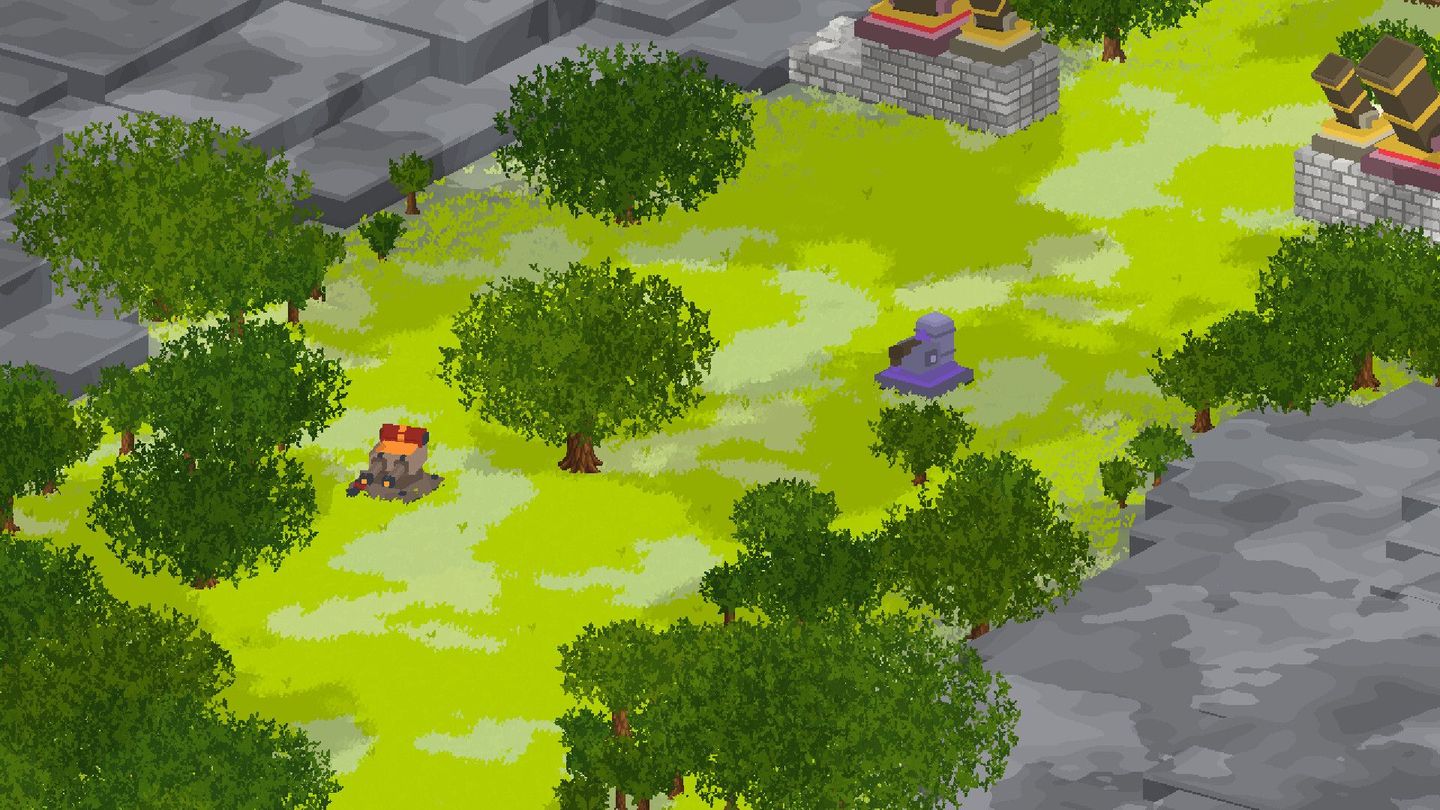
Terrain, Fire and Tactical Destruction
Walang anumang nasa mapa na basta dekorasyon lang. Ang mga pagsabog ay humuhukay ng mga crater na pwedeng pagkalagyan ng horde. Ang mga slime na dulas papasok ng butas ay nagtatambak hanggang makabuo ng ramp at makakaakyat, at ang mga gilid ng crater ay bumabagsak habang tumataas ang presyon. Kumakalat ang apoy, sinusunog ang mga slime at nagbubuga ng apoy sa mga tuktok ng puno. Nagniningas ang langis at kayang gawing pugon ang isang koridor - malakas, pero delikado.
Hindi kusang naaalis ang mga tore kapag bumigay ang mga suporta. Kung bumigay ang isang pader, maaaring bumagsak ang mga tore at matamaan ang horde, na ginagawang kalbo ang sariling depensa. Ginagawa nitong nakakaaliw panoorin ang mga agresibo o desperadong build dahil sa feedback loop na ito.
Essence, Progression and Replay DNA
Bahagi ng loop ang pagkatalo. Ang nakokolekta mo sa isang run ay nagiging essence, at ang essence ang nagpapakain sa isang persistent shop na nakaayos bilang puno na may walong sanga. Gamitin ito para i-unlock ang mga bagong piraso tulad ng glue at langis, pataasin ang base health, dagdagan ang starting funds o palawakin ang mga card option. Bawat run nagsisimula ka nang bahagyang mas malakas kaysa sa nauna, kaya bahagi ng puzzle ang matutunan kung alin ang mga upgrade na bagay sa estilo mo.
Dahil kayang baguhin ng deck, card at mga interaksiyon sa mapa ang mga patakaran sa kalagitnaan ng run, hinahalo ng Slime Break ang maingat na pagpaplano ng tower defense at ang magulong saya ng emergent physics. Binibigyan nito ng gantimpala ang parehong maayos na funnel at ang on-the-fly improvisation.
Why Slime Break Sticks
Binabago ng Slime Break ang pamilyar na tower defense template tungo sa isang mas magulo at mas tactile na karanasan. Ang kasiyahan galing sa panonood ng pagsasama-sama ng plano - isang ramp na nagfunnel ng masa, isang puddle na sumisigla kapag dumating ang mga armored slime, isang bumagsak na pader na pinatuyok ang isang agos ng mga kalaban - at pati na rin sa mga pagkakataong ito ay talagang sumasablay. Tungkol ang laro sa kontrol sa pamamagitan ng pag-unawa kung paano kikilos ang libu-libong malalambot na katawan, at pagkatapos ay ginagabayan ang kilos na iyon papunta sa patibong.
Kung mahilig ka sa mga sistema na nagbabanggaan - physics, procedural na pagpili ng card at permanenteng progression - paparamdam ng larong ito na bawat run ay isang maikling eksperimento sa malikhaing pamamahala ng sakuna.