
Close the Sky 把战线缩到瞄准镜里
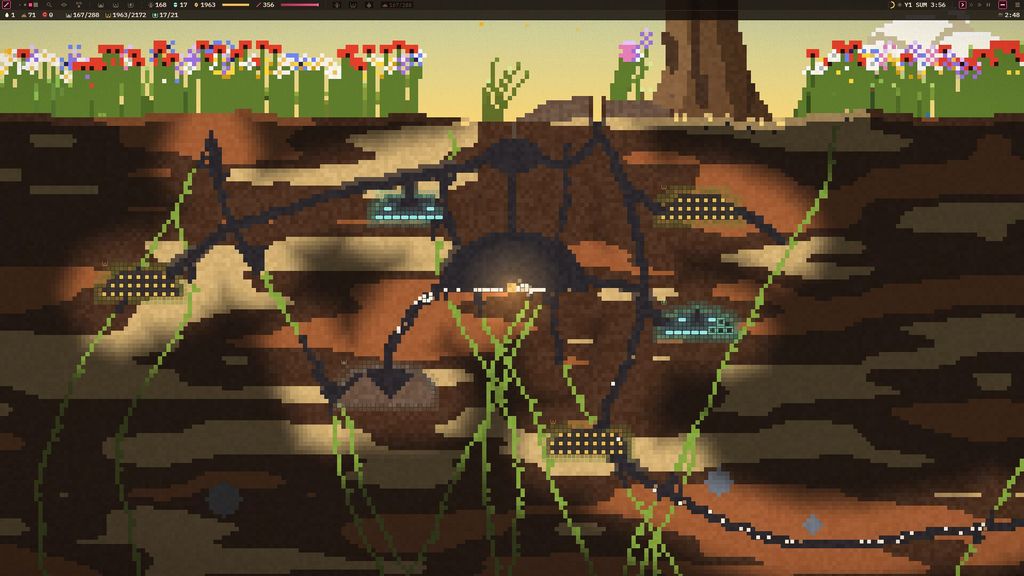
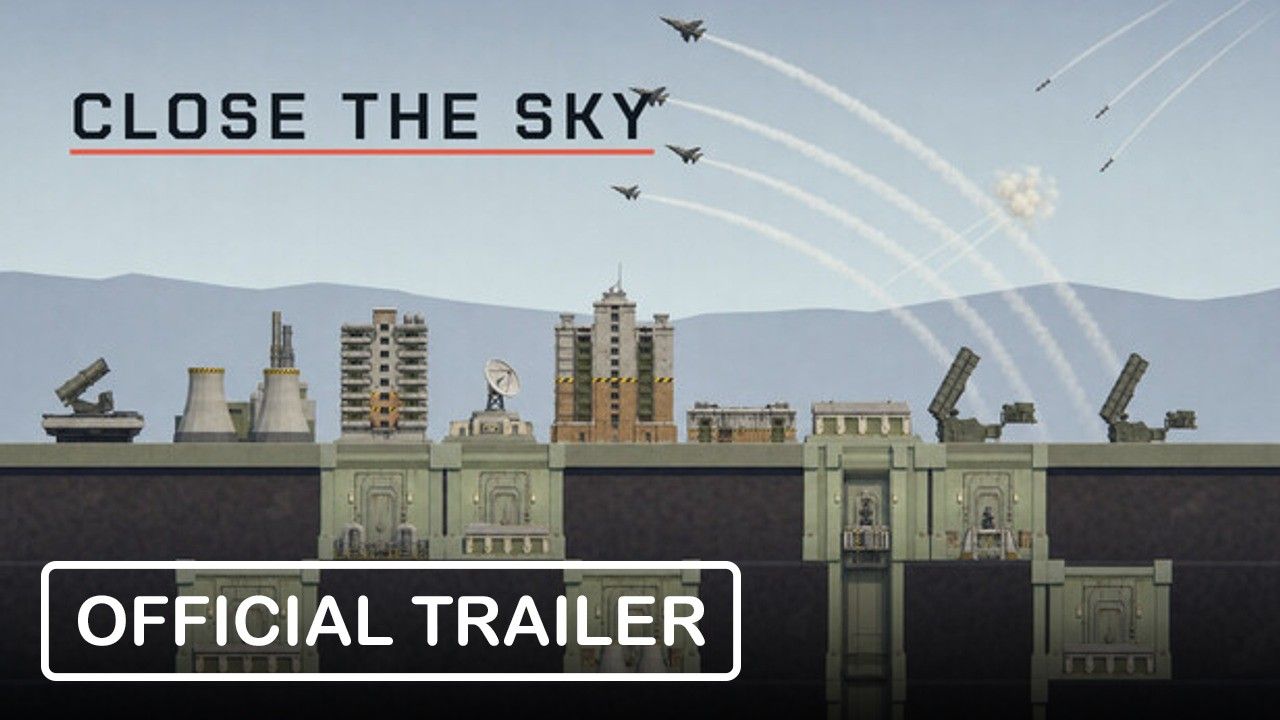
Close the Sky 把战场限制在一个横向剖面上。上面是天空,下面是一条地面带。你从这一视角指挥一个国家的战机:地表的工厂、仓库和防空电池,地下则藏着一切重要的东西。敌人与你对称,双方实时重建、研究并射击。
这不是一个单位编队模拟。没有要夺取的正面。胜利靠保护重要目标、发起精准打击,以及让你国家的战意高于对手。你要挖掘、建造,而且要亲自瞄准导弹。
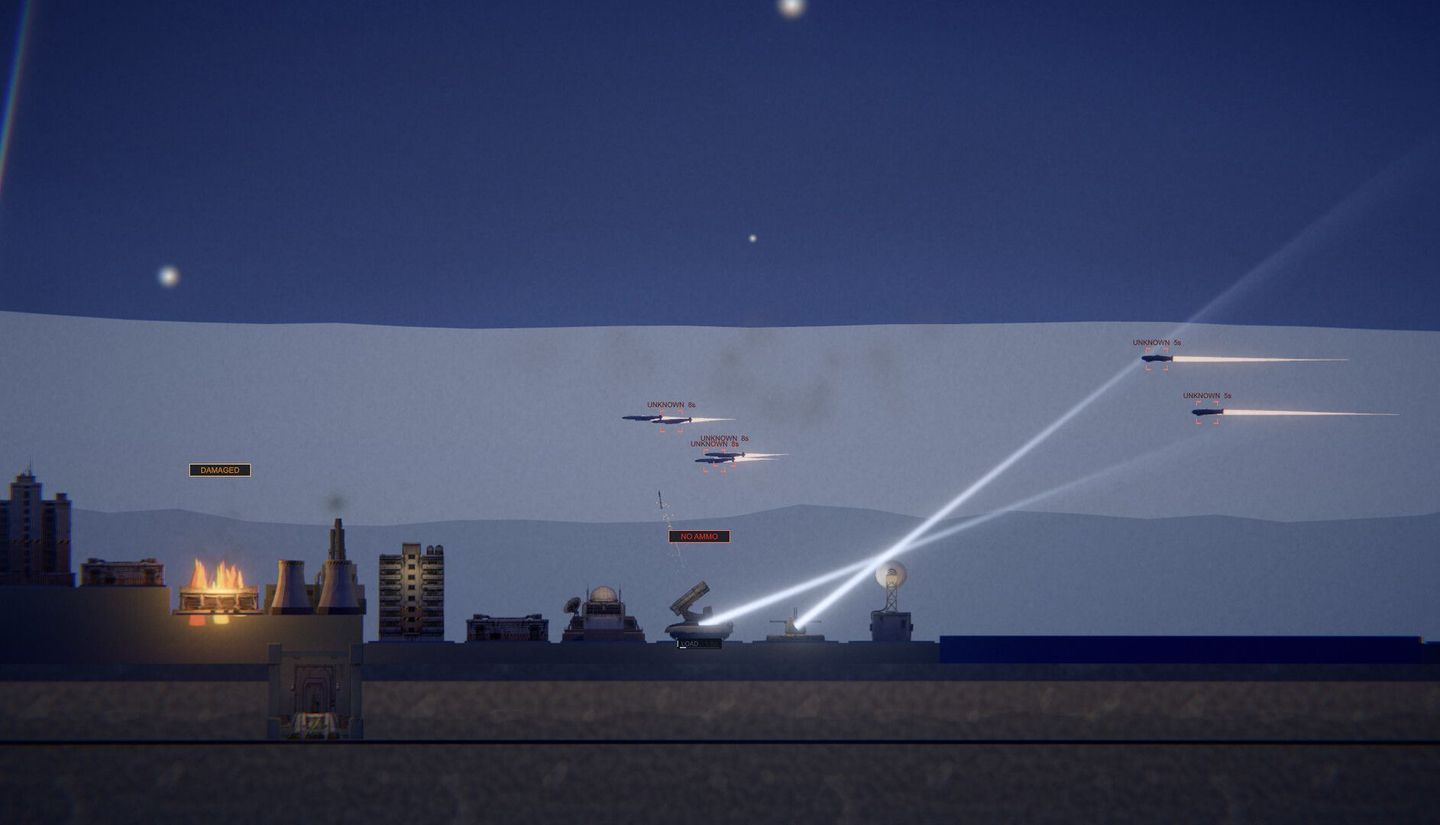
侧面战场
Close the Sky 里每一块地都可以挖三层深。深度会成倍增加成本和时间 - x2、x4、x8 - 而只有穿透性弹头才能到达最深的掩体。一枚 GBU-57 是进入深层掩体的唯一常规手段。这就造就了明晰而残酷的抉择:什么要下地,什么又必须暴露在外?
防空电池和雷达根本不能下地。它们需要与天空的视线连通,这也意味着那些维系你生存的设施恰恰是必须保持可见的目标。这种权衡是游戏的节拍:把经济体系埋进地下并尽力护住,同时接受你的防空节点会成为攻击目标。
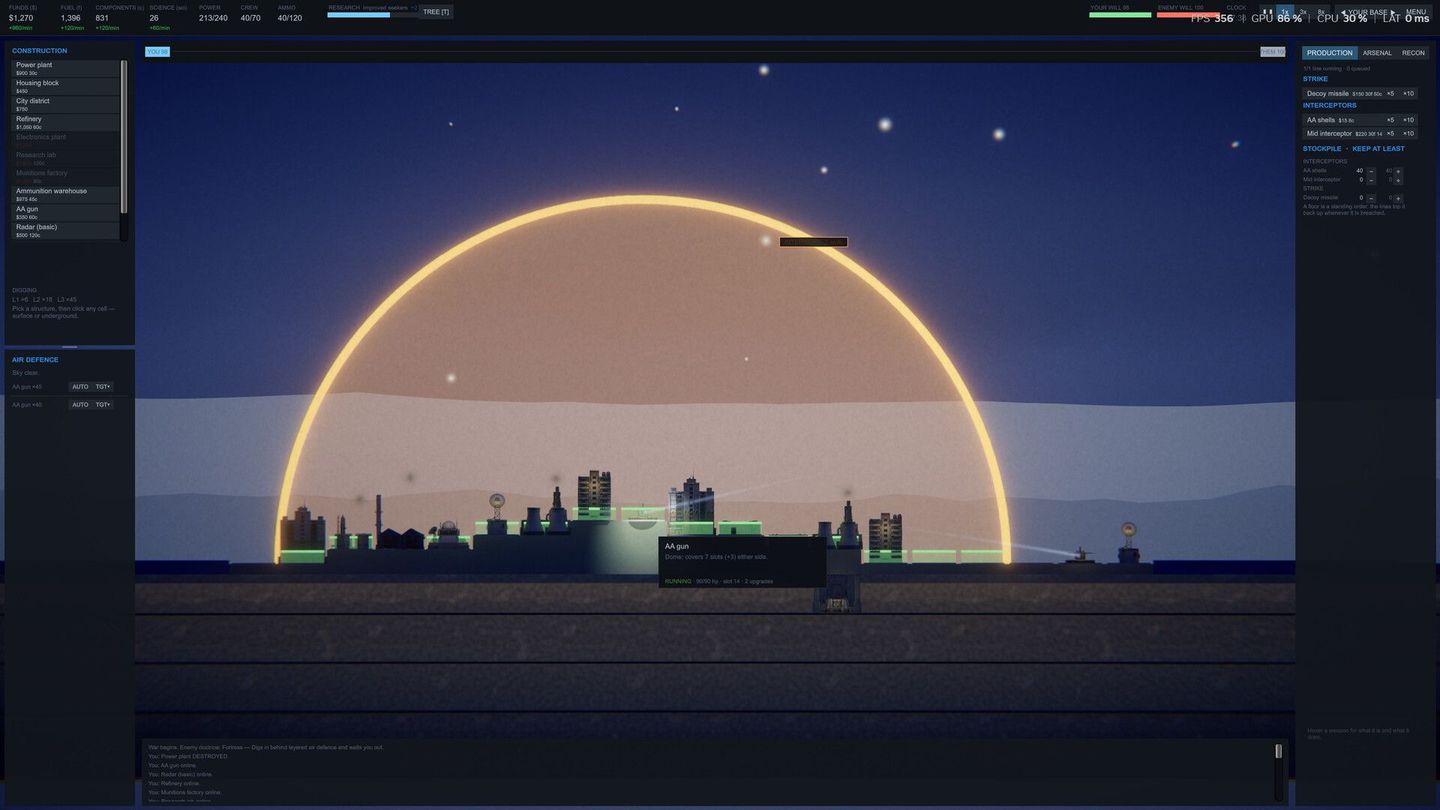
拦截器就是弹药
Close the Sky 把拦截器视作库存弹药。地对空火力从国家仓库发射,架设了发射点但货架空着的防空阵地不过是摆设-防空面板会用红字标注 DRY。你生产的每一发弹药都占用仓库空间。不同弹药占用不同的箱数:一发炮弹算一箱,弹道导弹五箱,核弹头十箱。
生产线很脆弱。一条生产线如果在出产时无处放置成品,就会在 100% 时堵塞,卡住后面排队的一切。而仓库本身也是一把对准你的武器。一个弹药库被炸毁会带走其中的库存,库存会发生爆炸。伤害与仓库当前的满度成正比-满仓会向两侧扩散六格,并能引燃接触到的其他满仓。把仓库埋起来每层都会将爆炸半径减半,这使得存储位置变成一个紧张的设计问题:靠近发电厂会招致灾难,靠近敌方则可能带来胜利。
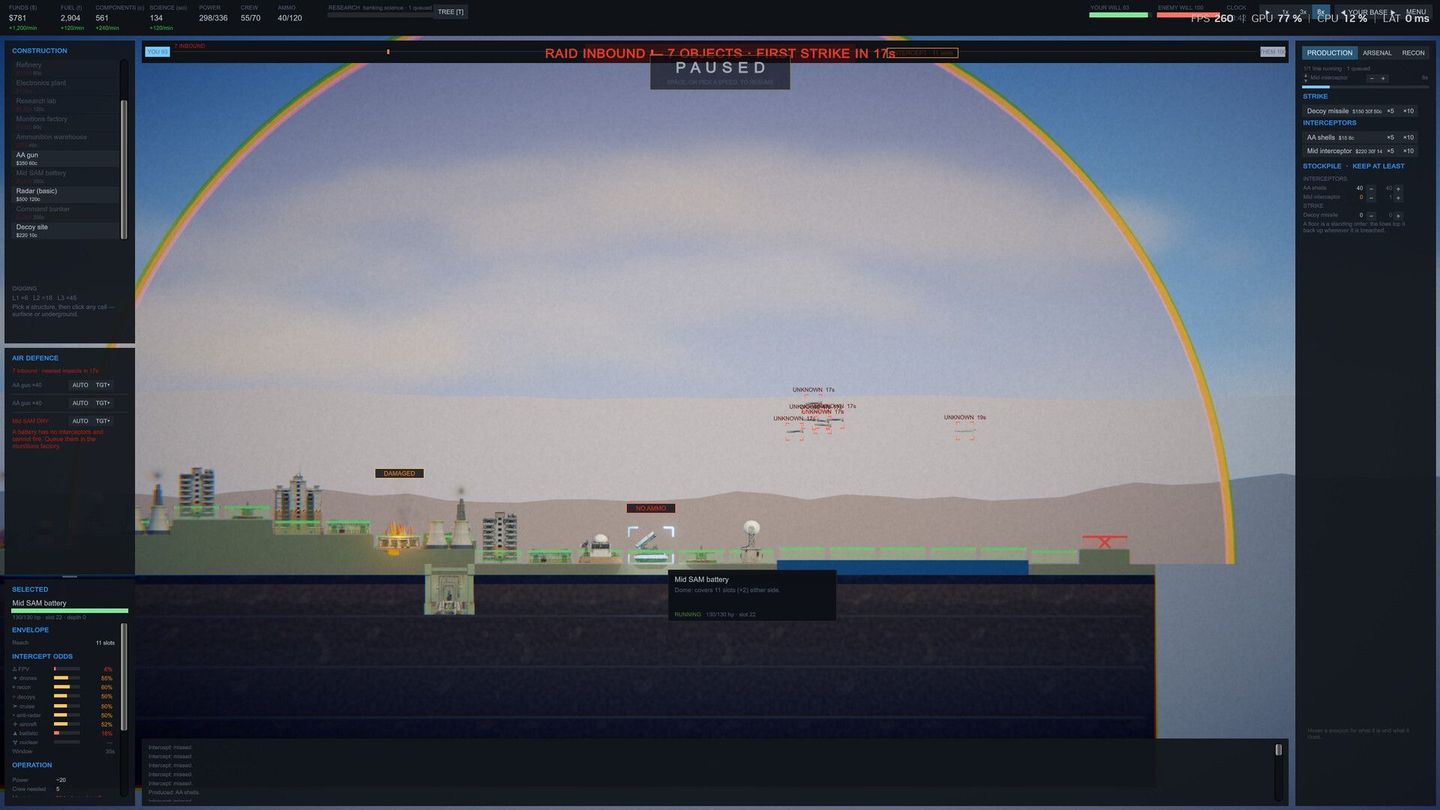
你打的是格子,不是建筑
Close the Sky 的情报总是快照,而且会变得过时。敌方基地一开始是黑暗的。侦察无人机会拍摄飞经过的格子,卫星站按计时器扫视。此后你看到的就是那张图,随着时间推移会从白色变成琥珀色表示情报陈旧。打击是瞄准地点,不是建筑-导弹会命中到达时占据该格的任何东西。这意味着陈旧的情报会让你白白消耗导弹,诱饵也是真实的威胁。
射击是亲手操作的。装备武器,切换到它们的基站,光标会变成瞄准镜:显示一个瞄准框、爆炸覆盖范围、你情报认为该单元内的目标、伤害分布以及你掌握的哪块电池能对其开火。点击即可发射,反复点击可以压制火力。操作感直观且无情-你亲自瞄准,这让每一发子弹都很重要。
Warheads are not interchangeable. Each munition carries a profile across four channels - structure, personnel, electronics and incendiary - reflecting its real-world role. A TOS-1A will gut a garrison and barely mark the walls. CHAMP burns out electronics without knocking much down. Weapons carry their real designations and full profiles are visible on hover, so choosing the right tool for a specific target matters.
Tech, Doctrines and How the Enemy Thinks
Close the Sky offers a full-screen tech tree with 51 technologies across detection, air defence, strategic, strike and reconnaissance branches. Hovering a node dims everything that is not one of its prerequisites, making research paths clear. Research halts if your labs lose power, so the domestic economy and grid are strategic too.
An opponent runs one of three doctrines, chosen by the match seed and announced in the log. Swarm floods the sky with cheap drones and wins on the exchange rate, Fortress digs in behind layered SAMs and waits you out, Blitz races to heavy missiles and hits before your defences exist. Difficulty alters only how fast the AI thinks - not the tools it gets. That predictability lets you plan around doctrine rather than arbitrary AI bonuses.
Multiplayer, Simulation Integrity and Victory
Multiplayer runs the same war against a human opponent. Each client runs the full simulation and only orders cross the wire, so play feels sharp even over a poor connection. The war clock is locked to 1x and every five seconds the clients compare a hash of their entire state to keep things honest.
You do not win by taking ground - there is none to seize. Victory is about will. Each nation has a will to fight that drains from civilian casualties, lost buildings and strategic target losses. The command bunker alone is worth 30 will. Nuclear weapons crater the opponent's will but dent your own, so escalation has real strategic cost.
Where to Look Next
If you like tight systems that force trade-offs between industry, detection and kinetic force, Close the Sky wears its rules on its sleeve. The game puts strategy into the mechanics of production, storage and targeting, and makes every decision have immediate, visible consequences. The developers also run a Discord for the project where players can follow development, discuss doctrines and share tactics.