

Dungeon Tells gives social deduction a dark, single-player twist
Dungeon Tells blends two ideas that do not often meet - the paranoia and deduction of social games, and the replayability of a roguelite card system. You play Demi, the Dungeon Mistress, charged with hunting down heroes who slipped out of their cages. Your main tool is not brute force but reading minds. Peek at thoughts, decide who to execute, and use charm to bend the strongest to your will.
Mind-reading is the core loop
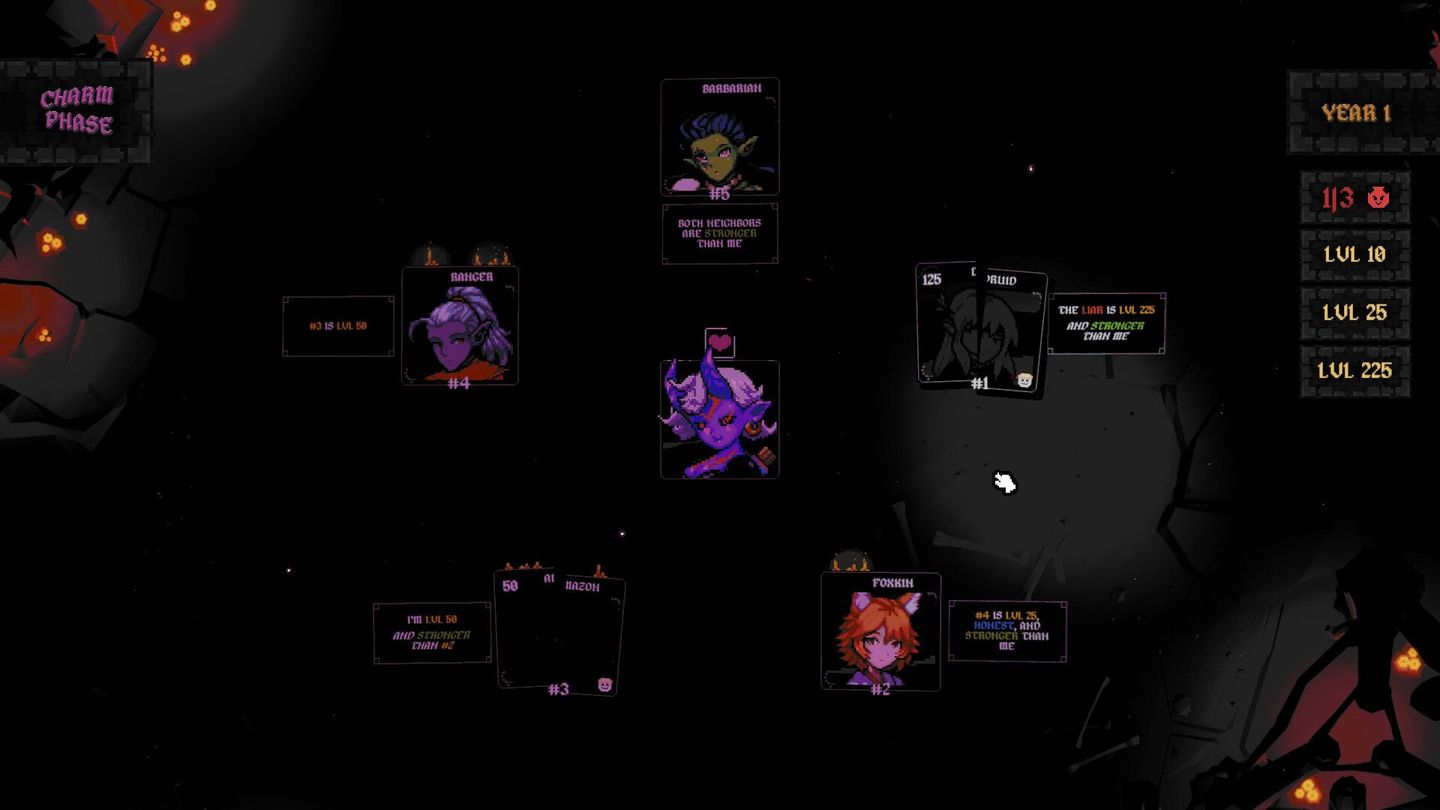
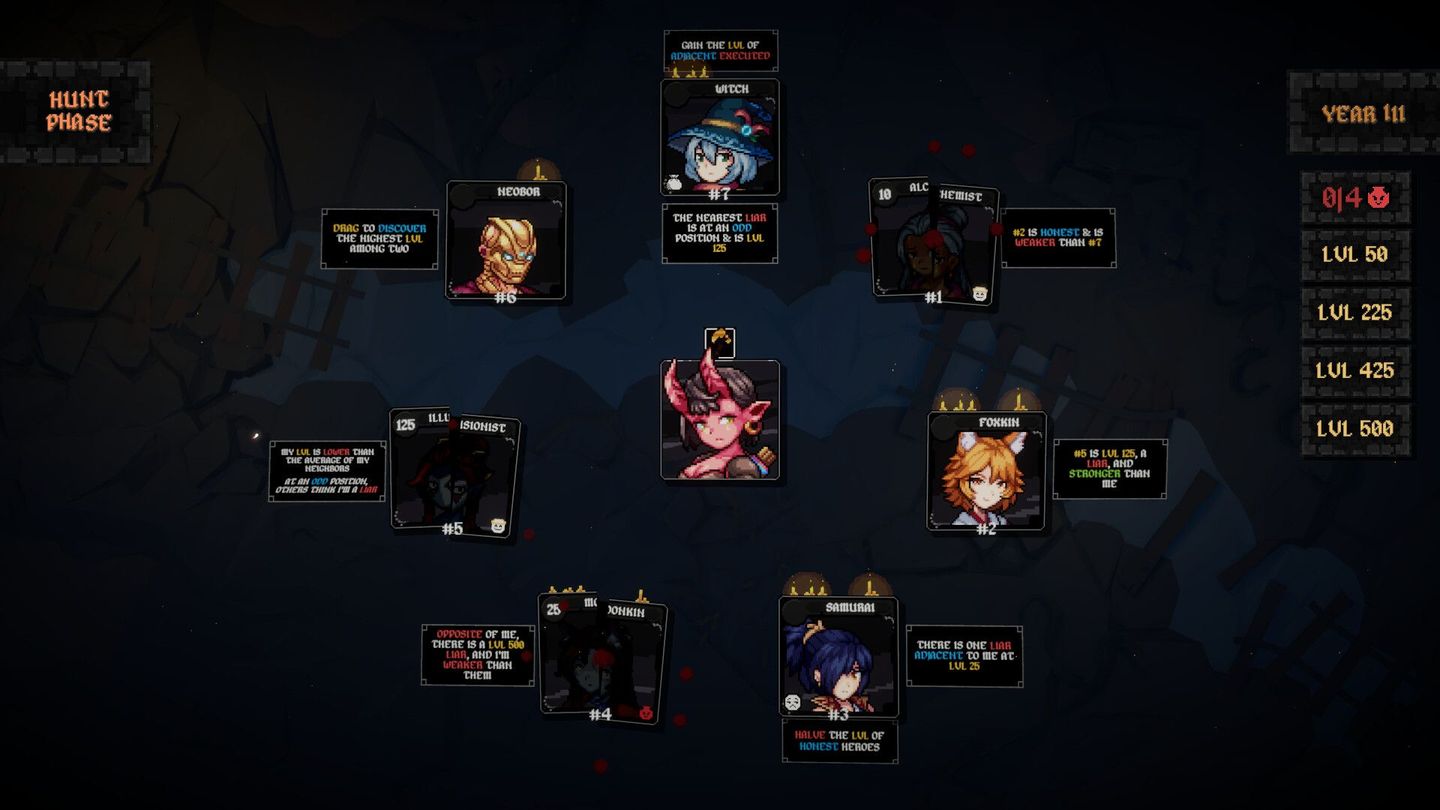
At the heart of the game is a simple but clever idea. Each escaping hero presents a thought bubble you can inspect. Those thoughts reveal personality, fears, and plans, but they are not always truthful. Some heroes are pathological liars and will try to trick you into making the wrong move.
This creates a cat and mouse game where you must weigh gut reads against revealed information. Thoughts give patterns to learn from run to run. Over time you will start recognizing which classes tend to lie, which tend to be blunt, and which use performative bravado to mask weakness.
Execute the weak until only three remain
You defend the dungeon with your trusty axe Beatrice. Executing an escapee is a decisive step. When a hero is executed they immediately reveal their true alignment and level. That reveal serves two purposes - it prevents the hero from returning on that run and it gives you concrete information to shape the rest of the encounter.
Execution is risky. Use it too early and you might lose valuable information or potential allies. Use it too late and the wrong champion could rise against you. The tension is about timing and pattern recognition rather than reflexes.
Charm the strong and flip them to your side
Once only three heroes remain, Demi can activate her Charm Power to subdue the strongest of the group. If your deductions are correct, your new champion will turn on their former allies and fight for your dungeon. That step is a satisfying payoff for careful reading and smart executions.
Charm is a high reward option that punishes sloppy detective work. Picking the wrong hero to charm can leave you handing a powerful tool to an enemy. Pick right and you gain a potent ally who converts your earlier reads into battlefield results.
Twist them with additional quirks
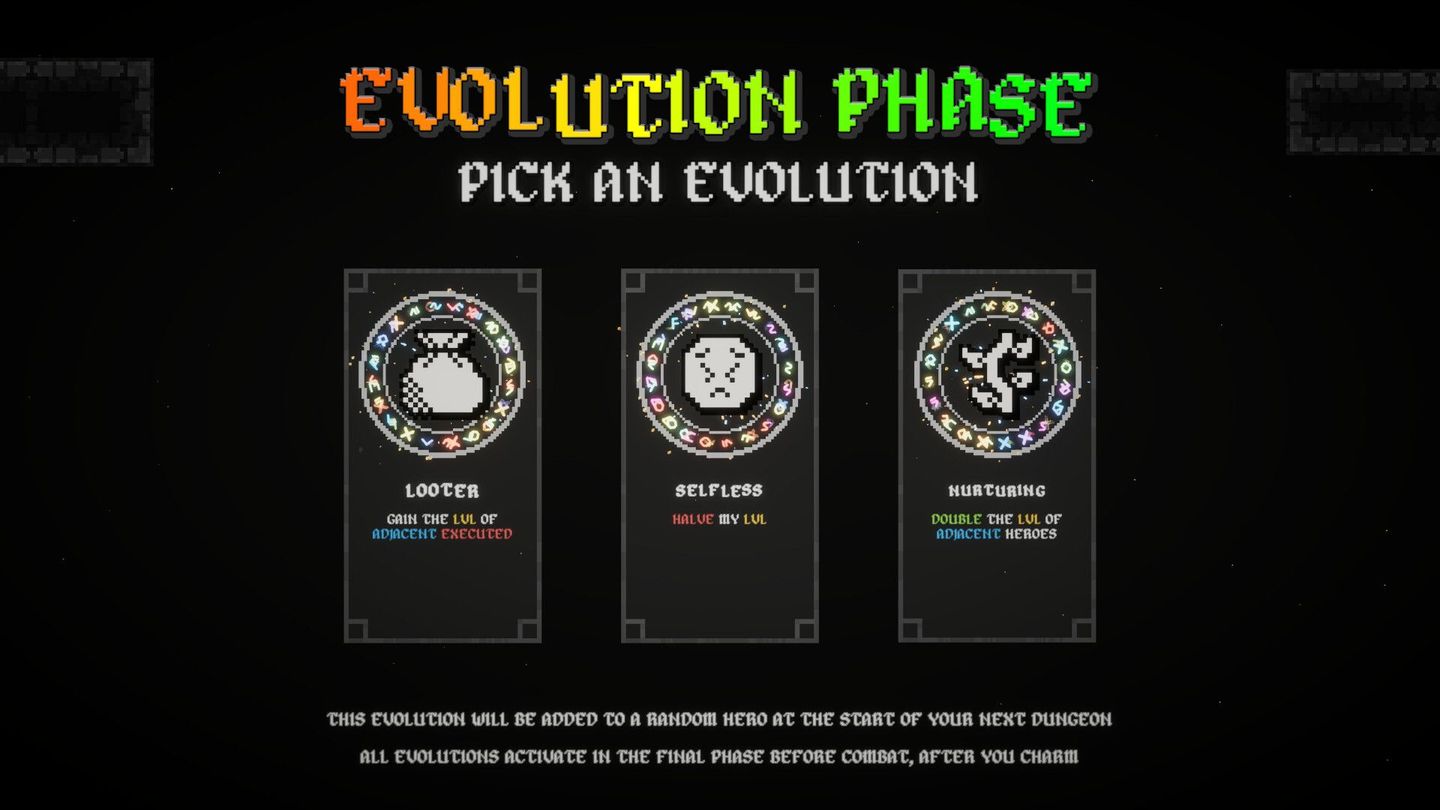
Dungeon Tells keeps things fresh with quirks. After you save your dungeon, captured escapees go back to their cages and start plotting their next run - often in higher numbers. The game lets you add a quirk such as Looter, Selfless, or Nurturing to one of the heroes in future escapes.
Quirks change how a hero thinks and behaves, and they alter the thought patterns you rely on. That means every successful run can make the next run both harder and more interesting, because your prior knowledge must be re-evaluated against new personality twists.
Randomized escapes and deep variety
There are over fifty hero classes, each with their own thought patterns, personalities, and behavior quirks. Escapes are randomized so each hunt brings a different roster and new deduction puzzles. That variety pairs well with a roguelite structure where you learn across runs but still face fresh surprises.
The card game trappings and the reveal-on-execution mechanic make each encounter feel like a compact logic puzzle with emergent storytelling. The roguelite loop of tweaks and escalating threats encourages experimentation with different deduction strategies.
Why Dungeon Tells stands out
Dungeon Tells is notable for translating social deduction into a single-player experience without losing the tension that makes the genre fun. The combination of mind-reading, bluff-detection, execution reveals, and the ability to convert foes into allies creates a satisfying decision economy. If you enjoy puzzle-like runs that reward attention to detail and adaptive strategy, this one is worth watching.