
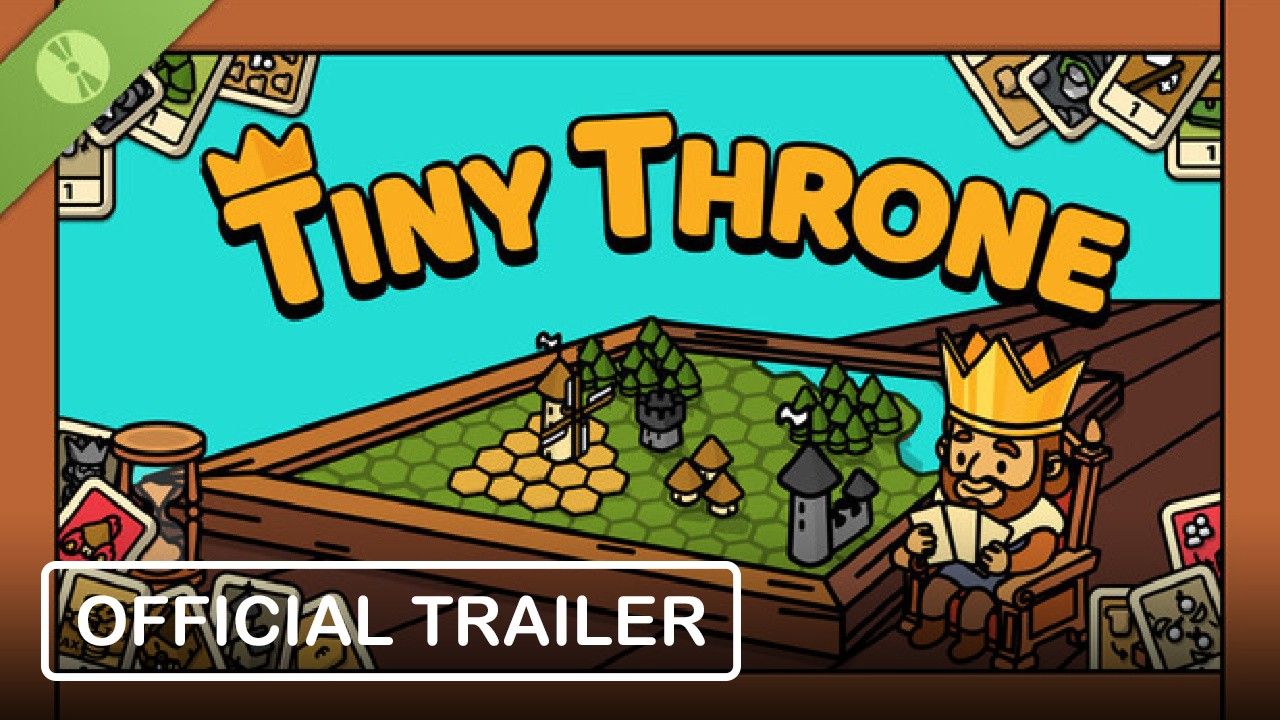
Tiny Throne Demo Turns Your Deck into a Tiny Medieval Kingdom
Tiny Throne compresses kingdom management into the familiar loop of a deckbuilder, but with a neat twist: your deck literally is your kingdom. The demo hands you a humble pool of blueprints and basic cards, and asks you to draft, expand and survive day by day. Everything you build, every resource you play and each unit you field comes from the cards you choose, which makes each pick feel meaningful in two ways.
This is a roguelike loop with a cozy face and a sharp bite. You will plan spatial layouts, balance food and population, and then flip to an attack phase where your preparations are put to the test.
Your Deck Is Your Kingdom
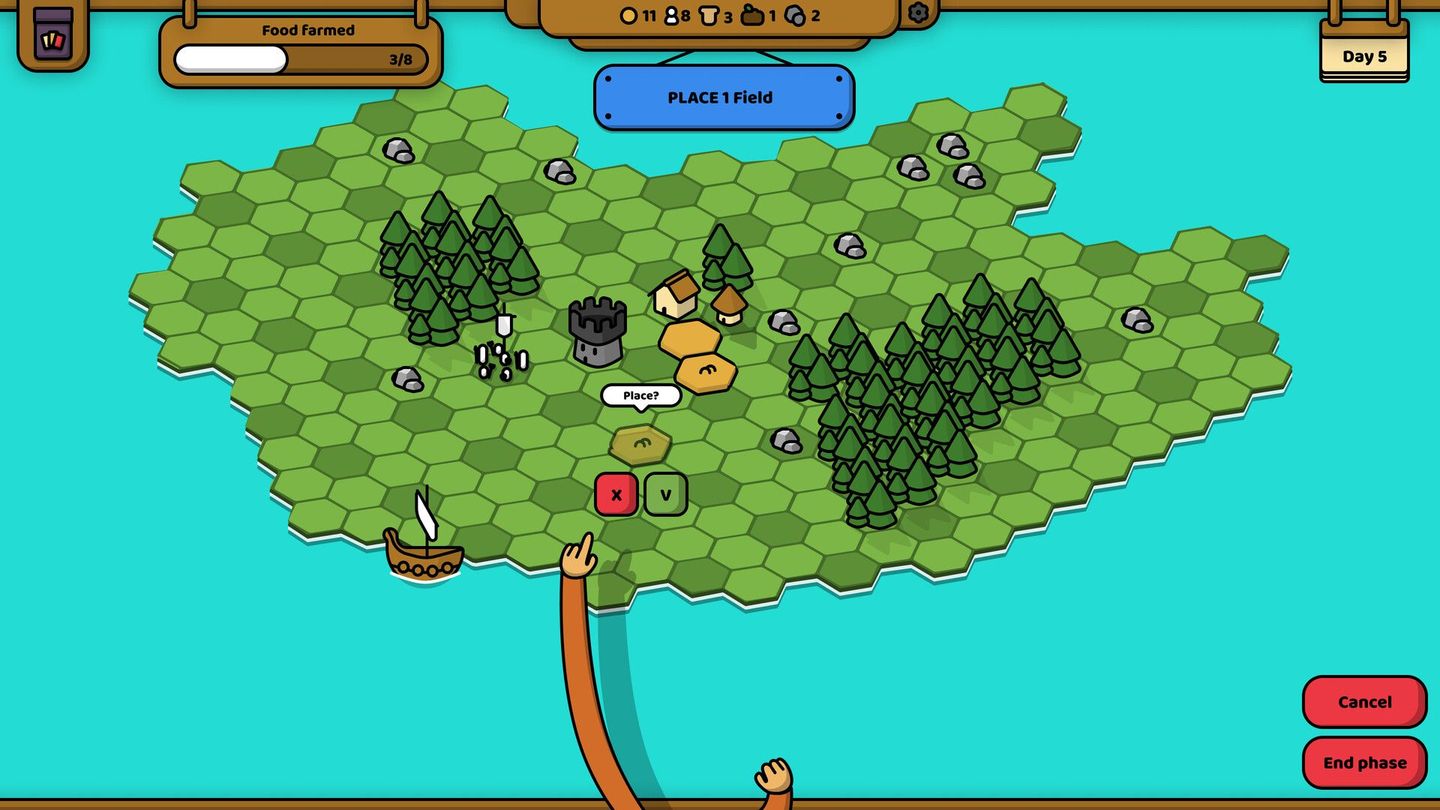
The demo leans hard into the central conceit: cards equal structures, people and options. You start with simple blueprints and draft new ones to grow a village. Population is not just flavour here. Every inhabitant acts as an action point that lets you draft, play, or reshuffle. Lose people, and you lose actions.
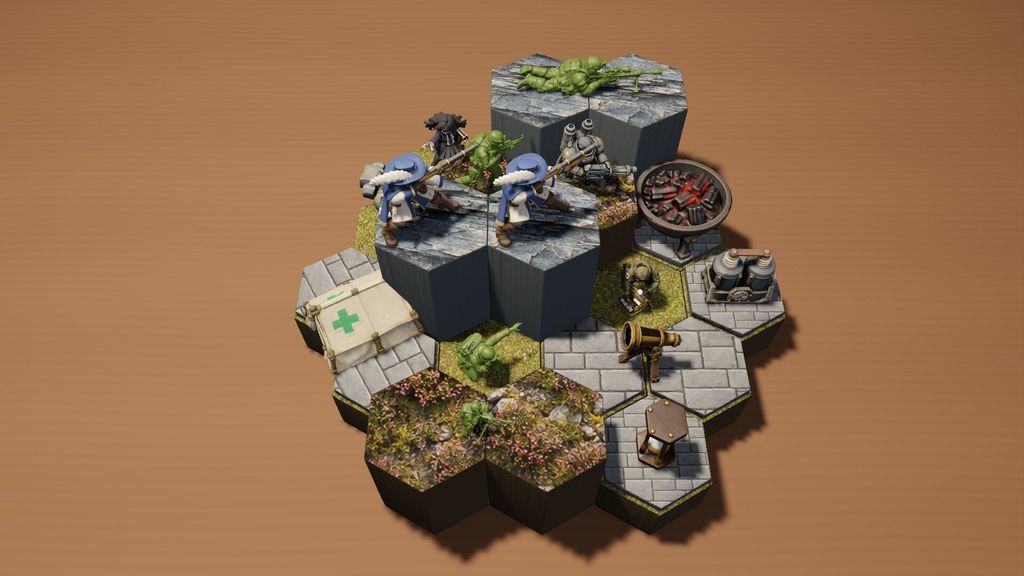
Spatial placement matters. Buildings interact on hex tiles, so placing farms next to mills can create food bonuses, while fortifications and cannons help hold your line. Synergy is key, and the layout is a small strategic puzzle on top of the usual deck math.
Food is a running threat. If your harvest fails, families leave and your available actions drop. That makes expansion a risk-reward dance: grow fast and risk starvation, or consolidate and grind a safer engine.
Build, Feed and Defend
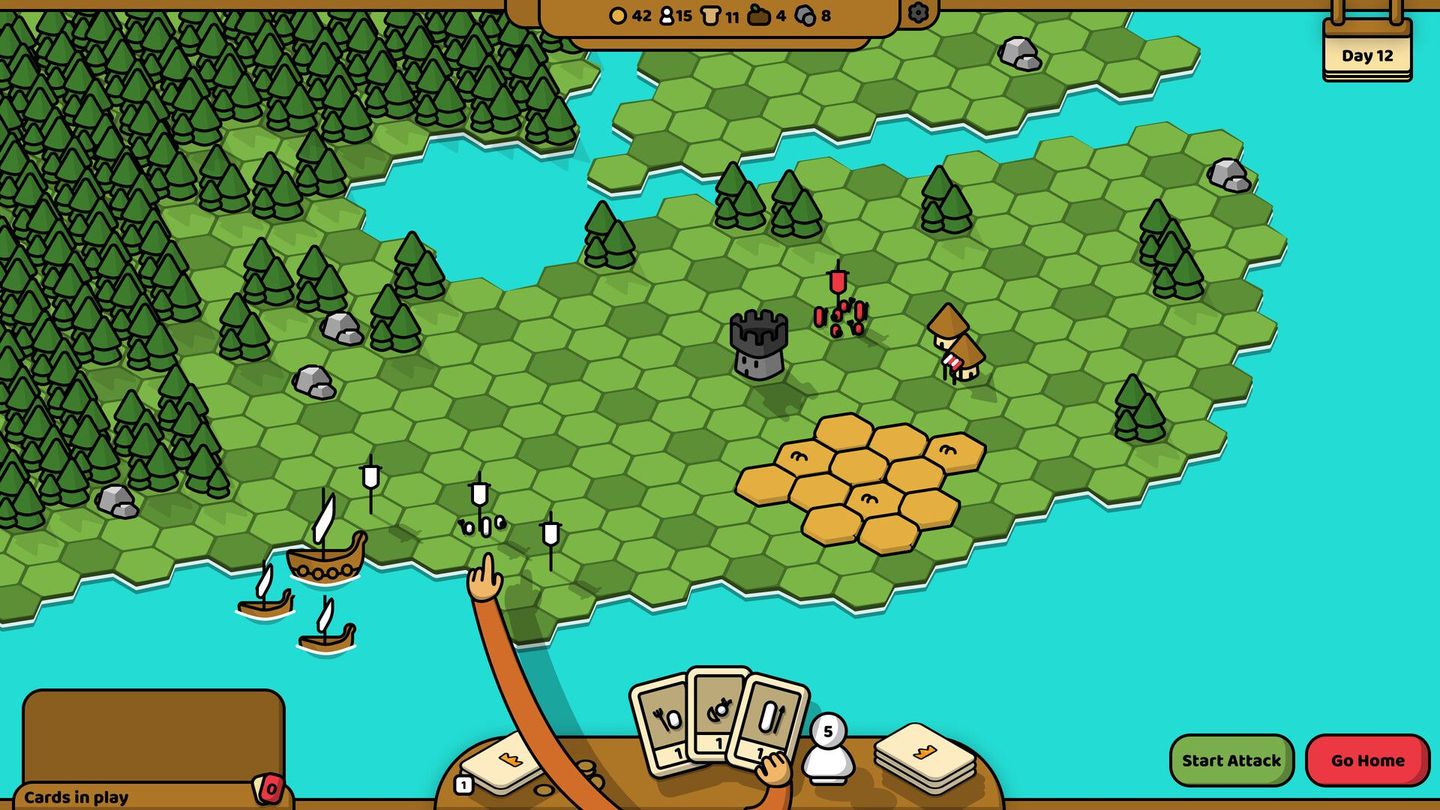
Gameplay alternates between a building phase and an attack phase. In the build phase you assemble your village, draft blueprints and prepare defensive pieces. When combat arrives, the units and defenses you assembled come from the cards in your hand and on the board.
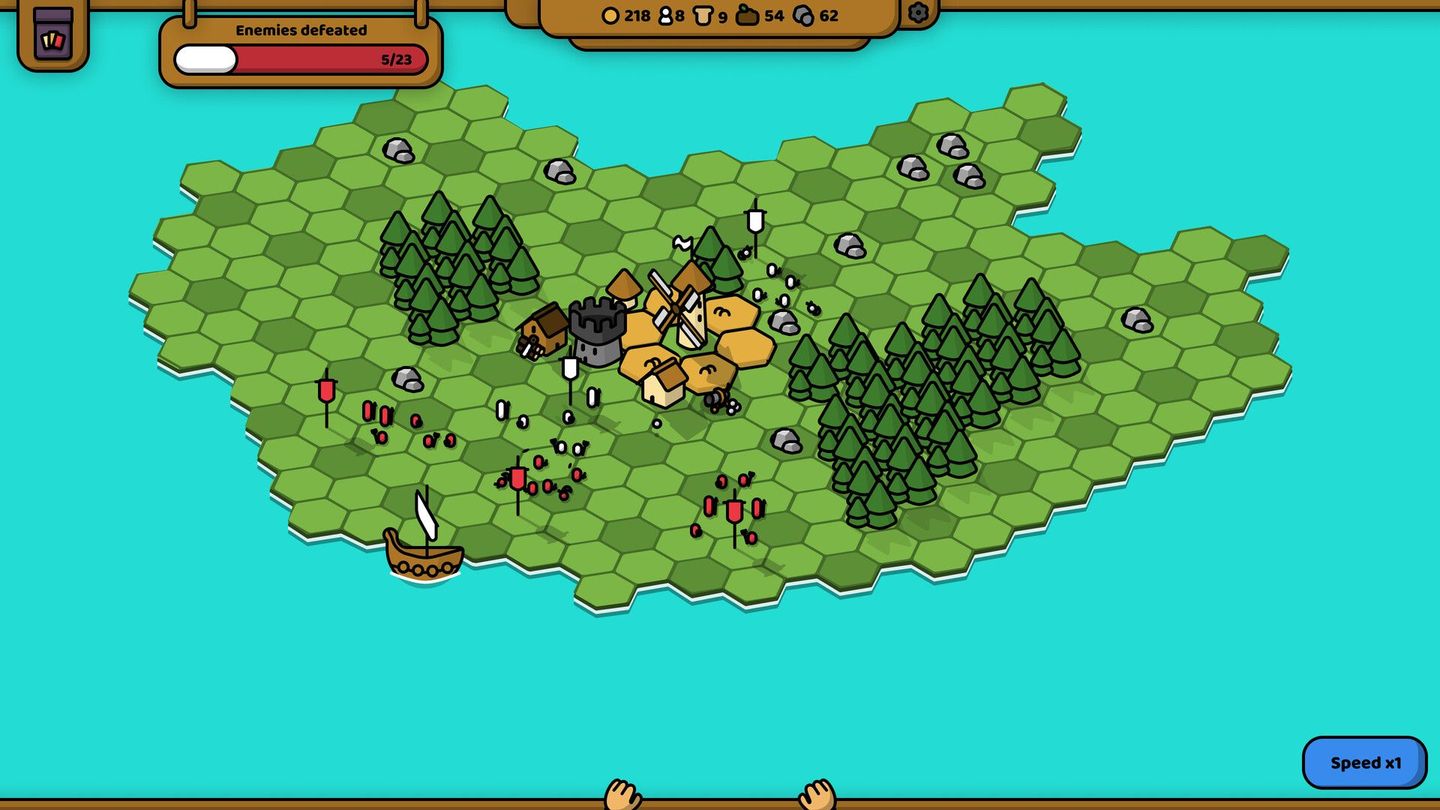
Raids require tactical thinking. Use gathered units to lay siege to enemy villages, time your assaults and hope your siege engines and catapults do their work. Defenses are not optional. Houses hold families, which in turn carry your action economy. When a house falls, the families inside leave with it and your action pool shrinks.
The calendar system adds pressure. You need to pace expansion and defence across days so that your village survives long enough to reap rewards.
Raids, Loot and The Shop
Winning skirmishes brings treasure chests filled with cards and resources that bolster the next day of your run. The demo also includes a shop where you can refine your deck, buy powerful cards and tune the direction of your run. Drafting and deleting cards remains central to optimization, so the shop is a strategic tool as much as a convenience.
Tiny Throne bills itself as "cozy-hardcore" and the demo demonstrates that balance well. The visuals and tone are warm, but the economy is punishing if you overextend. If you enjoy spatial puzzles, tight resource management and deckbuilding with a tactical combat layer, this demo is worth a look.
The Tiny Throne Demo is available now on Steam, inviting you to draft blueprints, feed settlers, build your engine, and lead raids to claim the throne.