
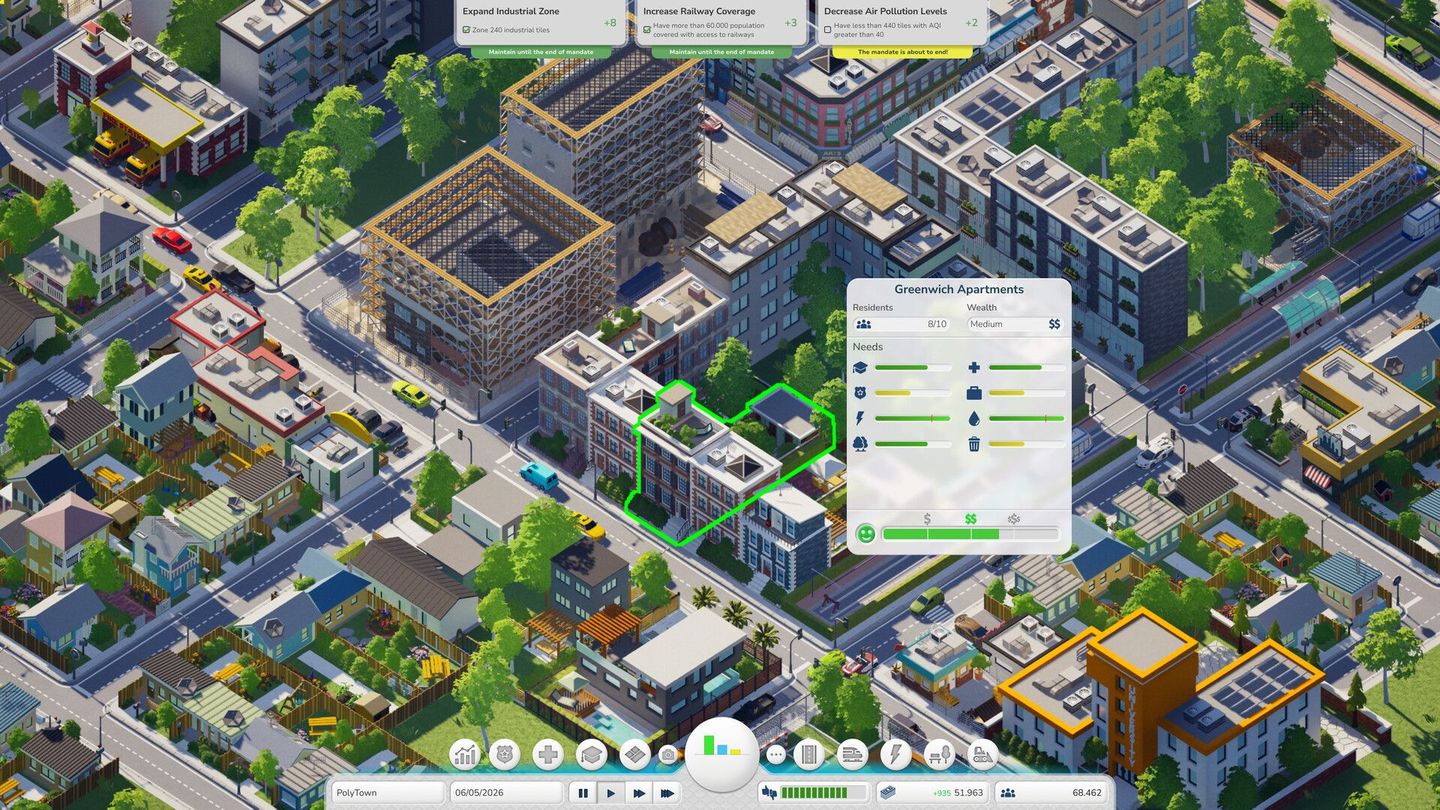
PolyTown: A Low Poly City Builder
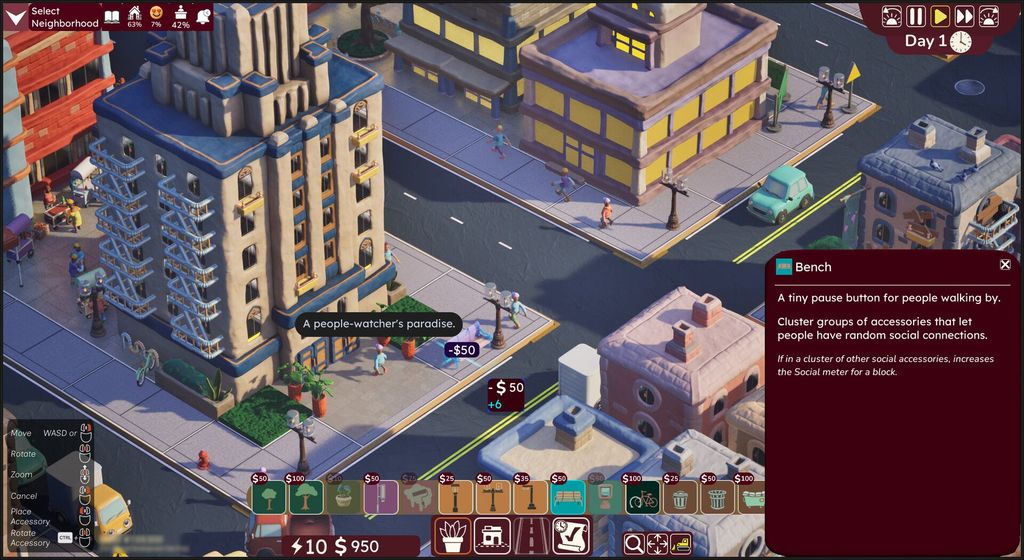
PolyTown lets you design the city you and your citizens want, with the familiar pleasures of zoning, utilities, and urban compromise. Zone areas for residents and businesses, connect them with services, and build the infrastructure that keeps people fed, healthy, and working. But mayoral life is not without stakes: promises matter, events happen, and unhappy voters will make you pay the price.
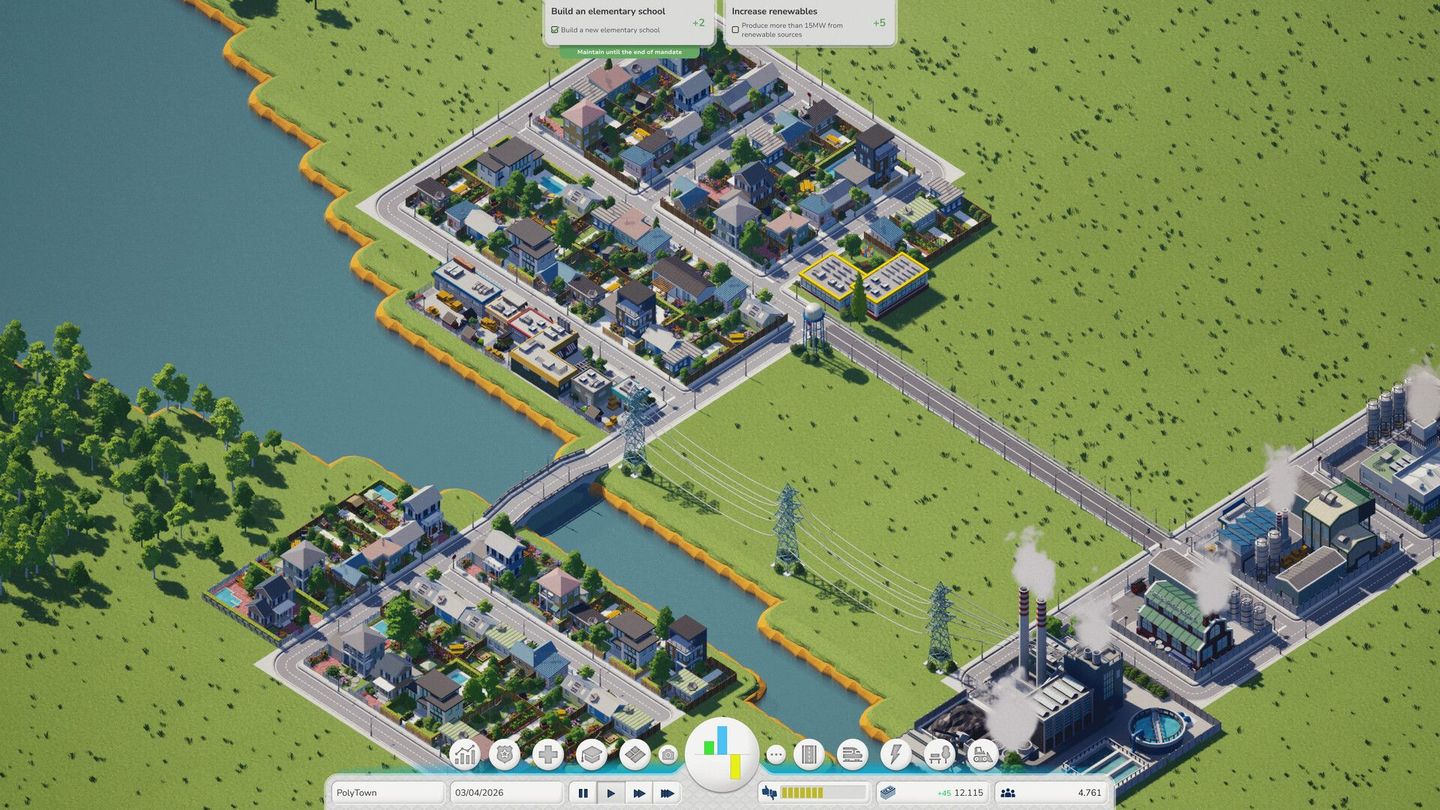
Zone your city
Planning is at the heart of PolyTown. You decide where homes, shops, and factories can appear, and those zoning choices shape pollution patterns, customer flow for businesses, and delivery efficiency for industry. Properly placed services prevent health problems near polluters and make sure shops have enough foot traffic. Zoning is less about rote placement and more about balancing who lives where and how the city grows.
The chair is hot
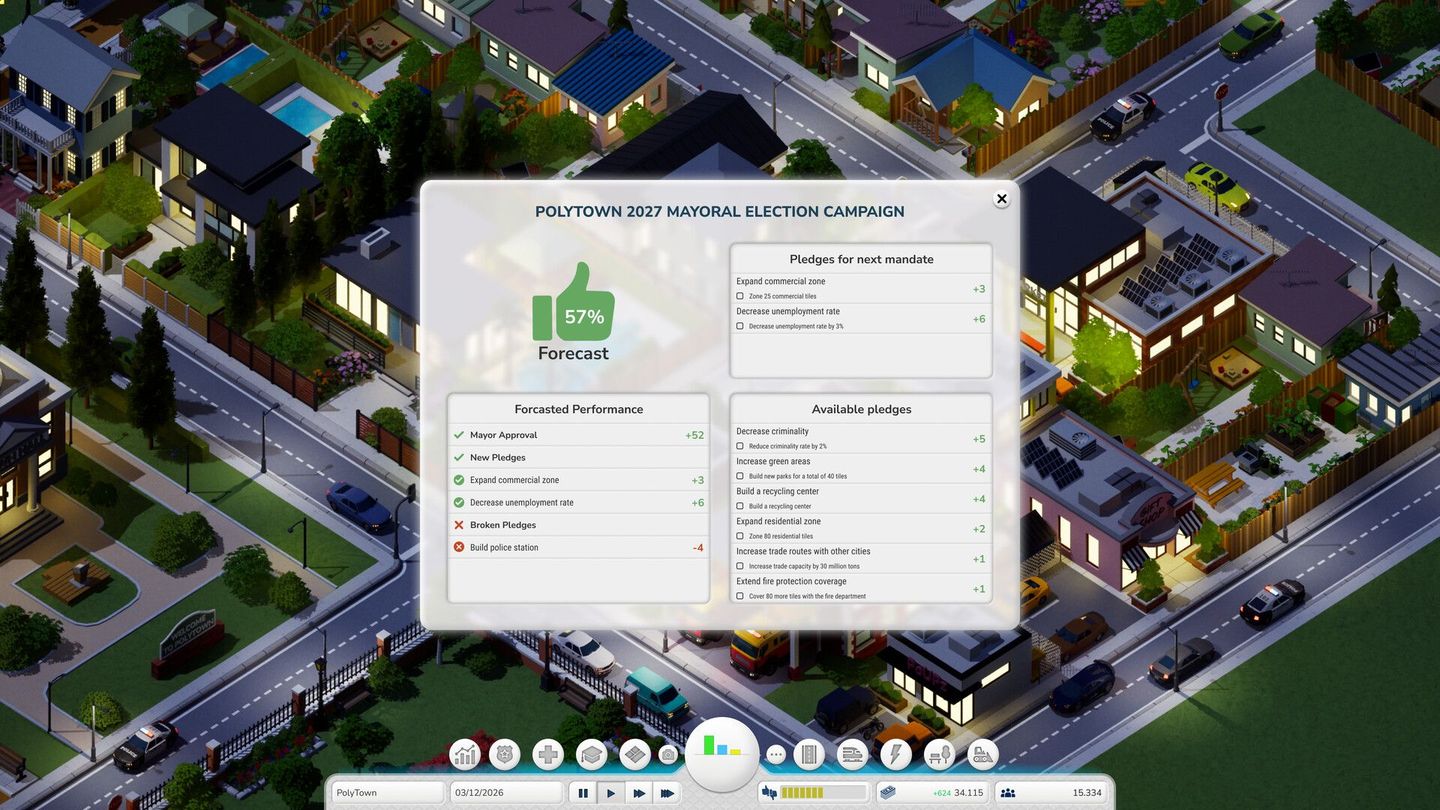
Assume that being mayor is mostly smooth and trouble-free, and the game will remind you that comfort is an illusion. Events will crop up: polluted water might cause disease and overwhelm hospitals, or prolonged unemployment may sting entire neighborhoods. Pledges are your political tool. Promise new jobs, better schools, or improved healthcare to win support during elections, but unkept promises and repeated failures make re-election much harder. Do badly enough and you may need to find another city or another job.
The bigger, the needier
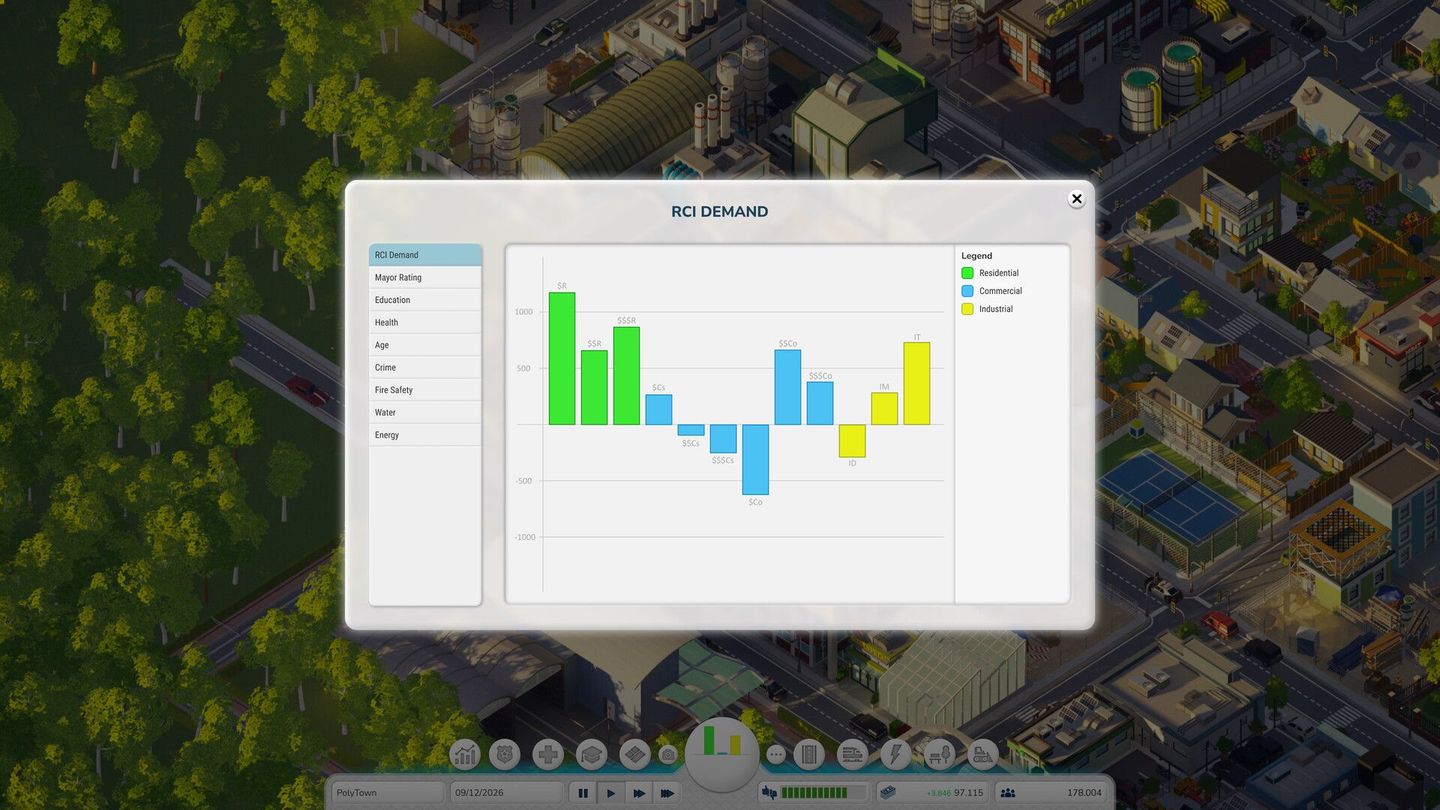
Small towns are straightforward: steady access to water and electricity can keep citizens content. Bigger cities change the equation. Even lower income groups eventually expect education and healthcare, and large infrastructures like universities and hospitals are expensive. Expanding your city unlocks demands that require long term planning and heavier investment, so growth comes with responsibility.
No traffic simulation
PolyTown spares you the headache of detailed traffic simulation. Citizens are assumed to adapt by moving closer to work or switching jobs if distance becomes a problem. That said, transportation is still meaningful. Services need to be reachable, and public transport helps tie distant neighborhoods into the urban fabric. If you can only afford one high school but must serve remote areas, a bus line can bridge that gap. Citizens may also explicitly ask for access to public transport when it affects their daily lives.